<?xml version="1.0" encoding="UTF-8"?>
<feed xmlns="http://www.w3.org/2005/Atom">
  <title type="text">Intermountain Histories</title>
  <updated>2026-04-17T19:32:20+00:00</updated>
  <generator uri="http://framework.zend.com" version="1.12.20">Zend_Feed_Writer</generator>
  <link rel="alternate" type="text/html" href="https://www.intermountainhistories.org/"/>
  <link rel="self" type="application/atom+xml" href="https://www.intermountainhistories.org/items/browse?output=rss2"/>
  <id>https://www.intermountainhistories.org/</id>
  <author>
    <name>Intermountain Histories</name>
    <uri>https://www.intermountainhistories.org</uri>
  </author>
  <link rel="hub" href="https://pubsubhubbub.appspot.com/"/>
  <entry>
    <title type="html"><![CDATA[The Logan Temple]]></title>
    <summary type="html"><![CDATA[<p><strong><em><span style="font-weight:400;">Those descending out of Sardine Canyon are welcomed into Cache Valley by the Logan Temple. Perched atop the east bench of the valley, it stands 170 feet tall. For nearly a century and a half, the temple has been an icon of the valley and a testament to the diligence of the pioneers who built it.</span></em></strong></p><img src="https://www.intermountainhistories.org/files/fullsize/61cf1188f0d820b0bea3b8f3c5a1bb52.jpg" alt="Aerial view of the Logan  UtahTemple" /><br/><p><span style="font-weight:400;">The first settlement attempt of Cache Valley occurred in 1856. Having endured the brutal winter, more Latter-day Saints migrated north, and Cache Valley became an established community. But even before the area was well established, prophecies were given by church leaders on the future construction of a temple.</span>
<span style="font-weight:400;">In an 1863 meeting, Wilford Woodruff of the church’s Quorum of the Twelve Apostles said that the day would come when great cities would fall but that Logan and its temple would outlast them. Ground was finally broken on the temple in 1877, beginning a seven-year construction process. Financing the temple was a challenge for these pioneers, but they rose to the occasion. The total expenses for the temple amounted to just over $600,000, with half consisting of labor costs. Through various programs and 100% volunteer labor, the Saints were able to complete the temple and have it ready for dedication exactly seven years after breaking ground.</span>
<span style="font-weight:400;">The dedication services were held from May 17th to 19th, 1884. Church president John Taylor presided and offered the dedicatory prayer. As part of that prayer, he said, “We feel, O Lord God, our weakness and unworthiness before Thee, and our inability to do anything without Thy guidance and assistance; but as Thou hast given us a commandment…we have built this house, and present it to Thee, and pray that Thou wilt accept it in the name of Thy Son Jesus Christ.” This prayer reflects the attitudes of those that built the temple, who believed their total reliance was on God and saw the majestic building as a humble offering.</p><p>As part of the Golden Jubilee celebration of the Logan Temple in 1934, poet Harrison R. Merrill wrote of the temple:</p><p><i>“Against the turquoise Utah skies</i><i>Two solemn temple towers rise,</i><i>Twin beacons marking well the place</i><i>Where children of a mighty race</i><i>Of Pioneers assemble. They came from far</i><i>The temple gleams – A guiding star.”</i></p>
<span style="font-weight:400;">The temple has since undergone major renovations, including a complete gutting of the interior in 1976. The renovation aimed to improve efficiency in temple ordinance work but came at the expense of historic pioneer craftsmanship. Many lament the loss of pioneer heritage, but plans are in place to restore some of the original style. In 2019, church president Russell M. Nelson stated, “Ours is a sacred responsibility to care for [pioneer-era temples]. Therefore, these pioneer temples will soon undergo a period of renewal and refreshing and, for some, a major restoration. Efforts will be made to preserve the unique historicity of each temple wherever possible.” As of December 2024, no additional plans for renovations have been announced.</span></p><p><em><strong><a href="https://www.intermountainhistories.org/items/show/884">For more (including 3 images) view the original article</a></strong></em></p>]]></summary>
    <published>2025-01-29T00:24:55+00:00</published>
    <updated>2026-04-17T19:32:20+00:00</updated>
    <link rel="alternate" type="text/html" href="https://www.intermountainhistories.org/items/show/884"/>
    <id>https://www.intermountainhistories.org/items/show/884</id>
    <author>
      <name>Cameron Carlson, Brigham Young University</name>
    </author>
  </entry>
  <entry>
    <title type="html"><![CDATA[Bessie Morehead: The Fight for a Spot ]]></title>
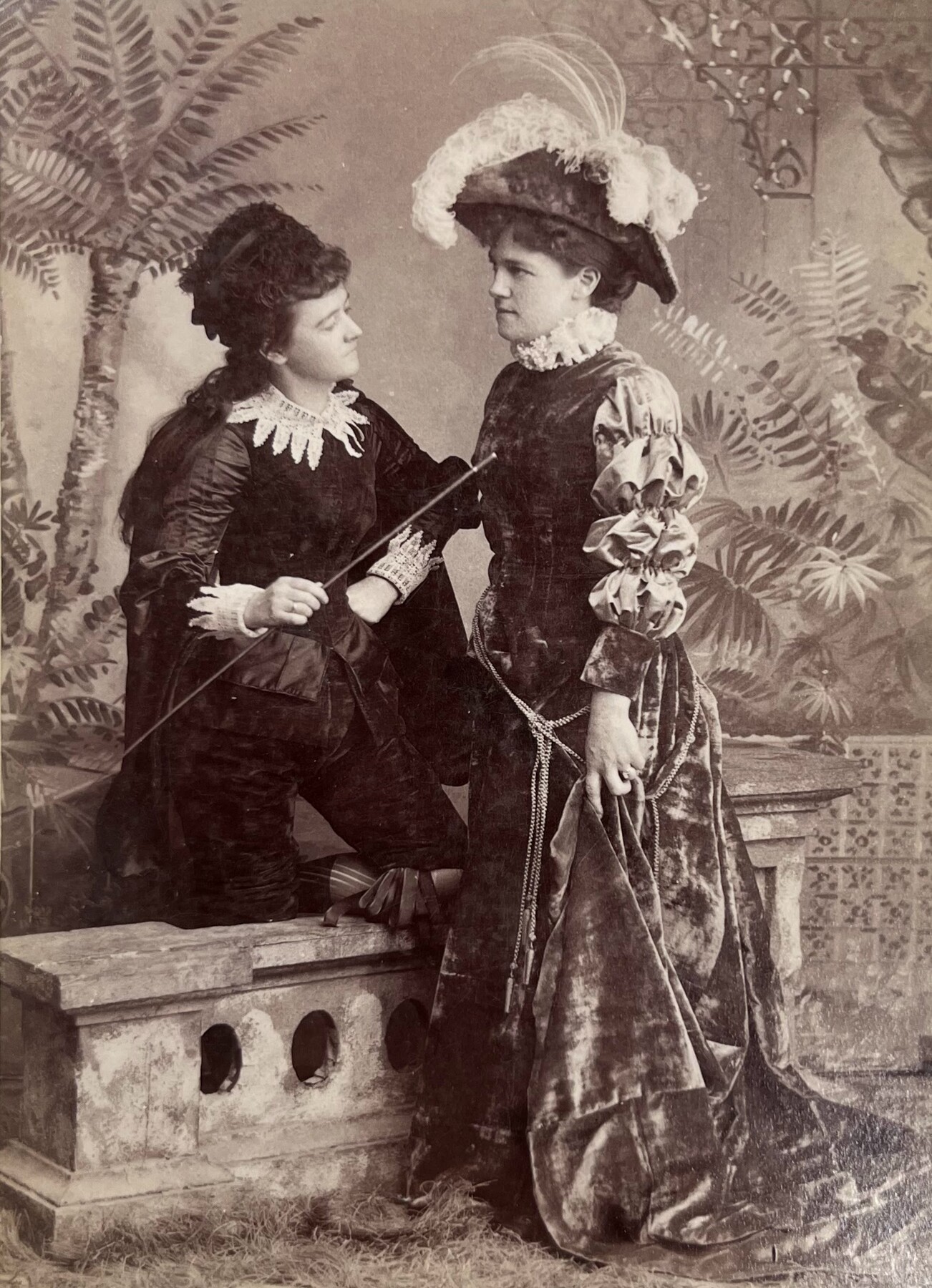
    <summary type="html"><![CDATA[<p><strong><em>Bessie Morehead, a well-known singer in Cache Valley, defeated her opponent Charles Hyde to become the first female County Recorder in Cache County, Utah.</em></strong></p><img src="https://www.intermountainhistories.org/files/fullsize/a689c8c32b896bc5645f616e6b0df0a9.jpg" alt="Actresses Bessie Morehead and Maggie Sloan in theatrical costume for &quot;The Three Mantles&quot;" /><br/><p>In 1896 Utah became a state and women were allowed to run for public office. In that year 14 women won public office in Utah: one to the U.S. Senate, two to the state House of Representatives, and eleven to county offices, including Bessie Morehead. Morehead was born in Smithfield, Utah in 1867 and became a well known Logan citizen. She was a talented singer and performed in the Logan Opera Company. She was seen as one of Utah’s “best and favorite vocalists.” </p><p>She decided to run for the Cache County Recorder in 1896. This was a highly respected and honorable position to hold. Democrats nominated Morehead instead of the incumbent Charles Hyde. Many Democrats at the time were excited for women to participate in public office and wanted to give Morehead a chance. Hyde decided to switch to the Republican party to run against her. When Hyde came to the Democratic Convention, Morehead kicked him out. He then came at her with a knife but luckily nothing happened. </p><p>The fight didn’t stop there. Her LDS stake president casted doubt on Morehead as a candidate. He implied that Charles Hyde was a more religious member than she was. One editor for the Logan Journal defended her and said she was just as faithful. Amongst all this opposition. Morehead still won the election. She received 3,174 votes and Hyde received 1,840. After the election Hyde said the “Democratic party of Cache County is corrupt”. Only to receive backlash from the newspaper asking why he sought the Democratic nomination for recorder in the first place if it was corrupt. </p><p>Bessie Morehead served two terms from 1897-98 and 1899-1900. Morehead and 13 other Women in Utah made history. Bessie Morehead became the first woman in Cache County to hold public office. </p><p><em><strong><a href="https://www.intermountainhistories.org/items/show/861">For more (including 4 images) view the original article</a></strong></em></p>]]></summary>
    <published>2024-10-18T05:49:35+00:00</published>
    <updated>2026-04-17T19:32:19+00:00</updated>
    <link rel="alternate" type="text/html" href="https://www.intermountainhistories.org/items/show/861"/>
    <id>https://www.intermountainhistories.org/items/show/861</id>
    <author>
      <name> Samantha H. Crockett, Utah State University</name>
    </author>
  </entry>
</feed>