<?xml version="1.0" encoding="UTF-8"?>
<feed xmlns="http://www.w3.org/2005/Atom">
  <title type="text">Intermountain Histories</title>
  <updated>2026-04-17T19:32:20+00:00</updated>
  <generator uri="http://framework.zend.com" version="1.12.20">Zend_Feed_Writer</generator>
  <link rel="alternate" type="text/html" href="https://www.intermountainhistories.org/"/>
  <link rel="self" type="application/atom+xml" href="https://www.intermountainhistories.org/items/browse?output=rss2"/>
  <id>https://www.intermountainhistories.org/</id>
  <author>
    <name>Intermountain Histories</name>
    <uri>https://www.intermountainhistories.org</uri>
  </author>
  <link rel="hub" href="https://pubsubhubbub.appspot.com/"/>
  <entry>
    <title type="html"><![CDATA[The Rockwood Speakeasy – Butte, Montana: When Montana lawmakers passed alcohol bans in 1918, Butte’s nightlife went underground. Business owners concealed their speakeasies, brothels, and gambling halls in basements under the city’s sidewalks. During Prohibition, Rockwood (Rookwood) Speakeasy earned its fame hidden behind coats and code words.]]></title>
    <summary type="html"><![CDATA[<img src="https://www.intermountainhistories.org/files/fullsize/51321426bb9e095b46c0551d1ba7b90f.jpg" alt="The cross section of Butte’s Broadway and Main Street in the 1920s" /><br/><p>James Pratt, proprietor of the Red Boot and Shoe Company, built the Rockwood (also called the Rookwood), in Butte, Montana in 1912. The ground level housed the shoe company’s shop, and the floors above functioned as a hotel. Pratt designed the building to attract attention and business with décor like Tudor-arching, green tile, a copper-clad cornice, a wrought iron staircase, and marble wainscoting and floors. The Rockwood’s unique ambiance and railroad access attracted elite and traveling patrons alike.
Before Prohibition, Butte, Montana, boomed as a mining town and gained notoriety for its lively bar and entertainment scene. When the Montana government banned alcohol distribution and consumption in December of 1918, Butte bars moved underground—into basements and tunnels beneath storefronts—and continued to sell alcohol. During this time, over one hundred underground speakeasies, including the Rockwood, operated in the city. In 1918, Pratt converted the building’s basement into a speakeasy. This underground area matched the hotel’s elegance above, attracted numerous clients, and became one of Butte’s more famous drinking spots.
In 1923, one of Rockwood’s moonshine clients, Mae Holberg, died by suicide after overconsuming alcohol. The 29 January 1923 issue of <em>The Butte Daily Post </em>describes the harrowing story. Holberg attended an all-night party at the Rockwood. Witnesses and police confirmed this party involved large quantities of illegal liquor. Around 7:00 A.M., Holberg drank one and a half ounces of Lysol, a fatal dose that ended her life within hours. A friend at the party told officers he believed Holberg took her own life because “she was despondent,” he said, “one or two drinks always made her despondent and downhearted.” Tragic stories like this made the Rockwood notorious in the illegal drinking world.
After Prohibition ended, Butte’s underground scene lost its appeal. Shop owners no longer needed to hide their liquor, so they moved alcohol sales to street levels, and many permanently sealed off their speakeasies. Rockwood’s basement became one of these buried speakeasies, while the rest operated as a hotel and retail space. In 2004, workers renovating the Rockwood Hotel discovered a closet filled with untouched coats from decades past. Behind the coats, they uncovered a two-way mirror which concealed a hole that opened into the Rockwood Speakeasy—frozen in time since the Prohibition era.
This discovery highlights the secretive and exclusive nature of the Rockwood Speakeasy and explains how it remained hidden and operational throughout Prohibition. It is a modern-day time capsule, offering visitors a glimpse into the past. Visitors can imagine stepping into the shoes of a 1920s client—looking into the mirror, giving the bouncer the code, and feeling the thrill of defying Montana’s dry laws.</p><p><em><strong><a href="https://www.intermountainhistories.org/items/show/896">For more (including 5 images) view the original article</a></strong></em></p>]]></summary>
    <published>2025-09-23T15:34:47+00:00</published>
    <updated>2026-04-17T19:32:20+00:00</updated>
    <link rel="alternate" type="text/html" href="https://www.intermountainhistories.org/items/show/896"/>
    <id>https://www.intermountainhistories.org/items/show/896</id>
    <author>
      <name>Scarlett Kluge, Northern Arizona University </name>
    </author>
  </entry>
  <entry>
    <title type="html"><![CDATA[The KKK in Butte, Montana]]></title>
    <summary type="html"><![CDATA[<p><strong><em><span style="font-weight:400;">Taking advantage of existing tensions between Protestants and Irish Catholics in Butte, Montana, the Ku Klux Klan sought to penetrate the community and hoped to stoke discourse.</span></em></strong></p><img src="https://www.intermountainhistories.org/files/fullsize/23f3a64865731d1aad110432024680ba.jpg" alt="Undated photograph of Elm Orlu mine" /><br/><p><span style="font-weight:400;">Before the arrival of the Ku Klux Klan in 1923, tension between Protestants and Catholics existed in the mining communities of Butte, Montana. The so-called “War of the Copper Kings” was a feud between mine owners Marcus Daly and William A. Clark during an 1888 campaign for territorial representation of the companies. Although both were Irish, Clark was a Protestant while Daly was a fervent Catholic. Many of the miners were migrant Irish-Catholics and Daly won the election. Clark never forgot the loss and battled for control until he died in 1900. It was also during this period that a group known as The American Protective Association (APA) gained popularity in Butte. The APA was an organization that was extremely anti-Catholic and members frequently got into violent altercations with Catholics at local bars.   </span></p><p><span style="font-weight:400;">Furthermore, due to issues such as decreased copper demand following the end of the First World War, many in Montana felt economically unstable and wary of foreigners. When the Ku Klux Klan arrived in Butte in the 1920s, it hoped to exacerbate the existing religious tensions and economic fears by using Irish Catholic workers as scapegoats. </span>
<span style="font-weight:400;">Originally gaining popularity in Billings, the Klan sought to move into Butte. However, as Butte historian Christine Erikson notes, “Catholic Immigrants cared little for an organization that referred to the Pope as an ‘impatient, meddling individual controlled by a Jesuitical lot of assaassainous villains.’” The Klan notably chose to act in an especially clandestine manner while conducting operations in Butte. Local Klansmen moved from town to town and conducted meetings under various aliases such as the “Protestant Men’s Welfare Council” and “Butte Men’s Literary Club.” Klan officers also urged other chapters in Montana to avoid exposing Butte Klansmen by ensuring that any mail to members in Butte didn’t indicate anything that suggested a Klan association. It is estimated that at least 181 residents of Butte joined the organization during 1923-1929, including 39 who worked as miners and on rail lines for Clark. </span>
<span style="font-weight:400;">The reasons for their especially secretive nature are not completely clear. The Butte Klan could have been worried about backlash from other Protestant organizations that operated in the area such as Masonic groups. It is also possible that other Butte clandestine organizations were not eager to associate with a group that was gaining a national reputation for terrorism. Another reason could be that in a town with a sizable Irish-Catholic population, the Klan worried about community backlash. Butte’s </span><i><span style="font-weight:400;">Labor Bulletin </span></i><span style="font-weight:400;">heavily criticized the Klan in Butte and proclaimed, “Their Invisible Empire Should Have No Place in These United States.”</span>
<span style="font-weight:400;">The Klan's larger efforts in Butte eventually proved to be fruitless—the membership and public activity essentially became dormant by the 1930s. Instead, the Klansmen opted to do smaller acts such as “guarding” voting booths and writing opinion pieces in editorials about unfavorable politicians. However, most of their Butte activities seemed to be brooding in their meeting places and discussing inter-Klan politics. </span></p><p><em><strong><a href="https://www.intermountainhistories.org/items/show/811">For more (including 3 images) view the original article</a></strong></em></p>]]></summary>
    <published>2024-05-21T00:10:52+00:00</published>
    <updated>2026-04-17T19:32:18+00:00</updated>
    <link rel="alternate" type="text/html" href="https://www.intermountainhistories.org/items/show/811"/>
    <id>https://www.intermountainhistories.org/items/show/811</id>
    <author>
      <name>Aidan Capristo, Northern Arizona University</name>
    </author>
  </entry>
  <entry>
    <title type="html"><![CDATA[Granite Mountain/Speculator Mine Disaster]]></title>
    <summary type="html"><![CDATA[<p><strong><em>The Granite Mountain/Speculator Mine disaster is considered the worst hard-rock mine disaster in the United States, with 163 people dying as a result of the fire. The disaster is remembered both for its death toll as well as the strike that ensued following the fire. </em></strong></p><img src="https://www.intermountainhistories.org/files/fullsize/b27dced64868903650ec532263084c95.jpg" alt="Where there’s smoke" /><br/><p>The Granite Mountain/Speculator Mine disaster near Butte, Montana, began a little before midnight on June 8, 1917, as the result of a tragic but ironic accident. The North Butte Mining Company planned to install a sprinkler system in the 3,500-foot shaft of Granite Mountain to increase safety. The system was nearly complete when one of the last steps required moving an electrical cable that was 1,200 feet long and weighted three tons. While workers lowered the cable, it slipped and fell about a thousand feet down a mine shaft. The cable was ruined in the fall, as it had stripped away the cable’s lead sheathing, revealing the oil-soaked cloth insulation underneath. Workers left the cable in the shaft and reported the incident to the assistant foreman, Ernest Sullau.
Sullau and John Collins, a shift boss, went down to inspect the damages and locate the cable. Sullau carried a carbide-burning lantern, with an open flame, and as he walked around the shaft, he set a piece of cloth on fire. Surprised, he moved the lantern back away from the burn but inadvertently set another section of cloth on fire. Sullau stayed below while Collins went above to inform the engineers of the fire.
Although the fire burned extremely hot, few miners were burned. Instead, the fire’s smoke and gas was the true threat as it spread throughout the mine as well as into adjoining mines, asphyxiating Sullau and many miners. Firefighters worked for five days to contain the fire, and it took rescuers three days thereafter to get all the survivors out. Most of those who survived were treated for smoke and gas inhalation onsite and were able to go home; the few particularly bad but still living cases were rushed to the hospital. By the time the dust settled, the community counted 168 dead.
The fire was a breaking point for the workers in Butte. Left with no unions since 1914, they went on strike and created the Metal Mine Workers’ Union. However, Butte was one of the largest producers of copper, and due to World War I copper was in high demand. As a result of the need for copper, in August the federal government deployed troops to break the strike. With federal troops on the scene adding to mounting pressures against the miners, their strike ended in December.
The fire was also particularly difficult for the miners’ families. While compensation was available, it was only given to miners who had wives or children. Otherwise, the company was only obligated to pay $75 for funeral expenses. However, many of the unmarried miners were the sole providers to their elderly parents. Miners whose family members were either not U.S. citizens or not in the country also did not receive financial compensation. Overall, only 39 of the 163 families of the dead received any non-funeral financial compensation.</p><p><em><strong><a href="https://www.intermountainhistories.org/items/show/535">For more (including 4 images) view the original article</a></strong></em></p>]]></summary>
    <published>2021-11-13T10:53:02+00:00</published>
    <updated>2026-04-17T19:32:11+00:00</updated>
    <link rel="alternate" type="text/html" href="https://www.intermountainhistories.org/items/show/535"/>
    <id>https://www.intermountainhistories.org/items/show/535</id>
    <author>
      <name>Megan Wagner, Northern Arizona University</name>
    </author>
  </entry>
  <entry>
    <title type="html"><![CDATA[The Berkeley Mine Pit: Butte’s Scenic Toxic Lake]]></title>
    <summary type="html"><![CDATA[<p><strong><em>The Berkeley Mine Pit is the most expensive site on the EPA’s superfund list, filled with water so acidic it can dissolve the propeller of a boat.</em></strong></p><img src="https://www.intermountainhistories.org/files/fullsize/b0280a5e449e8efb8945c58f3821f84f.jpg" alt="Berkeley Pit" /><br/><p>Butte, Montana’s history is inseparably tied to mining. A gift shop on the outskirts of town sits next to a massive man-made pit filled with 40 billion gallons of water. Some visitors comment on the beauty of the contrast between the “blue sky and emerald green waters” and enjoy signs that give brief snippets about the history of the Anaconda Copper Mining Company and the pit. Others who visit know that that the pit is filled with water so acidic that it can dissolve the propeller of a boat. In 2016 the poisonous water was responsible for the death of an estimated 4,000 geese who stopped for a drink. The Berkeley Mine Pit is now the most expensive site on the EPA’s superfund list.</p><p>Underground mining operations date back to the 1870s in Butte. By 1955, however, Anaconda decided that it would be more profitable and safer for miners to dig straight down to copper veins instead of tunneling to them. This method resulted in a growing pit. The people of Butte proudly identified as miners, but the pit exposed the community to a type of mining never before experienced and they began complaining to company officials about the noise and dust from nearby explosions. As the pit grew deeper and wider and more waste was produced, Anaconda saw only one way to stop complaints and keep their operation going: obtain more land.</p><p>Anaconda faced the task of dismantling communities that they helped create. East Butte, Meaderville, McQueen, Dublin Gulch, and Finn Town were towns of immigrant miners close enough to the Berkeley Pit that the company deemed their destruction necessary to continue mining operations. Fortunately for Anaconda, they already owned most of the land in these towns, they needed only to buy or trade the houses on top of it. A sign by the pit today reads, “many of the relocated residents didn’t mind because it meant that good paying jobs would stay in the community.” While it is true that these communities were eventually abandoned and engulfed by waste or the pit itself, the reality of people leaving their homes, churches, and baseball fields to be destroyed was more complicated. One resident remarked, “People said they’d fight, but then they jumped.”</p><p>Anaconda was no longer the typical pre-WWII mining company that hired detectives to intimidate or beat workers into submission. They used legal means to move workers and their families to different parts of town. They offered fair sums of money for houses or offered a trade so people could immediately move into a house in a different town also owned by Anaconda. Though many took the deals offered by the company, there were always holdouts. In 1961 however, a bill passed in the state legislature that gave private companies like Anaconda the right to exercise eminent domain to expand pit operations. Though the process was used sparingly, Anaconda could take property if they wanted to, making resistance to pit expansion futile. Still, one man in charge of covering the old school in Meaderville with mine waste said, “I felt like a murderer. Progress does have its price.”</p><p>By the 1980s, pressures from environmentalists and the financial state of Anaconda Copper led to the closure of the Berkeley Pit. Pumps that kept surrounding groundwater from the pit were turned off, and the pit has been filling with toxic water ever since. In 1983 the pit was placed on the EPA’s superfund list. Last year, ground was broken on a facility that will stop water in the pit from raising to levels that would poison surrounding water supplies in Butte. The pit stands today as a poignant reminder of the large-scale destructive effects of capitalism in the West and represents the complex relationship between people and the resources on which they depend for jobs, and ultimately, life. The Berkeley Pit cannot be discussed in Butte without a reverence for the thousands of miners that sacrificed limbs, time, and sometimes their lives all to earn a decent wage. As we look forward to solutions for Berkeley, we must not forget to remember how and why it was created.</p><p><em><strong><a href="https://www.intermountainhistories.org/items/show/376">For more (including 4 images) view the original article</a></strong></em></p>]]></summary>
    <published>2020-01-07T03:35:54+00:00</published>
    <updated>2026-04-17T19:32:07+00:00</updated>
    <link rel="alternate" type="text/html" href="https://www.intermountainhistories.org/items/show/376"/>
    <id>https://www.intermountainhistories.org/items/show/376</id>
    <author>
      <name>Sam Heywood, Brigham Young University</name>
    </author>
  </entry>
  <entry>
    <title type="html"><![CDATA[The Rich History of the Anaconda Copper Mine]]></title>
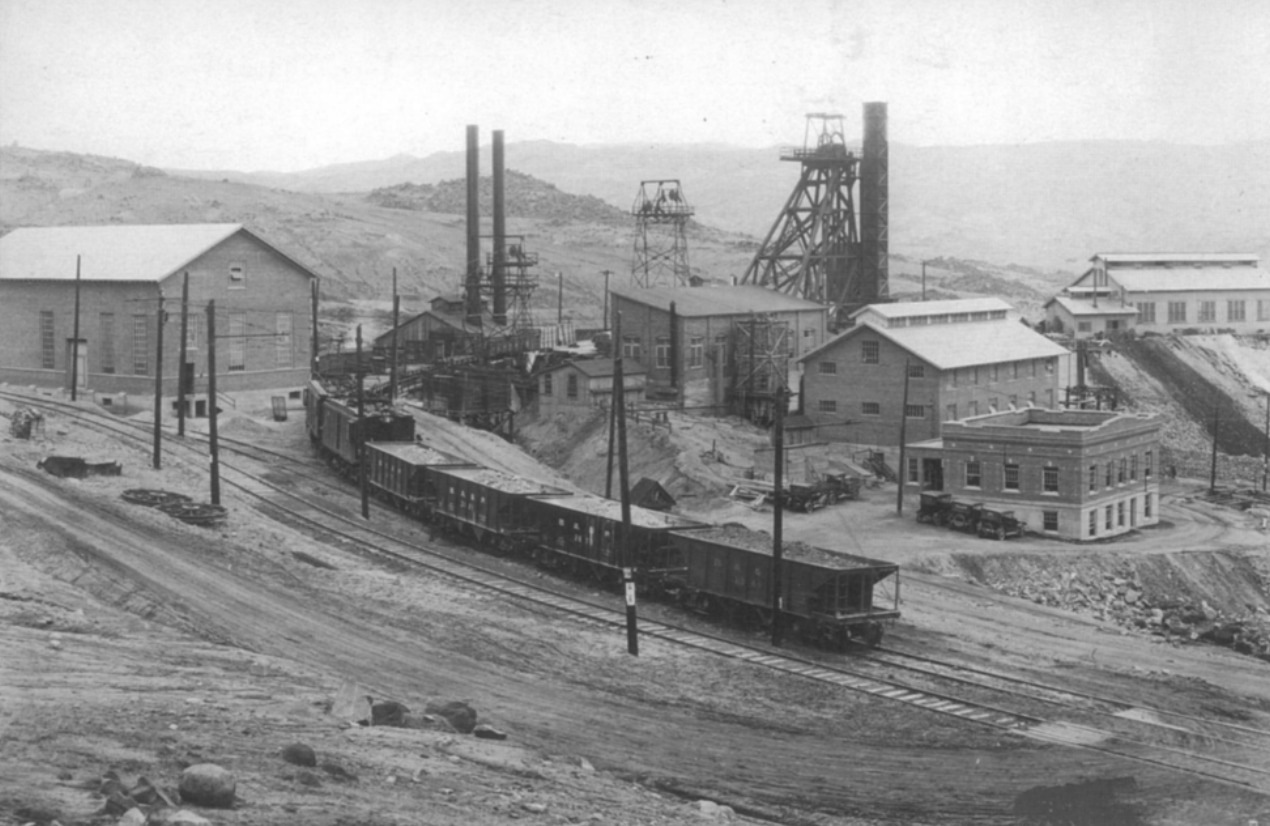
    <summary type="html"><![CDATA[<p><strong><em>The Anaconda Copper Mine was the true epitome of an Irish immigrant’s American dream coming to life. Its creator, Marcus Daly, not only built a copper industry that was incomparable to others at the time, but he also provided the opportunity for thousands of Irish immigrants to come to the West with the promise of a stable job and a strong community. His success created the potential for many American dreams to follow. </p></strong></p><img src="https://www.intermountainhistories.org/files/fullsize/64942ddddffb68a48e273acd7fe99a46.jpg" alt="Anaconda Copper Mining Company in the 1920s" /><br/><p>Within months of its creation, the Anaconda Copper Mine, located near Butte, Montana, was a leading producer of copper across the entire North American continent. And it all began with one Irishman, Marcus Daly. Having advanced in the mining business for over two decades, Daly bought the Anaconda Silver Mine in 1881, with the help of the Haggin-Hearst-Tevin organization. When his workers discovered a rich vein of copper several months later, the other owners weren’t thrilled—there weren’t the resources to easily treat the copper, and no one knew if this discovery could grow to compete with the copper plants in the Midwest. Even so, Daly kept hope. He bought the properties from his partners and switched the mine to focus only on copper; the company quickly became very prosperous. Daly continued to buy mines in the surrounding area of Butte and to incorporate them into the Anaconda Copper Mining Company throughout the 1890s. By 1895, the prosperity had spread; in a report to British investors, mining expert Hamilton Smith stated that the mine could produce more copper than any other company, at a fraction of the cost. </p><p>Much of the surrounding landscape and population of Butte, Montana was shaped by the incredible success of the Anaconda Copper Mining Company in the late 1800s and into the early 1900s. Timber proved critical to the success of the mining business, and Daly bought and utilized the Montana forests in order to run his mine. Furthermore, Daly’s Irish heritage and promise of a stable mining company drew thousands of Irishmen to Butte to work in his mines. Historian David M. Emmons has said, “By 1900, there were approximately 12,000 immigrant and second-generation Irish in a total Silver Bow County (Butte) population of 47,365. Thus, 25 percent of the residents . . . were either Irish-born or the children of Irish-born.” Irishmen came to the Anaconda Copper Mining Company because of the relationships Daly built with his workers there. These relationships started the moment applicants applied directly to him, and they continued as he met workers’ families and would even personally train young men in the work. The mines were incredibly prosperous for both owner and workers, and with the promise of employers who respected their people, the Irish had clear incentives to flood to Butte. </p><p>Although not much remains of the Anaconda Copper Mine beyond abandoned mine shafts and railroad tracks, it is worth the trip through Butte to see the residue of a true American dream that played such a heavy role in shaping Montana economy, environment, and population in the late 1800s. </p><p><em><strong><a href="https://www.intermountainhistories.org/items/show/278">For more (including 3 images) view the original article</a></strong></em></p>]]></summary>
    <published>2019-02-09T05:30:47+00:00</published>
    <updated>2026-04-17T19:32:04+00:00</updated>
    <link rel="alternate" type="text/html" href="https://www.intermountainhistories.org/items/show/278"/>
    <id>https://www.intermountainhistories.org/items/show/278</id>
    <author>
      <name>Makayla Beitler, Brigham Young University</name>
    </author>
  </entry>
  <entry>
    <title type="html"><![CDATA[The Copper King Mansion]]></title>
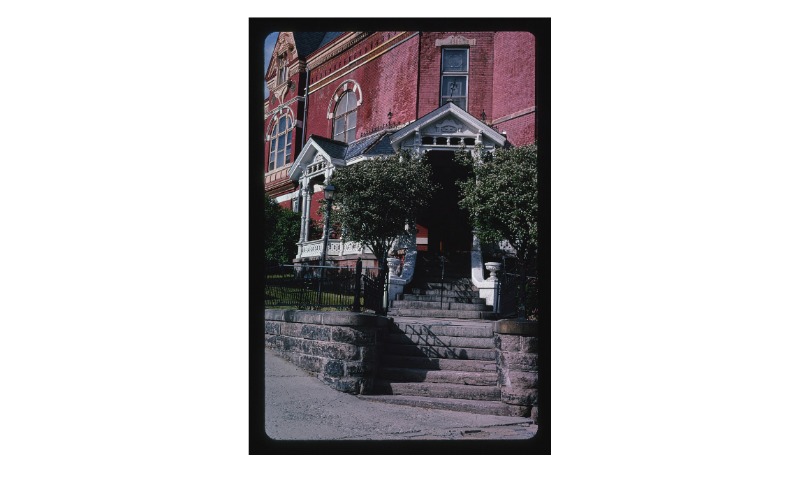
    <summary type="html"><![CDATA[<p><strong><em> Located in the heart of Big Sky country, Butte, Montana was one of the first boomtowns in the American West. One of its key features, the Copper King Mansion, was built by the prominent copper mining businessman William Andrews Clark. Today, the mansion serves as a Bed and Breakfast as well as a house museum. </em></strong></p><img src="https://www.intermountainhistories.org/files/fullsize/ac7dca59380caa843665e0165d868754.jpg" alt="Copper King Mansion Bed and Breakfast" /><br/><p>Born in 1839, Williams Andrews Clark worked on a farm until he was fourteen years old. He attended law school for two years, taught from 1859 to 1860, then moved westward to try his luck with the Gold Rush in 1862. Arriving in Butte a few years late, Clark invested his profit by helping other miners—bringing supplies, recording claims, and making loans. He expanded his business ventures to newspapers, oil wells, railways, and sugar plantations and even served as a Montana senator from 1901 to 1907. In Butte, Clark bought several mines, built the first successful smelter and stamp mill in 1879, and established a water company, an electric light company, and an electric railway. Estimates on his wealth range from $50 to $200 million. </p><p>Architect D.T. McDevitt and the construction firm W.F. Beall & Co. built the Copper King Mansion from 1884 to 1888. The imported materials cost the family about $200,000. Experts estimate the entire construction cost to be half a million dollars—equivalent to about half a day’s income for Clark. The home is a thirty-four room Romanesque Revival Victorian mansion. Its rounded arches over various doors and windows, cavernous entryways, thick masonry walls, and stone and brick facades are characteristics of Romanesque Revival architecture. Its asymmetrical design, large windows, stained glass, and decorative trim characterize Victorian architecture. The interior contains frescoed ceilings, hand-carved woodwork, and antique furnishings.</p><p>Ann Cote bought the Copper King Mansion in 1953, and her family continues to use and care for it. The mansion serves as a Bed and Breakfast year round. From May 1 to September 30, guides lead tours through the mansion from 10AM to 4PM. Tours include the history of the mansion, the people who built it, its architecture, and the many original artifacts located throughout the mansion. Bedrooms retain their style from one hundred years ago with large beds, impressive woodwork, and a personal connection to the people that lived there. Rooms are labeled according to which family member resided there. Guests can stay in the same room where Williams Andrews Clark slept—contributing to an authentic experience. Restoration efforts in 2011 revitalized the exterior of the mansion. Visitors can experience living like a “Copper King.”</p><p><em><strong><a href="https://www.intermountainhistories.org/items/show/233">For more (including 4 images) view the original article</a></strong></em></p>]]></summary>
    <published>2018-06-19T19:32:49+00:00</published>
    <updated>2026-04-17T19:32:03+00:00</updated>
    <link rel="alternate" type="text/html" href="https://www.intermountainhistories.org/items/show/233"/>
    <id>https://www.intermountainhistories.org/items/show/233</id>
    <author>
      <name>Megan Nolan, Northern Arizona University</name>
    </author>
  </entry>
</feed>