<?xml version="1.0" encoding="UTF-8"?>
<feed xmlns="http://www.w3.org/2005/Atom">
  <title type="text">Intermountain Histories</title>
  <updated>2026-08-18T16:00:24+00:00</updated>
  <generator uri="http://framework.zend.com" version="1.12.20">Zend_Feed_Writer</generator>
  <link rel="alternate" type="text/html" href="https://www.intermountainhistories.org/"/>
  <link rel="self" type="application/atom+xml" href="https://www.intermountainhistories.org/items/browse?output=rss2"/>
  <id>https://www.intermountainhistories.org/</id>
  <author>
    <name>Intermountain Histories</name>
    <uri>https://www.intermountainhistories.org</uri>
  </author>
  <link rel="hub" href="https://pubsubhubbub.appspot.com/"/>
  <entry>
    <title type="html"><![CDATA[Hazel Hunkins-Hallinan: Silent Sentinel Suffragist ]]></title>
    <summary type="html"><![CDATA[<p><strong><em>Billings native Hazel Hunkins-Hallinan, alongside other members of the National Women’s Party, peacefully picketed the White House fence from 1917-1919 to advocate for a federal amendment for women’s right to vote. Known as the “Silent Sentinels,” they proved to be a continual reminder to President Woodrow Wilson of the issue of suffrage.</em></strong></p><img src="https://www.intermountainhistories.org/files/fullsize/bffa4510a4cca3ac68232b815d975d58.jpg" alt="[Untitled]" /><br/><p><span style="font-weight:400;">Hazel Hunkins grew up in Billings, Montana, and as a young girl, she was seen as “different” because she wanted to do what boys could do from climbing trees to becoming a doctor. After graduating valedictorian from Billings High School, Hunkins obtained her chemistry degree from Vassar College. However, when she applied to chemistry labs across the country they all replied that although she was qualified, they “don’t hire women.” </span>
<span style="font-weight:400;">This response sparked a fire in her, and when she met Anne Louise Rowe of the National Women’s Party (NWP), Hunkins realized that she “was one of millions who had been shoved aside because of my sex” and she had to do something about the exclusion of women. Within six months of joining the NWP, she became the Montana State Chairman. When the NWP began their constant picketing of the White House in 1917, Hunkins participated in the demonstrations. The pickets were peaceful—holding purple, gold, and white suffrage banners and signs like “Mr. President, how long must women wait for liberty?” </span>
<span style="font-weight:400;">Hunkins led a protest at Lafayette Square, carrying the American flag and leading the way to the Park. Once at the statue, she made the simple statement: “Here, at the statue of Lafayette, who fought for the liberty of this country, and under the American flag, I am asking for the enfranchisement of American Women.” She was immediately arrested. Other women followed Hunkins’ lead, each suffragist making her own statement until 47 women were arrested.</span>
<span style="font-weight:400;">Lafayette Square confirmed the NWP efforts were unpopular; however, once World War started, they were scrutinized even more, as people thought the women needed to support the war effort rather than picket a wartime president. The NWP, instead of wavering in their resolve, started new demonstrations like the watchfires of freedom—where President Wilson’s speeches about democracy in Europe were read aloud and burned because American women did not have democracy at home.</span>
<span style="font-weight:400;">The arrests of NWP women continued, often being charged with newly fabricated crimes like “obstruction of a public sidewalk.” Rather than paying fines, they chose jail because as Hunkins stated, “Women cannot be law-breakers until they are law-makers.” The prison conditions were awful—cold, damp areas, without proper clothing, blankets, and food—so the suffragists would often go on hunger strikes to protest these conditions, and in some cases, they would be force-fed. After one such hunger strike, Hunkins left the prison hardly able to walk. </span>
<span style="font-weight:400;">Despite all of the challenges they faced fighting public opinion and police officers’ efforts to stop their protests, in 1920 the 19th Amendment was finally ratified, giving American women the right to vote. After this triumph, Hazel Hunkins continued to push for women’s rights. When she moved to London with her husband, Charles Thomas Hallinan, she joined the British feminist Six Point Group. At age 87, Hunkins-Hallinan returned to America to participate in the March for Equal Rights. There she stated what she fought her whole life for, “Equal Rights is so clear cut; it’s fundamental—a basic change… For half a cent I would stay here and campaign.” </span></p><p><em><strong><a href="https://www.intermountainhistories.org/items/show/866">For more (including 4 images) view the original article</a></strong></em></p>]]></summary>
    <published>2024-10-21T17:33:32+00:00</published>
    <updated>2026-04-17T19:32:19+00:00</updated>
    <link rel="alternate" type="text/html" href="https://www.intermountainhistories.org/items/show/866"/>
    <id>https://www.intermountainhistories.org/items/show/866</id>
    <author>
      <name>Rosalyn Visser, Rocky Mountain College</name>
    </author>
  </entry>
  <entry>
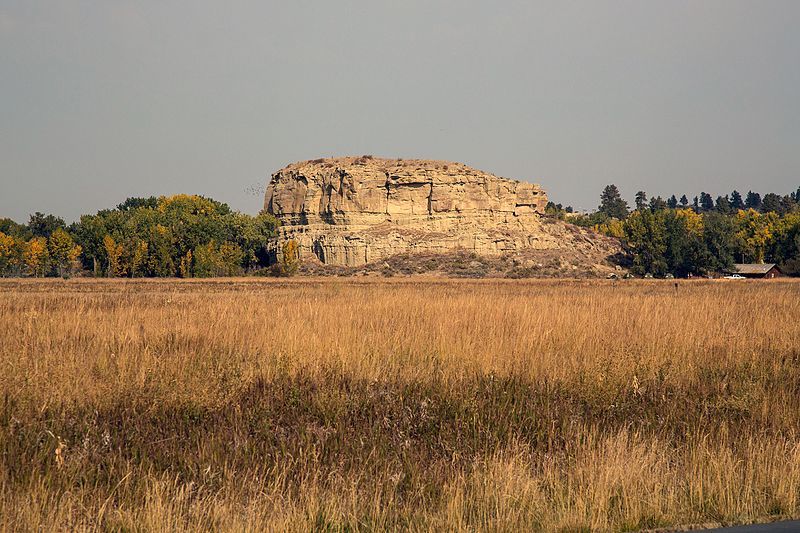
    <title type="html"><![CDATA[Pompeys Pillar National Monument]]></title>
    <summary type="html"><![CDATA[<p><strong><em>Pompeys Pillar is an impressive sandstone formation standing nearly 200 feet above the Yellowstone River. Designated as a national monument in 2001, the pillar features numerous Native American petroglyphs, as well as marks and drawings made by travelers and settlers. The most notable mark on this historic rock, however, is the signature of the great explorer William Clark, who named the pillar after Sacagawea’s son.</p></strong></p><img src="https://www.intermountainhistories.org/files/fullsize/11cc09f1ff08529113f7496d29342260.jpg" alt="Pompeys Pillar" /><br/><p>The summer of 1806 found Lewis and Clark’s Corps of Discovery on their return trip from the Pacific Ocean to St. Louis. Led by Meriwether Lewis and William Clark, the band of explorers, which initially consisted of some 55 people, had traveled from St. Louis, Missouri to the Pacific Ocean. President Jefferson had tasked them to find a viable water route to the Pacific Coast. Moreover, they discovered 178 new plants species and 122 animal species. They charted and mapped the rivers and mountains of the plains and Rockies and established friendly relations with many Native American tribes.</p><p>On June 30, 1806, the Corps were returning home when they decided to make a brief stop at a meadow along the Bitterroot River known as Traveler’s Rest. During that stay, Lewis and Clark determined to divide their forces into different groups so that they could explore as much territory as possible. Clark and Sacagawea, a Shoshone woman, led their party through the Bozeman Pass. They constructed cottonwood log canoes to float down the Yellowstone River. After floating for several days, Clark spotted an enormous rock structure on July 25 and decided to stop and climb it. In his journal Clark recorded, “At 4PM [I] arrived at the remarkable rock situated in an extensive bottom. This rock I ascended and from it's top had a most extensive view in every direction. This rock which I shall call Pompy's Tower is 200 feet high and 400 paces in secumpherance and only axcessible on one side which is from the N.E. the other parts of it being a perpendicular clift of lightish coloured gritty rock.The Indians have made 2 piles of stone on the top of this tower. The nativs have ingraved on the face of this rock the figures of animals &c.” </p><p>Clark named the large sandstone rock Pompys Tower after Sacagawea’s son Jean Baptiste Charbonneau, who Clark nicknamed “Pomp” and who would eventually become Clark’s adopted son. Clark also carved his now famous inscription on the pillar, including his name and the date, July 25, 1806. This mark is one of the few visible remnants of expedition along the Lewis and Clark National Historic Trail.</p><p><em><strong><a href="https://www.intermountainhistories.org/items/show/413">For more (including 3 images) view the original article</a></strong></em></p>]]></summary>
    <published>2020-03-25T00:48:08+00:00</published>
    <updated>2026-04-17T19:32:08+00:00</updated>
    <link rel="alternate" type="text/html" href="https://www.intermountainhistories.org/items/show/413"/>
    <id>https://www.intermountainhistories.org/items/show/413</id>
    <author>
      <name>Rulon Udall, Brigham Young University</name>
    </author>
  </entry>
  <entry>
    <title type="html"><![CDATA[JFK at the Yellowstone County Fairgrounds: Story 2 of 5 of the John F. Kennedy’s Conservation Tour in September, 1963 Tour]]></title>
    <summary type="html"><![CDATA[<p><strong><em>At Yellowstone County Fairgrounds in Billings, Montana, President John F. Kennedy extended his message on conservation. He also focused on the prevention of a nuclear conflict and the importance of maintaining world peace. Some significant issues in the U.S. domestic policy like education, economics, and national security were also addressed. </em></strong></p><img src="https://www.intermountainhistories.org/files/fullsize/7289602c39d624563a43cf066cb2b3d8.jpg" alt="President John F. Kennedy delivers an address at Yellowstone County Fairgrounds on September 25, 1963. " /><br/><p>After giving a speech at the University of Wyoming earlier that day (September 25, 1963), President John F. Kennedy arrived at the Yellowstone Fairgrounds in Billings, Montana, at 3:55 p.m. The Secret Service estimated that more than seventeen thousand people in this Republican stronghold gathered to greet the Democratic president and listen to his speech on outdoor recreation policy. Before arriving at the Fairgrounds, Kennedy was greeted by more than one hundred thousand people waiting for his arrival both at the airport and on the streets of the city.</p><p>In his speech, the President addressed U.S. foreign policy and the complexities of the world in a time of great changes. Assisting other countries of the world served the national interest of the United States, and decreasing the chance of a military collision between the two great nuclear powers – the USA and the Soviet Union – was of key significance. Kennedy emphasized the importance of developing international relations and highlighted the support of the Nuclear Test Ban Treaty.</p><p>Kennedy also talked about significant aspects in the U.S. domestic policy, focusing on the importance of passing a new tax bill, stimulating the U.S. economy, and avoiding overwhelming economic problems. Creating new jobs, promoting the development of education, increasing youth employment and security would make the country stronger and help promote its vital interests. According to the President, it was also crucial to focus on the protection of resources like land, water, and power in order to keep the United States strong.</p><p>John F. Kennedy discussed the projects that had already been initiated in Washington, D.C. He focused on ten reclamation projects and the acquisition of wetlands, as well as the importance of saving woodlands, protecting the country’s wildlife, and supporting farmers and ranchers. Kennedy emphasized the role of the state of Montana in conservation and pointed out that creating new wilderness areas would attract even more tourists and help develop the state tourism industry. Each citizen, according to the president, should help lay the foundation for a prosperous and peaceful future for both the state and the country. Everyone should take action in order for future generations to live in greater security and prosperity.</p><p>At 4:35 p.m. on Wednesday, September 25, 1963, President John F. Kennedy departed the Yellowstone County Fairgrounds by motor for Logan Field Airport.</p><p>Yellowstone County, which is located in south-central Montana, is the state’s most populous county with an estimated population of 158,980 in 2017. Billings is the largest city in the state of Montana, and it is a major retail and wholesale trade, financial, energy, transportation and medical center.</p><p><em><strong><a href="https://www.intermountainhistories.org/items/show/222">For more (including 3 images) view the original article</a></strong></em></p>]]></summary>
    <published>2018-06-13T23:45:26+00:00</published>
    <updated>2026-08-18T16:00:24+00:00</updated>
    <link rel="alternate" type="text/html" href="https://www.intermountainhistories.org/items/show/222"/>
    <id>https://www.intermountainhistories.org/items/show/222</id>
    <author>
      <name>Anastasiia Shuvaeva, Northern Arizona University</name>
    </author>
  </entry>
</feed>