<?xml version="1.0" encoding="UTF-8"?>
<feed xmlns="http://www.w3.org/2005/Atom">
  <title type="text">Intermountain Histories</title>
  <updated>2026-04-17T19:32:05+00:00</updated>
  <generator uri="http://framework.zend.com" version="1.12.20">Zend_Feed_Writer</generator>
  <link rel="alternate" type="text/html" href="https://www.intermountainhistories.org/"/>
  <link rel="self" type="application/atom+xml" href="https://www.intermountainhistories.org/items/browse?output=rss2"/>
  <id>https://www.intermountainhistories.org/</id>
  <author>
    <name>Intermountain Histories</name>
    <uri>https://www.intermountainhistories.org</uri>
  </author>
  <link rel="hub" href="https://pubsubhubbub.appspot.com/"/>
  <entry>
    <title type="html"><![CDATA[Willie Ito: From Topaz to Disney]]></title>
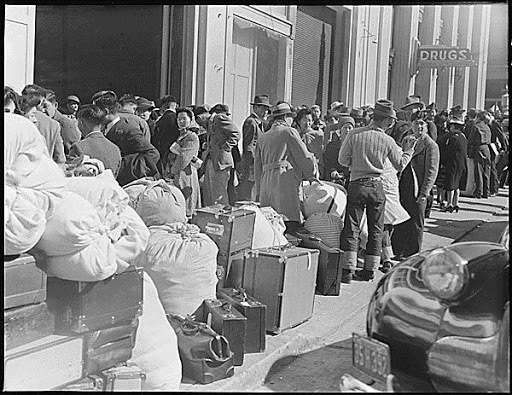
    <summary type="html"><![CDATA[<p><strong><em>Internees at Topaz went to school and participated in all kinds of classes, including art. One art student at Topaz went on to illustrate one of the most iconic Disney animation scenes of all time.</p></strong></p><img src="https://www.intermountainhistories.org/files/fullsize/1cc7d8583516881c7661310b76cbf7b9.jpg" alt="Preparing to Leave San Francisco" /><br/><p>The devastation of Pearl Harbor and the hysteria of the Second World War set the stage for white Americans to indulge their racist attitudes. Despite Japanese Americans showing no verifiable signs of sedition, many American citizens saw them as enemies who could not be trusted. Those of Japanese ancestry who lived along the Pacific coast were forced to enter inland internment camps like Topaz, Utah, for the duration of the war. Despite having had their rights disregarded, many of these prisoners continued to develop their talents. One such prisoner was a boy named Willie Ito, who went on to create a piece of art that would be seen by millions of Americans for years to come. </p><p>Willie was born in 1934 and grew up in San Francisco California. One of the most influential experiences in young Willie’s life was going to a movie theater in San Francisco and seeing the film Snow White and the Seven Dwarfs (1937). It was then that he knew that he wanted to be an animation cartoonist. After President Roosevelt signed Executive Order 9066 in February 1942, Willie and his family were interned at Tanforan racetrack in San Francisco. A few months later the government relocated the Tanforan prisoners to a permanent camp in Topaz, Utah. In Topaz Willie went to school and took art classes. While many of the kids liked to play games and baseball after school, Willie liked to go back to his family’s assigned barrack and draw. Willie would draw on the Sears Roebuck catalogs that were delivered every three months, making flipbooks in the margins of the expired catalogs.</p><p>Willie and his family left Topaz in early 1945. While studying at Chouinard Art Institute in Los Angeles, Willie landed the dream job of working at Walt Disney Studios. One of his first projects was animating the famous spaghetti scene in the film Lady and the Tramp. Willie also worked at Warner Bros and Hannah-Barbera Studios before returning to Walt Disney to work on consumer products. More recently Willie has illustrated two children's books, Hello Maggie (2007) and Boy of Heart Mountain (2010). These books detail some of the experiences of the people of Japanese descent who were incarcerated during World War II. Willie has chosen to use his artistic skill to educate others on the great injustices done to him and many other Americans of Japanese descent who were here at Topaz as well as the other internment camps across the country.</p><p><em><strong><a href="https://www.intermountainhistories.org/items/show/299">For more (including 3 images) view the original article</a></strong></em></p>]]></summary>
    <published>2019-02-13T10:34:59+00:00</published>
    <updated>2026-04-17T19:32:05+00:00</updated>
    <link rel="alternate" type="text/html" href="https://www.intermountainhistories.org/items/show/299"/>
    <id>https://www.intermountainhistories.org/items/show/299</id>
    <author>
      <name>Marcus Vanderholm and Jillian Manley, Brigham Young University</name>
    </author>
  </entry>
  <entry>
    <title type="html"><![CDATA[Abby Williams Hill’s Artemisia Geyser Pool]]></title>
    <summary type="html"><![CDATA[<p><strong><em>Abby Williams Hill was captivated by the Artemisia Geyser Pool, and for good reason. Though it may not garner as much attention as Old Faithful, Artemisia provides onlookers a unique experience since it does not give any warning signs to indicate when it will erupt. The feeling of surprise and awe of the geyser’s eventual eruption is captured in one of Hill’s best paintings.</em></strong></p><img src="https://www.intermountainhistories.org/files/fullsize/d36be929f8f3d34f4f993d564b77d337.jpg" alt="Artemisia Pool" /><br/><p>The Artemisia Geyser Pool sits just below the Gem Pool and Atomizer Geyser in the Upper Basin of Yellowstone Park. The three of these make up the Cascade Group that erupts for a duration of 15–25 minutes once or twice a day. Artemisia is unique because it does not give any visible warning that indicates when it will erupt. When Artemisia does erupt, however, the force is strong, causing the surrounding area to thump due to the steam bubbles coming from the geyser. Though it has not been the focus of many artists that have come through Yellowstone, Artemisia captivated the painter Abby Williams Hill and was the subject of one of her best paintings. </p><p>Though she was originally from Iowa and spent time in New York training to become an artist, Abby Williams Hill is best known for her work in the American West. After marrying Frank Hill, she moved with him to Tacoma, Washington. There, she became well-known as an artist, and in the early 1900s she was commissioned by the Northern Pacific Railroad to paint the American West as she traveled through it via the railroad. At the time of the assignment, Hill was forty-five, with one son and three adopted daughters. She brought her family along with her on her assignments so they could explore the sites together. Her assignment for the railroad specifically was to paint twenty-two works in the short span of eighteen weeks, in the en plein air style. En plein air is a French term that means outdoors. This style of painting was started and finished while the artist was still outside observing the location, unlike the studio paintings of the past where the artist would sketch while at the location and return back to the studio to finish the work. As a woman, Hill is an interesting and important figure, since many women artists of the time did not receive these types of opportunities, or the recognition that followed. </p><p>In her diary on September 3, 1906, Abby Williams Hill wrote about the Artemisia Geyser Pool, “I have been sketching the Artemisia. We thought it would play, but there was almost no movement of water. There is a small geyser on the formation below it. Ione [Hill’s daughter] and I went to look at it and judging it would soon play, stood to watch it. There came a jarring of the earth and a thumping under our feet. Looking up we saw a ridge of water moving down over the hill towards us as if all the water in the Artemisia had been raised and pushed off over the hill. We ran with all our might, jumped the little gully and climbed the hill where we sat down, but the thumping was so great we ran further. By this time, the water was agitated and soon a great mass was raised a hundred feet, rivers of boiling water poured out. The steam shut off a view of everything else and it was as if we were looking at an eruption in the ocean. The vibration and thumping continued with increased and startling force. It seemed as if a new crater was about to yawn under us.” </p><p>Her painting of Artemisia Geyser Pool depicted a place untouched by humans, yet since she painted in the twentieth century, after Yellowstone was open to the public, this was an unrealistic reality. Historian Laura Edgar writes, “Despite the obvious presence of tourists and the facilities that catered to them, Hill’s paintings depicted only virgin landscapes devoid of any representation of human intervention. She felt strongly that the increased presence of humans in the national parks harmed the pristine natural environment; this opinion grew stronger as the decades passed, resulting in a flurry of correspondence with the US Department of the Interior in the late 1920s and 1930s.” Hill’s painting hearkened back to the time when Yellowstone was first explored by artists. </p><p><em><strong><a href="https://www.intermountainhistories.org/items/show/162">For more (including 3 images) view the original article</a></strong></em></p>]]></summary>
    <published>2018-05-07T23:08:52+00:00</published>
    <updated>2026-04-17T19:32:01+00:00</updated>
    <link rel="alternate" type="text/html" href="https://www.intermountainhistories.org/items/show/162"/>
    <id>https://www.intermountainhistories.org/items/show/162</id>
    <author>
      <name>Emma Tolman, Brigham Young University</name>
    </author>
  </entry>
  <entry>
    <title type="html"><![CDATA[Thomas Moran&#039;s Grand Canyon of the Yellowstone]]></title>
    <summary type="html"><![CDATA[<p><strong><em>Thomas Moran immersed himself  deeply in his Yellowstone work. He documented over thirty different sites, one of his best was the Grand Canyon of the Yellowstone.  Enthralled with Yellowstone, Moran started signing some of his works with a “Y” in the middle of his name, Thomas “Yellowstone” Moran.</em></strong></p><img src="https://www.intermountainhistories.org/files/fullsize/bdfbcb15bf2f510059e59a2e5d60ff65.jpg" alt="The Grand Canyon of the Yellowstone" /><br/><p>The Grand Canyon of the Yellowstone, carved out by the Yellowstone River, stretches 1,500 – 4,000 feet wide, and 800 – 1,200 feet deep. After the Yellowstone Caldera, essentially a giant volcano, erupted more than 600,000 years ago, the canyon was formed through lava flow and the increased rate of erosion caused by these flows. The Canyon has captivated visitors for a long as the park has been open, not only because of its striking form, but also because of its reputation as the subject of one of Thomas Moran’s grandest paintings.</p><p>Thomas Moran’s Grand Cañon [sic] of the Yellowstone is one of his most recognizable paintings. Moran was a part of the Hayden Geological Survey in 1872. The survey was federally funded, and its purpose was to document the landscape and geological features of the Yellowstone area. This expedition, with Moran’s artwork as a central component, was influential in establishing Yellowstone as the first national park in America. </p><p>Thomas Moran’s painting mirrors the grandness of the canyon with its giant canvas size of 7 feet by 12 feet.  Peter H. Hassrick writes that, “Some observers, when they saw the large canvas, wondered aloud when the image would move.” This type of enormous painting was a key characteristic of the Rocky Mountain School of artists. The goal of the Rocky Mountain School, patterned after the Hudson River School, was to create art that transported people into the imagined space, that would encourage them to visualize themselves in the depicted location. Admittedly a lofty goal, the artists usually combined different views of the area into one whole creating, an image that one could never witness in real life.</p><p>Writing to Ferdinand Vandeveer Hayden, leader of the Hayden Geological Survey, Thomas Moran said of the Grand Canyon of the Yellowstone, “I have always held that the Grandest, Most Beautiful, or Wonderful in Nature, would, in capable hands, make the grandest, most beautiful, or wonderful pictures, and that the business of a great painter should be the representation of great scenes in Nature . . . I cast all my claims to being an Artist, into this one picture of the Great Cañon and am willing to abide by the judgment upon it.” </p><p><em><strong><a href="https://www.intermountainhistories.org/items/show/160">For more (including 5 images) view the original article</a></strong></em></p>]]></summary>
    <published>2018-05-07T22:04:07+00:00</published>
    <updated>2026-04-17T19:32:01+00:00</updated>
    <link rel="alternate" type="text/html" href="https://www.intermountainhistories.org/items/show/160"/>
    <id>https://www.intermountainhistories.org/items/show/160</id>
    <author>
      <name>Emma Tolman, Brigham Young University</name>
    </author>
  </entry>
  <entry>
    <title type="html"><![CDATA[Albert Bierstadt&#039;s Old Faithful]]></title>
    <summary type="html"><![CDATA[<p><strong><em>Albert Bierstadt was fascinated by the geysers of Yellowstone. In all his life, he had never seen anything as captivating as these bubbly, explosive fountains. His painting of Old Faithful is one of his best works.</em></strong></p><img src="https://www.intermountainhistories.org/files/fullsize/d2c03b869049797a3d1bfc53ed6f9781.jpg" alt="Old Faithful" /><br/><p>Old Faithful is a geological wonder with its consistent eruption schedule. It is not the largest or most regular geyser in Yellowstone National Park, yet it has become one of the most popular sites in Yellowstone. Albert Bierstadt, like tourists of today, was amazed by Old Faithful and his painting captures this feeling. </p><p>Albert Bierstadt was born in Germany in 1830 but moved to the United States at the age of one. Early on in his life, Bierstadt showed interest in art. To jumpstart his career he returned to Germany to study art and later trained with the Hudson River School in New York. The Hudson River School’s style was focused on grand paintings of landscapes with a glowing light. Using the skills he learned in his training, Bierstadt began painting landscapes in the West. Well-known for his works in Yosemite, Bierstadt decided he wanted to explore another American geological wonder. Though Albert Bierstadt was not on the Hayden Geographical Survey of 1872, he was visiting Yellowstone at the same time as Moran and Jackson. He also believed that he was a more accomplished artist than those on the Hayden Survey. </p><p>One of his grandest works in Yellowstone was his Old Faithful. As noted in the introduction, Bierstadt was enthralled by the geysers in Yellowstone. Peter Hassick expands on Bierstadt’s captivation, “Bierstadt’s admitted fascination with Yellowstone’s geysers is reflected in the number of paintings that he produced using them as themes. . . . Contrasted with his conventional, monumental landscapes infused with Claudian glow and other theatrical effects, these studies are intimate and naturalistic.” </p><p>Albert Bierstadt said of his experience in Yellowstone, “This is not the first season I have spent about the Rocky Mountains, but it is my first introduction to the geysers of the Yellowstone. To use the word wonderful is simply to use a relative term. But I have never been so impressed with the infinite divinity of the types of nature as I was by the same geysers. I went West with the fixed intention of spending the greater part of my time about the geysers, and also to study them as thoroughly as I could in the protracted period I had allotted to myself. I have always had an inclination towards geological studies, and here I had a whole world of geological phenomena spread before me.” </p><p><em><strong><a href="https://www.intermountainhistories.org/items/show/159">For more (including 3 images) view the original article</a></strong></em></p>]]></summary>
    <published>2018-05-06T03:49:56+00:00</published>
    <updated>2026-04-17T19:32:01+00:00</updated>
    <link rel="alternate" type="text/html" href="https://www.intermountainhistories.org/items/show/159"/>
    <id>https://www.intermountainhistories.org/items/show/159</id>
    <author>
      <name>Emma Tolman, Brigham Young University</name>
    </author>
  </entry>
</feed>
