<?xml version="1.0" encoding="UTF-8"?>
<feed xmlns="http://www.w3.org/2005/Atom">
  <title type="text">Intermountain Histories</title>
  <updated>2026-04-17T19:32:15+00:00</updated>
  <generator uri="http://framework.zend.com" version="1.12.20">Zend_Feed_Writer</generator>
  <link rel="alternate" type="text/html" href="https://www.intermountainhistories.org/"/>
  <link rel="self" type="application/atom+xml" href="https://www.intermountainhistories.org/items/browse?output=rss2"/>
  <id>https://www.intermountainhistories.org/</id>
  <author>
    <name>Intermountain Histories</name>
    <uri>https://www.intermountainhistories.org</uri>
  </author>
  <link rel="hub" href="https://pubsubhubbub.appspot.com/"/>
  <entry>
    <title type="html"><![CDATA[Museum of Peoples and Cultures (MPC)]]></title>
    <summary type="html"><![CDATA[<p><strong><em>The Museum of Peoples and Cultures serves as BYU's anthropological museum, displaying research and artifacts collected by staff, faculty, and students. Throughout its existence, the MPC has been actively involved in the community of Provo and the field of anthropology. </em></strong></p><img src="https://www.intermountainhistories.org/files/fullsize/383a583dacdc79204699da675ee3e736.jpg" alt="The Museum of Peoples and Cultures" /><br/><p><span style="font-weight:400;">The Museum of Peoples and Cultures (MPC) makes up one of several museums at Brigham Young University. The MPC features the archaeological and anthropological findings and work of both staff, university faculty, and students. Since its original inception in the late 1940s, the museum has served as both entertaining and educational. </span>
<span style="font-weight:400;">In 1946, BYU’s archaeological department was formed. The resulting research and artifacts called for a showcase, which was housed on the lower floor of the <a href="https://www.intermountainhistories.org/items/show/384">Eyring Science Center</a>. Soon, in 1961, the museum moved to the basement of the <a href="https://www.intermountainhistories.org/items/show/136">Maeser Building</a>. Twenty years later, the museum settled into <a href="https://www.intermountainhistories.org/items/show/568">Allen Hall</a> and received its name, the Museum of Peoples and Cultures. Here, the MPC featured a plethora of exhibits, including some curated and crafted by students through the anthropology department. In 1985, the museum was cited as having more than 500,000 artifacts from various parts of the world including the Middle East and Afrcia. Currently, the exhibits focus on Mesoamerican, Ute, Freemont, and early settler history. </span>
<span style="font-weight:400;">In 1985, the Museum hosted an exhibit on Tell Qarqur, a major archaeological site in Western Syria. One artifact was a ceramic “Mother Goddess” figurine symbolizing fertility. That same year, the school began fundraising efforts to expand current facilities housing the collections. Additionally, they announced a $10 million project for a complex of museums including a new building for the Museum of Peoples and Cultures, a fine arts museum, an earth sciences museum, an exhibit hall, and a language pavilion. However, the Museum of Peoples and Cultures did not get a new building until 2015, when it moved to its current location. </span>
<span style="font-weight:400;">The MPC was also widely involved in the community of Provo and the field of archaeology. In 1986, the museum hosted a dig for students and community members in Southern Utah of an Anasazi village ruin. The Anasazi people were dated to live in the area between 1150 and 1250 A.D.  The museum also sponsored a dig in Salt Lake City when, while excavating for new condominiums, construction workers came upon a pioneer cemetery and two pit houses over 800 years old. </p><p>The museum became a popular destination for field trips. Also for kids, the museum hosted “Stories from Around the Globe.” This was an interactive storytelling experience for toddler and preschool-age children. Storytellers narrated folk tales from different cultures. Then the children participated in an activity inspired by the story. For older patrons, the museum held block parties and date nights. Also, in an effort to draw in crowds during the priesthood session held by The Church of Jesus Christ of Latter-day Saints, which only male members of the church attended, the museum held a “Girl’s Night Out” event.</span>
<span style="font-weight:400;">The Museum of Peoples and Cultures' contribution to Provo and to the archaeological community has been recognized numerous times. In 2011, the museum won the “Leadership in History” award from the American Association for State and Local History for their exhibit, “Beneath Your Feet: Discovering the Archeology of Utah Valley.” Additionally, in 2017-2018, the museum was ranked one of the 50 Most Impressive College Museums. The museum continues to house artifacts and exhibits and is open to the public Monday through Friday from 9-5. </span></p><p><em><strong><a href="https://www.intermountainhistories.org/items/show/700">For more (including 7 images) view the original article</a></strong></em></p>]]></summary>
    <published>2023-02-06T19:17:17+00:00</published>
    <updated>2026-04-17T19:32:15+00:00</updated>
    <link rel="alternate" type="text/html" href="https://www.intermountainhistories.org/items/show/700"/>
    <id>https://www.intermountainhistories.org/items/show/700</id>
    <author>
      <name>Lindsey Meza, Brigham Young University&amp;#32;&amp;amp;&amp;#32;Makoto Hunter, Brigham Young University </name>
    </author>
  </entry>
  <entry>
    <title type="html"><![CDATA[Danger Cave]]></title>
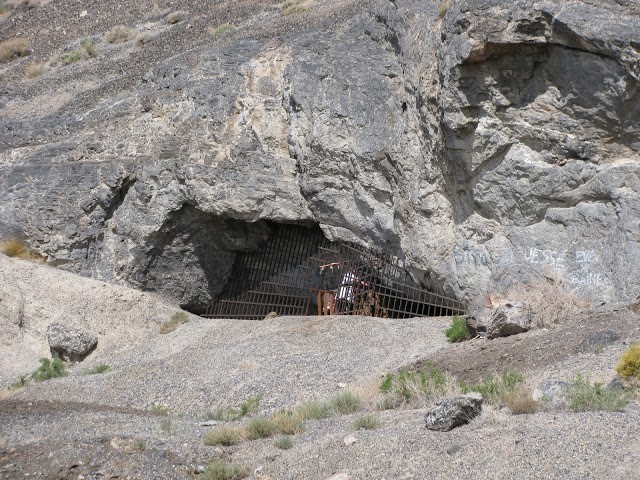
    <summary type="html"><![CDATA[<p><strong><em>Formed by the waves of Lake Bonneville, Danger Cave served as the home to Native American as far back as 11,000 years.  The excavation of Danger Cave by a University of Utah archaeological team in the mid-20th century has given us unique insight to the lives of those Native people who survived in the harsh desert climate of the Great Basin.</em></strong></p><img src="https://www.intermountainhistories.org/files/fullsize/10c11ecad6c13f685f449f95dfb39142.jpg" alt="Danger Cave Fenced Off" /><br/><p>The barren deserts of North America have always been viewed with fascination due to the lack of natural resources. Early human survival in this region was extremely hard, and the mid-20th century excavation of Danger Cave greatly expanded understanding of regional history. Danger cave is an archaeological site located in the Bonneville Basin of western Utah, north of Wendover and west of the Bonneville Salt Flats. Danger Cave State Park Heritage Area became a National Historic Landmark in 1961 and a state park in 1968. This cave is one of the most significant archaeological sites in North America because it reshaped the way that we think about Utah’s Native peoples.</p><p>Danger Cave was formed about 13,000 years ago under the waves of Lake Bonneville. When the water levels of the lake lowered, people began living in the cave. Native Americans are thought to have begun living inside of this cave about 11,000 years ago, right after the end of the Ice Age. It had been inhabited by different native people consistently after that, so archaeologists discovered layers and layers of artifacts in this cave. These native people left behind fascinating evidence of their existence inside of Danger Cave. </p><p>Despite the challenging working conditions in the cave, which included dust and heat, the cave was excavated throughout the 1940s and 1950s by anthropology students attending the University of Utah. Jesse Jennings was a faculty member at the University who led the exaction project that has reshaped the way we think of the early people of the Great Basin. The large amount of artifacts found makes it one of the most important sites in North American history and gives us a better idea of how early Native Americans survived in the barren desert of western Utah. </p><p>The extremely dry climate in the cave made it a perfect place to store artifacts and human remains for over 11,000 years. Inside of the cave textiles, baskets, pottery, animal bones, plant remains, weapons, chipped stones, and leather scraps were all found. Radio-carbon dating proved this site to be one of the oldest known Native American sites in North America. </p><p>The artifacts and data collected from Danger Cave taught us about the previously unknown ancient cultures of the western deserts. Findings in the cave suggest that these people lived in relatively small groups of 15-30 individuals, that consist mostly of extended families. The search for food was what dictated their lives, and these groups moved around constantly searching and they had little time for leisure activities. They had no building projects and no complicated rituals. The main focus of their lives were to survive and to have enough food. </p><p><em><strong><a href="https://www.intermountainhistories.org/items/show/95">For more (including 4 images) view the original article</a></strong></em></p>]]></summary>
    <published>2018-01-16T18:22:15+00:00</published>
    <updated>2026-04-17T19:31:59+00:00</updated>
    <link rel="alternate" type="text/html" href="https://www.intermountainhistories.org/items/show/95"/>
    <id>https://www.intermountainhistories.org/items/show/95</id>
    <author>
      <name>Ashley Olson, Brigham Young University</name>
    </author>
  </entry>
</feed>