<?xml version="1.0" encoding="UTF-8"?>
<feed xmlns="http://www.w3.org/2005/Atom">
  <title type="text">Intermountain Histories</title>
  <updated>2026-04-17T19:31:58+00:00</updated>
  <generator uri="http://framework.zend.com" version="1.12.20">Zend_Feed_Writer</generator>
  <link rel="alternate" type="text/html" href="https://www.intermountainhistories.org/"/>
  <link rel="self" type="application/atom+xml" href="https://www.intermountainhistories.org/items/browse?output=rss2"/>
  <id>https://www.intermountainhistories.org/</id>
  <author>
    <name>Intermountain Histories</name>
    <uri>https://www.intermountainhistories.org</uri>
  </author>
  <link rel="hub" href="https://pubsubhubbub.appspot.com/"/>
  <entry>
    <title type="html"><![CDATA[Brigham Young Academy]]></title>
    <summary type="html"><![CDATA[<p><strong><em>Since the founding of The Church of Jesus Christ of Latter-day Saints, Mormons have emphasized the importance of education. An 1832-33 revelation given by Joseph Smith stated that church members were to learn not just religious doctrines, but "Of things both in heaven and in the earth, and under the earth; things which have been, things which are, things which must shortly come to pass; things which are at home, things which are abroad; the wars and the perplexities of the nations, and the judgments which are on the land; and a knowledge also of countries and of kingdoms." In 1876, the LDS Church founded an Academy to accomplish that goal. </em></strong></p><img src="https://www.intermountainhistories.org/files/fullsize/aa0fd4e6a984449347cb9be2067e35d6.jpg" alt="Brigham Young Academy " /><br/><p>In the mid-nineteenth century, Mormon leaders became concerned when the youth in their church began attending missionary schools sponsored by other Christian denominations. They wanted their youth to obtain quality educations, but to do so from faithful LDS teachers. On October 16, 1875, Brigham Young moved forward with his educational goals for the Church by purchasing the Timpanogos branch of the University of Deseret in order to found Brigham Young Academy. Young declared that this school would teach secular and religious knowledge.</p><p>January 3, 1876 marks the first day of classes at Brigham Young Academy, with a meager 29 students registered.  Karl G. Maeser served as the first permanent principal of BYA from 1876-1892. He used his talent in education and faith in God to transform the school. When he arrived at BYA, he remarked, “There were no records, not much system, and certainly no regularity." He found the "premises inadequate, the facilities limited, students few in number and poorly prepared, and financial conditions exceedingly discouraging."  Fortunately, Maeser was ready for the challenge. He trained teachers, taught classes, and enforced a strict list of rules for behavior. Under his leadership, BYA flourished scholastically. </p><p>In January of 1892, Benjamin Cluff was made BYA’s new principal. BYA’s financial situation was at an all-time low, but Cluff worked diligently through continual fundraisers to keep the school afloat. However, despite his best efforts, Cluff knew that the only way to truly save the school was to have the Academy incorporated by the Church. Despite the Church being in its own precarious financial situation, it had invested too much into BYA to see it disappear, and they agreed to take on financial responsibility for the school. Because of Principal Cluff, BYA was saved. In 1903 BYA was changed to Brigham Young University, and to this day pursues the stated goal of providing education that is spiritually strengthening, intellectually enlarging, character building, and that leads to lifelong learning and service.</p><p><em><strong><a href="https://www.intermountainhistories.org/items/show/2">For more (including 6 images) view the original article</a></strong></em></p>]]></summary>
    <published>2017-01-10T21:00:56+00:00</published>
    <updated>2026-04-17T19:31:57+00:00</updated>
    <link rel="alternate" type="text/html" href="https://www.intermountainhistories.org/items/show/2"/>
    <id>https://www.intermountainhistories.org/items/show/2</id>
    <author>
      <name>Ezra Anderson, Brigham Young University</name>
    </author>
  </entry>
  <entry>
    <title type="html"><![CDATA[Resiliency in Historic Bluff Utah: An analysis of the history of Bluff, Utah, including the Hole-in-the-Rock expedition, the settlement of Bluff, and Bluff in the 20th century.]]></title>
    <summary type="html"><![CDATA[<p><strong><em>The history of Bluff, Utah provides a case study in resiliency.</em></strong></p><img src="https://www.intermountainhistories.org/files/fullsize/4841867b4f3971d64b232a811e9f10be.jpg" alt="Highway entrance to Bluff" /><br/><p>The white pioneer settlers who trekked to Bluff Utah in 1880 overcame tremendous challenges to simply arrive at their intended destination. The voyage across the state from Salt Lake City was a long and arduous one. Josephine "Aunt Jody" Woods lamented, "The life was frightened right out of us all. I don't know what they call this place but I call it the Devil's Twist & that is a Sunday name for it. For of all the roads on earth, I don't think there is any worse than they are [here]. It is no earthly use for me to try to describe the road or the county. It is the most god forsaken & wild [looking] country that was ever traveled." One stage in the journey required the blasting of a large hole cliffside rocks, and lowering wagons down the steep decline to the Colorado River - a site known as "Hole in the Rock." Despite the difficulties, the journey was made without a single loss of life. </p><p>Once they reached the site they would call Bluff, the pioneers had many difficulties that included facing the environment and the Native Americans that were there. The river had to be tamed, resources gathered, and buildings constructed. All of these proved difficult, but possible for the pioneers. Irrigation needed to be erected to create land suitable for farming, but was repeatedly washed away when the floods rose. The early settlers lived in constant fear of the river. "I remember about the river. We used to be so deathly afraid of that river because at that time we had so much flooding. We were scared to death the town was going to be washed away. It just started cutting in so bad that it was almost up to the houses," recalled Nadine Adams. </p><p>They were also in constant fear of the Native peoples of the region. Concerning Native theft of livestock, Albert Lyman related, "Eleven of the horses had been stolen from Bluff, and two of them had been gone a year. When the Indians saw the intention of the white men to claim these horses, they sent up a yell, and guns flashed quickly into sight." </p><p>The resilient residents continued to face difficulty into the 20th century as their economy faced various boom-bust cycles because of shifts between agriculture, livestock, and mining. Eventually the town's population settled around 300 individuals. The journal entries of these people demonstrate both the trials they faced and their resilient nature in overcoming them. </p><p><em><strong><a href="https://www.intermountainhistories.org/items/show/5">For more (including 3 images) view the original article</a></strong></em></p>]]></summary>
    <published>2017-01-10T21:50:21+00:00</published>
    <updated>2026-04-17T19:31:57+00:00</updated>
    <link rel="alternate" type="text/html" href="https://www.intermountainhistories.org/items/show/5"/>
    <id>https://www.intermountainhistories.org/items/show/5</id>
    <author>
      <name>Ross Platt, Brigham Young University</name>
    </author>
  </entry>
  <entry>
    <title type="html"><![CDATA[Community and Construction of the St. George Temple]]></title>
    <summary type="html"><![CDATA[<img src="https://www.intermountainhistories.org/files/fullsize/a7740075124b728e132835b7e00989be.jpg" alt="St. George Temple Before Sunset" /><br/><p>Brigham Young, with hopes of encouraging self-sufficiency within the church, called Mormon pioneers to settle southern Utah, a desolate desert. Though they established a growing community, and soon joined together to build an LDS Temple. The building of the temple served to unite the fledgling community.  The temple construction was no easy feat, as the ground for the site chosen by Brigham Young was marshy; thus the Saints had to pack lava rock tightly by pounding it with a lead-filled cannon in order to build a safe enough foundation.  Members volunteered one out of 10 days to work; women made drapery and clothing for the men; families donated time, labor, china dishes, and sometimes, even hair (as the stories go). The framing of such an incredible building was a massive undertaking in design and was only possible as members and non-members alike worked together to create a place to worship the Lord. </p><p>The first design of the temple steeple was, as Brigham Young described it, “short” and “squatty”  However, the temple was almost completed so they chose to keep it.  A year later on an October afternoon, after Brigham Young’s death, a huge lightning storm overtook St. George, and lightning caught the steeple on fire. The rain put the fire out, but the steeple was destroyed while the rest of the roof and walls were left perfectly intact. Needless to say, when they rebuilt it they built the steeple taller, possibly hoping to appease Brigham Young.  The construction of the whole temple took about 7 years, and it facilitated building of more housing for the influx of workers; economically improved the community through work at sawmills, wood camps, and stone quarries; and equalized the financial situation of everyone. George A. Smith said, “We were united in everything we did in those days. We had no rich, nor poor.”  </p><p>Brigham Young said about the LDS members in southern Utah, “I will say that we have had a blessed time, such a time as no other people on the earth have enjoyed for many centuries, that we have any knowledge of.”  The building of the St. George temple, the trials, the joys, and the sacrifice created a unified foundation on which the rest of St. George’s growth was built upon. </p><p><em><strong><a href="https://www.intermountainhistories.org/items/show/6">For more (including 3 images) view the original article</a></strong></em></p>]]></summary>
    <published>2017-01-10T23:10:12+00:00</published>
    <updated>2026-04-17T19:31:57+00:00</updated>
    <link rel="alternate" type="text/html" href="https://www.intermountainhistories.org/items/show/6"/>
    <id>https://www.intermountainhistories.org/items/show/6</id>
    <author>
      <name>Mikell Smith, Brigham Young University</name>
    </author>
  </entry>
  <entry>
    <title type="html"><![CDATA[The Diverse Roles of Fort Douglas]]></title>
    <summary type="html"><![CDATA[<img src="https://www.intermountainhistories.org/files/fullsize/94d54e2a1b5155f87bcd5cd902618adb.jpg" alt="Camp Douglas, 1866" /><br/><p>Fort Douglas, originally named Camp Douglas after the recently deceased Illinois senator Stephen A. Douglas, was established in 1862 at the onset of the Civil War. Its primary concern was the protection of the Overland Mail Route, which was left unattended as most of Abraham Lincoln’s frontier troops went to fight against the South. Led by Colonel Patrick E. Connor, volunteers from California and Nevada guarded the Overland Mail Route from Indian attacks and also kept a wary eye on the Mormons, a wild card in the fight between the North and the secessionist South, and a potentially dangerous group with radical ideas.</p><p>After the war, the volunteers were replaced by army regulars as Camp Douglas turned into Fort Douglas, a supply center for Western military cavalries and Regimental Headquarters that trained soldiers for service elsewhere. One of the most prominent units to go through Fort Douglas was the 24th Infantry, a unit of black soldiers and white officers, that fought in Cuba during the Spanish-American War. </p><p>During the First World War, Fort Douglas was used as a German internment camp, holding an estimated 900 prisoners. During the Second World War,  after the bombing of Pearl Harbor, it  became the headquarters of the Ninth Service Command, because it was more landlocked than the previous location (San Francisco) which would provide more protection against foreign attacks. It once again served as an internment camp, and also as a finance center for the military. After World War II, Fort Douglas gave parcels of its land away to the nearby University of Utah. In 1974 it became an official US Army Museum and in 1988 it was turned over entirely to the University of Utah, which continues to run it under the sponsorship of the Utah National Guard</p><p><em><strong><a href="https://www.intermountainhistories.org/items/show/7">For more view the original article</a></strong></em></p>]]></summary>
    <published>2017-01-10T23:45:39+00:00</published>
    <updated>2026-04-17T19:31:57+00:00</updated>
    <link rel="alternate" type="text/html" href="https://www.intermountainhistories.org/items/show/7"/>
    <id>https://www.intermountainhistories.org/items/show/7</id>
    <author>
      <name>Ina Haskell, Brigham Young University</name>
    </author>
  </entry>
  <entry>
    <title type="html"><![CDATA[Escape and Death at Topaz]]></title>
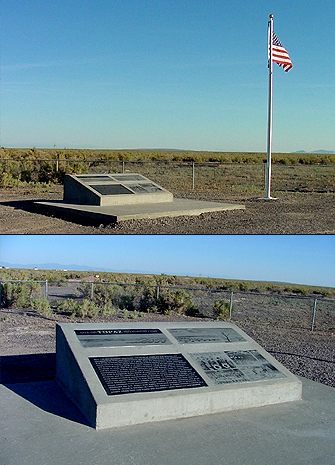
    <summary type="html"><![CDATA[<p><strong><em>A general description of the camp of Topaz and the story of attempted escape and death.</em></strong></p><img src="https://www.intermountainhistories.org/files/fullsize/5214fd4fe0ca6f426e3bd8d3097e073a.jpg" alt="Monument at Topaz Camp Site" /><br/><p>Japanese internment reached its long fingers deep into the interior states of the U.S. not sparing the state of Utah.  Utah's contribution to this program came in the form of Topaz.  Located 15 miles from Delta, Utah, Topaz was created by the War Relocation Agency to house up to 9,000 evacuees.  It would, at its peak, reach a total population 8,232 individuals, and, over the course of its life, Topaz would serve as the home for 11,212 individuals.  These first groups of individuals came mostly from the Tanforan race track that had been converted temporarily into an internment camp.  They were moved into the camp beginning on September 11, 1942.  The camp was constructed in blocks with 34 blocks being devoted to residencies and 8 being administrative, including a hospital built on the site .  Overall, Topaz appeared as a well-developed city with schools, libraries, churches, and other features of a normal community .</p><p>The lack of normalcy in this community was encapsulated by a single event in 1943.  An older gentleman, James Wakasa, was killed while allegedly trying to escape from the camp by crawling under the barbed wire fence.  The local newspaper reported the initial story, that Wakasa had been attempting this escape and was warned four times by the guard before he was fatally shot .  However, a later report by the military showed that he had in fact been standing near the fence when he was shot.  Further investigation revealed that many of the military personnel assigned to guard the camp were combat veterans and this particular guard had seen time in the Pacific, perhaps compromising his objective judgment.  The death of Wakasa brought to the forefront the inherent tensions that existed within the camp between the Japanese American evacuees and the Caucasian administration.  Despite efforts made within the leadership of the camp to eliminate this form of distrust, the fact that the war was still going on and Caucasian Americans were distrustful of most Japanese Americans, citizens or not, was one that could not be passed over lightly.</p><p>In a cruel irony of wartime circumstances, Utah became a place not for refugees as it had been for Mormon Pioneers in the nineteenth century, but one for prisoners of war within their own country.</p><p><em><strong><a href="https://www.intermountainhistories.org/items/show/8">For more (including 3 images) view the original article</a></strong></em></p>]]></summary>
    <published>2017-01-10T23:57:31+00:00</published>
    <updated>2026-04-17T19:31:58+00:00</updated>
    <link rel="alternate" type="text/html" href="https://www.intermountainhistories.org/items/show/8"/>
    <id>https://www.intermountainhistories.org/items/show/8</id>
    <author>
      <name>Benjamin Sowards, Brigham Young University</name>
    </author>
  </entry>
  <entry>
    <title type="html"><![CDATA[Memorializing Mountain Meadows]]></title>
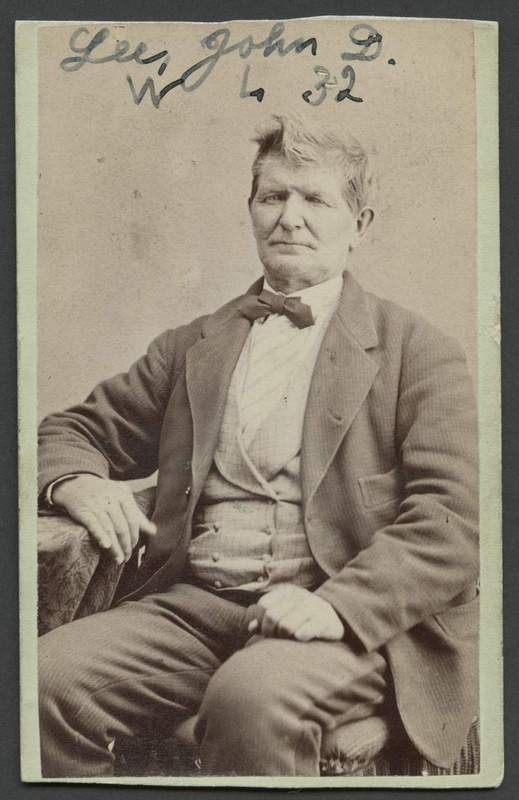
    <summary type="html"><![CDATA[<p><strong><em>This monument honoring the victims of the Mountain Meadows Massacre is a sober one. It tells a story of fear, radicalism, and tragedy. </em></strong></p><img src="https://www.intermountainhistories.org/files/fullsize/52f1afbf2035519af22f18d37ca1543e.jpg" alt="Mountain Meadows Massacre Monument" /><br/><p>In the mid-1850s, the Mormons of Utah were not on friendly terms with the United States of America. Previous persecutions from the government caused Mormons to be distrustful of the United States. The United States saw the Mormon theocracy that existed in Utah and feared its disloyalty. This caused the Utah War, a cold war between the territorial and federal governments. Droughts and pestilence in the mid-1850s caused an extremist movement in Utah called the Mormon Reformation with powerful rhetoric, including a religious capital punishment. The atmosphere of Utah at the time was hostile. </p><p>The Baker-Fancher party of emigrant families was passing through the Southern end of Utah and rumors went with them. Local Mormons feared their intentions and assembled militia and local Paiutes to attack. In a series of attacks from September 7-11, 1857, 120 men, women, and children were killed, leaving only 17 small children alive. After much controversy over who was at fault for the massacre and the extensive efforts to cover up and understand, John D. Lee, one of the men who led the assault, was ultimately convicted and sentenced to death. </p><p>The first monument was built by James H. Carleton in 1859 when he was investigating the massacre for the United States. In shock of what he had seen, he felt the need to build a monument by stacking stones atop one another with a cross at the top. The monument was repeatedly destroyed and rebuilt over the years. Calls for a more honorable and permanent monument were made by the descendants of the Baker-Fancher party and Mormon President Gordon B. Hinckley. While the permanent monument was being built in August 1999, a backhoe dug up the bones of 28 massacre victims. Much controversy went behind whether to study them or to honor them through reburial in time for the dedication. Utah Governor Mike Lee made the decision to not spoil the commemoration of the dead with controversy. The decision was made to honor the dead and allow for the healing of old wounds. </p><p>Historian Levi Peterson likens learning about the massacre to a Greek tragedy. Tragedies tell a story of an honorable hero who falls under a gross misunderstanding. When we view another in the midst of a tragedy, we are capable of escaping our own tragic emotions and seek for healing through catharsis. As one views this monument, one may come seeking healing of their own mistakes.</p><p><em><strong><a href="https://www.intermountainhistories.org/items/show/9">For more (including 4 images) view the original article</a></strong></em></p>]]></summary>
    <published>2017-01-11T00:17:39+00:00</published>
    <updated>2026-04-17T19:31:58+00:00</updated>
    <link rel="alternate" type="text/html" href="https://www.intermountainhistories.org/items/show/9"/>
    <id>https://www.intermountainhistories.org/items/show/9</id>
    <author>
      <name>Jason Colver, Brigham Young University</name>
    </author>
  </entry>
  <entry>
    <title type="html"><![CDATA[The Nunnery]]></title>
    <summary type="html"><![CDATA[<img src="https://www.intermountainhistories.org/files/fullsize/7fd8911778918bad54a0a8a8d8942b72.jpg" alt="Lodge interior. St. Anne&#039;s Retreat. " /><br/><p>Known by various names, including Hatch's Camp, Forest Hills, Pine Glenn, St. Anne's Retreat, and the Nunnery, this historic site is about 6 miles up Logan Canyon in the middle of the Cache National Forest. This former summer camp has been listed on top haunted lists of the US. </p><p>The first owners and developers of the land were the Hatch and Odlum families. Boyd and Anne Hatch and Floyd and Hortense Odum not only developed this land together, but also went into business together starting in the 1920’s and soon became millionaires due to their entrepreneurial efforts. In the 1950s the Hatch family donated the property to St. Thomas Aquinas Parish in Logan. which gladly accepted the property on behalf of the Catholic Church and renamed the camp St. Anne's Retreat. It was only after the Catholic church took over the ownership of the Hatch property that rumors began to take hold of the community, filling the communal mind with images of drowning babies and Satanic nuns. Gary Topping, the archivist of the Catholic Diocese of Salt Lake City, is unaware of any actual crime that would taint the site's reputation in the era when the church used the property as a resort and was unable to find any evidence of any incident in the records of St. Thomas Aquinas Parish. A reporter for the Deseret Morning News was also unable to unearth any evidence backing up local legends. This leads many to believe that these horror stories were created from an environment of prejudice against non-LDS religions in Utah. </p><p>In 1995, Jesse Smith Bushman, a BYU graduate student, conducted a study in which he interviewed two Catholic priests in Utah about their experience as a religious minority in the area during the time that the rumors began about St. Anne’s retreat. These are some of the things they had to say about the LDS church and Catholic relations during the 1950s, “The LDS church and its members tended to overlook the other faiths in the state” and “some adults are still very affected by social barriers and may leave for that reason”. This idea of a “us” versus “them” society is shown in a story that one of the priests shared “about a man who had felt somewhat left out for five years and then after joining the LDS church felt quite accepted." These candid accounts suggest how mistrusting rumors could have started about a non-LDS religious institution. </p><p><em><strong><a href="https://www.intermountainhistories.org/items/show/10">For more (including 2 images) view the original article</a></strong></em></p>]]></summary>
    <published>2017-01-11T00:50:06+00:00</published>
    <updated>2026-04-17T19:31:58+00:00</updated>
    <link rel="alternate" type="text/html" href="https://www.intermountainhistories.org/items/show/10"/>
    <id>https://www.intermountainhistories.org/items/show/10</id>
    <author>
      <name>Taylor Dexter, Brigham Young University</name>
    </author>
  </entry>
  <entry>
    <title type="html"><![CDATA[Early Pioneers of the Deuel Settlement (Centerville, Utah)]]></title>
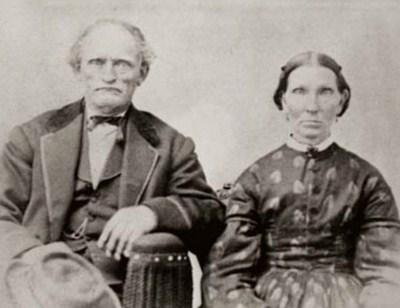
    <summary type="html"><![CDATA[<p><strong><em>After Latter-day Saint (Mormon) pioneers settled in the Salt Lake Valley in the Summer of 1847, Brigham Young, the church's Prophet, began encouraging parties to spread out and colonize new sites in the Great Basin. In the fall of 1847, Thomas Grover began the settlement that would be known as the Deuel Settlement. He was followed by the city’s renown Deuel brothers, Osmyn and William, and other families. The Deuel Settlement, or "City In-Between" was renamed “Centerville” in 1950 as it was situated precisely between the growing communities of Farmington and Bountiful.</em></strong></p><img src="https://www.intermountainhistories.org/files/fullsize/427758a1076e1029c3bff905b768e857.jpg" alt="William Henry  and Eliza Avery Whiting Deuel" /><br/><p>The Deuel Brothers, Osmyn Merrit and William Henry, were central to the early development of this settlement. They were born in Greenfield, New York, on January 1, 1802 and 1812 respectively. They married the daughters of the Nathaniel Whiting family (Eliza Avery and Mary). They were also well-trained blacksmiths and farmers, which in the future proved to be valuable in their pioneer experiences. However, the trait that bonded these two most was their faith, which would lead them to follow the first Mormon prophet Joseph Smith, and eventually join the Brigham Young and the main body of The Church of Jesus Christ of Latter-day Saints to Utah.</p><p>When Joseph Smith was martyred, Brigham Young, the new religious leader, asked the faithful to leave Nauvoo, Illinois and head west. The Deuel brothers and their wives joined 1,500 others in Charles C. Rich company, led by Charles C. Rich, John Taylor, and Parley P. Pratt. They landed in the Salt Lake Valley on October 2, 1847, anxious to build homes before winter. Osmyn and William built a home of roughly hewn logs and clay mortar and stone to shelter their families. The log cabin would prove to not only beat the cold, but also time as it currently stands today, preserved and under the protection of the LDS church. </p><p>In the Spring of 1848, the brothers headed north to become the first families to settle behind Thomas Grover in a community that would be known as the “Deuel Settlement.” They dragged logs down steep mountains to build homes. Due to the lack of metal nails, they used wooden pegs and rawhide thongs to hold the structures together. They built their own furniture, carded their own wool, and knitted their own clothing. The first blacksmith shop was owned and operated by William Deuel. He would not stay in the city though, after Brigham Young sent him on a mission to Southern Utah where he and his family would help settle Panguitch. Osymn, a farmer, however, remained for the remainder of his life as a prominent member of the civic, religious, and commercial community. Remnants of their life can be found today: the Deuel Creek in Centerville Canyon -  named after the brothers; Osymn’s beautiful rock home - one of the first stone homes in the city; and Osmyn’s tombstone in the Centerville City Cemetery.  </p><p><em><strong><a href="https://www.intermountainhistories.org/items/show/12">For more (including 6 images&#32;&amp;&#32;1 video) view the original article</a></strong></em></p>]]></summary>
    <published>2017-01-27T15:51:18+00:00</published>
    <updated>2026-04-17T19:31:58+00:00</updated>
    <link rel="alternate" type="text/html" href="https://www.intermountainhistories.org/items/show/12"/>
    <id>https://www.intermountainhistories.org/items/show/12</id>
    <author>
      <name>Kyle Lemperle, Brigham Young University</name>
    </author>
  </entry>
  <entry>
    <title type="html"><![CDATA[The Startup Building]]></title>
    <summary type="html"><![CDATA[<img src="https://www.intermountainhistories.org/files/fullsize/d3a2613e9767678a7c88f8a99e06b6d4.jpg" alt="Startup Candy Company" /><br/><p>The “Startup Building” located in Provo, Utah was built by William Startup in 1895. The structure housed the Startup Candy Company, one of the earliest candy and ice cream manufacturers in the state. William Startup (Sr.), the founder, began his company in Manchester, England in the 1830’s. William developed a delicious hard candy and named it “American Cough Candy” because of his desire to move to America. Unfortunately, William (Sr.) died in March 1862 before he could come to America, but his son William Daw Startup joined the Church of Jesus Christ of Latter-day Saints (LDS or Mormon) and established the Startup Candy Company in America. In 1938, great grandson Walter Startup Sr. (Walt) was forced to sell the factory due to the Great Depression that swept through the United States. Walt Startup was later able to build up enough funds to buy back the north half of the factory and the box plant. </p><p>Currently, the southern portion houses a number of small startup companies including DevMountain, a coding campus, while the Startup Candy store sits in what used to be the boxing plant. The building has two stories and a basement. Overall the outside design is a mix between commercial and warehouse style. The building has never been demolished and rebuilt, but has had renovation work done to it over the years. One such renovation was made to connect the box plant and factory together to give the Startup building the look we see today. </p><p>Remarkably, the Startup Candy Store is still being run by the Startup’s. Jon Startup (5th-generation) and his wife Stacey continue the tradition of creating and selling candies for the public to enjoy. The Startup Candy factory was designated to the Provo City Historic Landmarks registry on March 21st, 1996.</p><p><em><strong><a href="https://www.intermountainhistories.org/items/show/13">For more (including 4 images&#32;&amp;&#32;1 video) view the original article</a></strong></em></p>]]></summary>
    <published>2017-01-27T16:35:59+00:00</published>
    <updated>2026-04-17T19:31:58+00:00</updated>
    <link rel="alternate" type="text/html" href="https://www.intermountainhistories.org/items/show/13"/>
    <id>https://www.intermountainhistories.org/items/show/13</id>
    <author>
      <name>Marcus Russell, Brigham Young University</name>
    </author>
  </entry>
  <entry>
    <title type="html"><![CDATA[The Herriman Chapels]]></title>
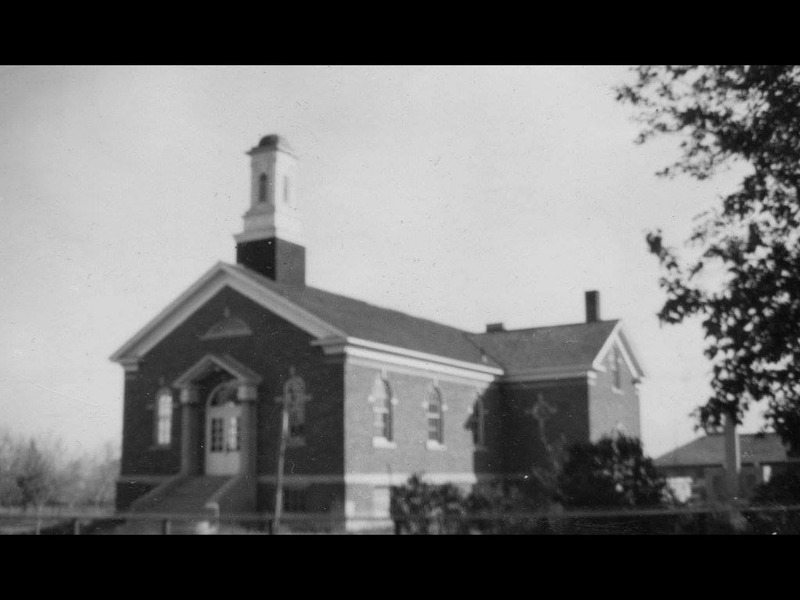
    <summary type="html"><![CDATA[<p><strong><em>Not long ago, Herriman, Utah was a small unheard of farm town.  However, its incredible recent growth has brought attention to the city.  The Deseret News in 2010 reported, “Herriman's population nearly quintupled from 3,246 in 2000 to 18,378 in 2009."  The growth has brought a new look to the city.  There is less farmland, and instead there are more homes, grocery stores, schools, and gas stations.  At the center of this town, lies an old chapel on Pioneer Street. However, it is not the original chapel that members of the Church of Jesus Christ of Latter-day Saints built in the town.</em></strong></p><img src="https://www.intermountainhistories.org/files/fullsize/4f3ba1e1f3801f135330214c0bdb1b0f.jpg" alt="Herriman Chapel, constructed 1925 on the site of the 1879 Rock Church, pictured here before later additions. " /><br/><p>Many believe the LDS church building there today is the original chapel of Herriman. The original chapel, often referred to as the old "Rock Church" was built in 1879 and located approximately where Herriman City Hall stands today - adjacent to the current church building, built in 1925.  The original chapel was only one room and eventually collapsed. The church, had a bishop's office at the very top of the south side of the building.  Below the office was stairs that allowed access to the office, chapel, and basement.  The chapel was on the north end of the building, and was known for its portraits of modern day prophets lining the walls. Downstairs had a simple baptismal font, classrooms, and a single restroom.  Many of the original structures still exist, but the original chapel and baptismal font are no longer in the church.    </p><p>The 1980’s brought a new time in church history for Herriman.  Previously, there was only one LDS congregation (ward), but the town's growth necessitated a second ward. Arvid Bowles became the first bishop of the Herriman First Ward, and Leland Lewis became the first bishop of the Herriman Second Ward. Bowles remembers additions were done to the church at different times throughout his life.  Over the course of time, the church received a new chapel, a cultural hall, classrooms, a Relief Society room, restrooms, and a library.  Bowles took an active part in raising money for the additions and for the church budget in Herriman.  His wife, Joyce, recalls, “They took chickens.  They planted potatoes.  We had to do all that for a lot of years to raise money.” </p><p>Unfortunately, the building has received a lot of wear and tear over the years, especially in the original areas of the building.  Bowles’ daughter, Debra, comments that there is consideration of knocking the church down.  For some though, the building is a reminder of Herriman’s smaller, simpler days and sacrifice.  As Joyce Bowles remembers what her family gave up for the church, she remembers more importantly that her family was blessed.  Joyce stated, “Do you know what’s funny? We never missed it at all…. We got along just fine.” </p><p><em><strong><a href="https://www.intermountainhistories.org/items/show/14">For more (including 7 images&#32;&amp;&#32;1 audio file) view the original article</a></strong></em></p>]]></summary>
    <published>2017-01-30T16:56:55+00:00</published>
    <updated>2026-04-17T19:31:58+00:00</updated>
    <link rel="alternate" type="text/html" href="https://www.intermountainhistories.org/items/show/14"/>
    <id>https://www.intermountainhistories.org/items/show/14</id>
    <author>
      <name>Kaili Sparks, Brigham Young University</name>
    </author>
  </entry>
  <entry>
    <title type="html"><![CDATA[The Rockwell-Dibble Gunfight : A would-be killer puts Orrin Porter Rockwell, &quot;Samson of Utah,&quot; and his supposed invincibility to the test in Lehi, Utah]]></title>
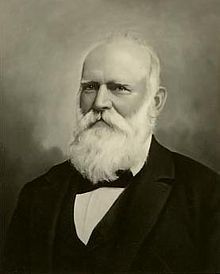
    <summary type="html"><![CDATA[<p><strong><em>Of the many famous lawmen of the American West, many were controversial figures. Mormon convert and former bodyguard to church founder, prophet, and martyr Joseph Smith, Orrin Porter Rockwell was no exception. Learn of his background and a gunfight when Loren Dibble tried to put the legend of his invincibility to an end.</em></strong></p><img src="https://www.intermountainhistories.org/files/fullsize/4118e5734da42c4c69e0e3fa48692ab0.jpg" alt="Rockwell Portrait " /><br/><p>Porter, as he was called, has been credited with killing more outlaws than Wyatt Earp, Bat Masterson, Doc Holliday, and Tom Horn combined - a reputation which earned him the rather menacing nickname, “Destroying Angel.” Having been one of the very first converts to, and members of the burgeoning Mormon Church in New York State in 1830, he became a bodyguard to the church founder and Prophet Joseph Smith. In this role he faced continued anti-Mormon persecution and violence, leading him to hone his skills of marksmanship and fighting. At one point, his family’s home was attacked and burned to the ground, as they watched. Thereafter, he vowed to never be helpless again. While Rockwell was in his service, Joseph Smith promised him that as long as he stayed faithful ito the Church, and did not cut his hair, he too, like the Biblical figure Samson, could not be killed by any man. Smith said that “no bullet or blade can harm thee.” This promise would make Rockwell known as a miraculous modern-day Samson type of figure, and created a great deal of fame, and mythology surrounding him. After Smith’s martyrdom, Porter Rockwell made the trek out west with the rest of the Mormon Church to what would become Utah Territory.</p><p>In Utah, Rockwell quickly resumed his duties as a bodyguard to the new head of the Mormon Church, Brigham Young. He became a Deputy US Marshal and local territorial lawman, working all throughout the territories of the American West. He was known as an expert marksman who carried multiple weapons with him - most notably, two large black-powder revolvers which he could shoot simultaneously. He gained enormous notoriety, through his many successes in law enforcement. Despite his numerous violent confrontation, he was never struck by a bullet. This prompted gunslingers to come to Utah to see if they could shoot down the “Destroying Angel,”  gain some notoriety of their own, and put to rest the legend of Rockwell’s Samson-like invincibility.</p><p>At this featured location, on the Main Street of Lehi, Utah, one such outlaw tried his hand at defeating Rockwell and his myth. Lehi City court documents recorded the events of June 25, 1873 as an "affray," or the “the fighting of two or more persons in a public place, and to the terror of others.” This affray began as a young outlaw named Loren Dibble approached Porter Rockwell in broad daylight, drew two guns, and emptied them at him. According to onlookers, Rockwell simply stood still, staring directly back at Dibble, without even having his composure ruffled. When Dibble had fired all of twelve shots, Rockwell drew his own two revolvers and shot at Dibble’s feet, making the young outlaw "dance" to avoid being hit by each bullet. When Rockwell had emptied both of his own guns, he walked directly up to Dibble, grabbed him by his collar, and shook him like a rag doll. Rockwell yelled into Loren Dibble’s face “If it wasn’t for the fact that I know who your father really was, I’d have killed you!” Rockwell threw him to the ground, and walked away. This comment about Dibble’s father was not understood at the time, by those present, but has more recently come to be understood through genealogy and DNA tracing that Dibble was the son of Joseph Smith, through one of Smith’s polygamous wives. Few other outlaws were given the benefit of having their lives spared by Porter Rockwell. Rockwell was known to kill too soon, sometimes without sufficient justification for taking a life. </p><p><em><strong><a href="https://www.intermountainhistories.org/items/show/15">For more (including 7 images) view the original article</a></strong></em></p>]]></summary>
    <published>2017-02-13T17:48:53+00:00</published>
    <updated>2026-04-17T19:31:58+00:00</updated>
    <link rel="alternate" type="text/html" href="https://www.intermountainhistories.org/items/show/15"/>
    <id>https://www.intermountainhistories.org/items/show/15</id>
    <author>
      <name>Jeremy Stiborek, Brigham Young University </name>
    </author>
  </entry>
  <entry>
    <title type="html"><![CDATA[Japanese Internment at Topaz]]></title>
    <summary type="html"><![CDATA[<p><strong><em>The histories told of World War II are often told in tones of patriotism, justice, and progress.  However, popularized narratives often leave out some of the more complicated and messy events of the time. The history of Japanese Internment at Topaz, Utah is one such story.</em></strong></p><img src="https://www.intermountainhistories.org/files/fullsize/70574f207d4f033313c4f992706cf358.jpg" alt="Topaz, Utah. A panorama view of the Central Utah Relocation Center, taken from the water tower" /><br/><p>The broad narratives of American involvement in World War II include often feature the United States as the hero of the Allied powers, men old and young fighting in Pacific and European theaters of war, and the American home-front experiencing an increase in manufacturing, women in the work force, and rations to support the cause of war. America's involvement led to the Axis powers fall and saved the world from Nazis, fascists, villainous Adolf Hitler, and expanding militarized Japanese empire. This simplified plot, however, leaves out much. What great stories have we missed in our past in the name of perpetuating an overwhelmingly positive American narrative? What lessons about humanity have been sacrificed?</p><p>Topaz, Utah is the site of one such lesson. It is here that 11,212 Japanese-Americans were interned over the course of World War II, with a peak population between 8,100 and 8,300. Executive Order 9066 was signed into action by President Franklin D. Roosevelt on February 19, 1942, ten weeks after the Pearl Harbor attack, and was supported by Congress through Public Law 503 and deemed constitutional by the Supreme Court in the context of war. Such actions sanctioned the voluntary evacuation, then the forced removal, of West Coast residents of Japanese ancestry by the U.S. Army to assembly centers and isolated relocation centers—regardless of citizenship. This decision followed a filing of the Munson report, an investigation of Japanese Americans living on the West Coast, on November 7, 1941 which included such conclusions as “[when] interview after interview piled up…the story was all the same. There was no Japanese ‘problem’ on the Coast. There will be no armed uprising of the Japanese.”</p><p>Moving to internment camps required the sacrifice of careers, properties, and constitutionally-protected rights. Those in the camps made efforts to return to some sense of normalcy; children attended school, adults were employed by the War Relocation Authorities inside camps, and some internees were even able to leave the camp for school or work. At Topaz specifically, the headquarters of the Buddhist Church of America was established, the Boy Scout bugle corps met regularly, and baseball leagues developed and grew to occupy two of the forty-two camp blocks. Not to acknowledge the irony of a love for baseball within the camps, a true American sport, in the midst of a whole-scale questioning of American-ness would be a mistake.</p><p>Most historians point to a trifecta of factors allowing the internment of an entire population in “the land of the free”—namely, racial prejudices, wartime hysteria, and ineffective government leadership. Using the sources below, reflect on the federal actions taken against Japanese-Americans. Was internment necessary? How does an event like this can uncover our own human nature? Asking such questions is not simply an attempt to poke holes in treasured American histories, but to more fully understand human experience in American history. The history of Japanese Internment at Topaz and elsewhere invites us to build empathy and understand with past and present human experience.</p><p><em><strong><a href="https://www.intermountainhistories.org/items/show/17">For more (including 8 images) view the original article</a></strong></em></p>]]></summary>
    <published>2017-02-13T18:23:17+00:00</published>
    <updated>2026-04-17T19:31:58+00:00</updated>
    <link rel="alternate" type="text/html" href="https://www.intermountainhistories.org/items/show/17"/>
    <id>https://www.intermountainhistories.org/items/show/17</id>
    <author>
      <name>Carina Whitesides, Brigham Young University </name>
    </author>
  </entry>
  <entry>
    <title type="html"><![CDATA[Echo, Utah: Gateway to the West]]></title>
    <summary type="html"><![CDATA[<p><strong><em>Echo, Utah, once a town of significant geographical and social importance in territorial Utah has become a virtual ghost town, physically isolated from the interstates that run a short distance from its once bustling main street.  In its history, it was a key location along the Hastings Cutoff Trail, the Donner Party passed by in 1846 as well as some 75,000 Latter-day Saint emigrants between 1847 and 1869.  The Pony Express, various stage and mail lines, the Overland Telegraph, the Transcontinental Railroad, and the Lincoln Highway all utilized Echo’s location for their routes.</em></strong></p><img src="https://www.intermountainhistories.org/files/fullsize/d77510f3151bbfb69069140fd8469d07.jpg" alt="James Bromely&#039;s Stage Station" /><br/><p>Echo is located at the mouth of the steep sided Echo Canyon,, the bottleneck that directed overland travelers toward the Ogden and Salt Lake valleys.  While the Donner Party was the first major American overland group since the mountain men to pass through, the Latter-day Saints or Mormons were the first to make note of its geographical significance when their first wagon train encamp there for almost a week in July 1847. They viewed the spot as an ideal resting spot for overland travelers--a long, broad valley covered in grass and trees. James Bromely noted the location’s desirability and established a large stage station there in 1854, forming the first permanent vestige of a town.</p><p>Echo became a strategic location during the Utah War in 1857-1858 as a base of operations for the Mormon Nauvoo Legion defending the Utah Territory from the invading US Army.  U.S. military leaders recorded that the narrow canyon and dramatic geological formations made the location perfect for both fortified defense and ambush. Travelers, having heard of Echo’s militant reputation, feared passing through the town for decades.</p><p>The Transcontinental Railroad entered Echo in 1868, building its own Hell-on-wheels style town to the northwest of the existing Mormon settlement. Echo became an important junction connecting the coal mines of Summit County and the gold and silver mines in Park City with the Union Pacific Main Line until the railroad consolidated its locomotive facilities in Ogden during World War II.  After the construction of Interstate-80 in 1986, the town did not receive an interstate exit.  Cut off from easy access, and with the railroad abandonment of its branch lines in 1988, the town withered and died.</p><p><em><strong><a href="https://www.intermountainhistories.org/items/show/18">For more (including 3 images) view the original article</a></strong></em></p>]]></summary>
    <published>2017-02-13T18:43:52+00:00</published>
    <updated>2026-04-17T19:31:58+00:00</updated>
    <link rel="alternate" type="text/html" href="https://www.intermountainhistories.org/items/show/18"/>
    <id>https://www.intermountainhistories.org/items/show/18</id>
    <author>
      <name>Joshua Bernhard, Brigham Young University  </name>
    </author>
  </entry>
  <entry>
    <title type="html"><![CDATA[Founding of Fairview ]]></title>
    <summary type="html"><![CDATA[<img src="https://www.intermountainhistories.org/files/fullsize/039e4a491a0e8095313509b1e4e9ea94.jpg" alt="Monument to the Founders " /><br/><p>Determined to create colonies throughout the proposed State of Deseret, Brigham Young called hundreds of Latter-day Saints (members of The Church of Jesus Christ of Latter-day Saints) to settle valleys throughout the Intermountain West.  With daily concerns of constructing adequate shelter and securing sufficient food for family, Mormon pioneers in Utah Territory learned to balance each of the most important aspects of their lives, including their religious organization.  The religious setup and gradual alignment of unit leadership in Sanpete County provides an exceptional time and place to highlight the early evolution of ecclesiastical organization in the Utah Territory.</p><p>On October 1, 1859, Stake President (local ecclesiastical leader who oversees a number of "ward" congregations) Welcome Chapman called together a body of Latter-day Saints in Mount Pleasant to discuss the settlement of North Bend.  He selected a group to form a new settlement and chose a leader to preside over them. “Appointed brother James N. Jones to act as President, or Bishop, for the present time,” Welcome Chapman recorded. The Saints then sustained Jones “by a vote of the people.” Jones, along with fifteen other men and their families, spent the next nine months building the Fairview settlement.</p><p>After Fairview achieved sufficient population stability, on 25 June 1860 LDS Apostle Orson Hyde officially organized the settlement and ordained James N. Jones as the presiding local religious authority.  In a letter to Brigham Young, Orson Hyde reported that “James N. Jones was selected and ordained Bishop of that ward.”   Several years later, “On the morning of the 25th [of April 1863] at North Bend in San Pete County, the chiefs Anterro, Tabby, George and old Sowiett and many other chiefs and braves, visited President Young and company at the house of Bishop Jones.</p><p><em><strong><a href="https://www.intermountainhistories.org/items/show/19">For more (including 3 images) view the original article</a></strong></em></p>]]></summary>
    <published>2017-02-13T18:58:33+00:00</published>
    <updated>2026-04-17T19:31:58+00:00</updated>
    <link rel="alternate" type="text/html" href="https://www.intermountainhistories.org/items/show/19"/>
    <id>https://www.intermountainhistories.org/items/show/19</id>
    <author>
      <name>Kyle Burgess, Brigham Young University </name>
    </author>
  </entry>
  <entry>
    <title type="html"><![CDATA[John Wesley Powell ]]></title>
    <summary type="html"><![CDATA[<p><strong><em>After fighting to preserve the Union in the Civil War—and losing his right arm at the Battle of Shiloh, John Wesley Powell set off to chart one of the last blank portions of the United States geographical map. His expeditions in the late 1860s and early 1870s helped to complete the geographical map and contribute to the environmental knowledge about aridity in the American West.</em></strong></p><img src="https://www.intermountainhistories.org/files/fullsize/5fb8a2748927667cabdfa9e7a2e3197b.jpg" alt="Powell Portrait " /><br/><p>In 1867, on the first of two expeditions down the Green and Colorado rivers, John Wesley Powell’s crew, consisting of ten men, embarked on the adventure of a lifetime. The trek exhausted them both physically and mentally. Sailing on in four poorly-constructed wooden boats, the crew made repairs almost every night. Powell experienced the turbulent rapids at the confluence of the Grand and Colorado rivers. After a devastating accident in ‘disaster falls,’ the men lost one of their boats and about a third of their provisions. The grueling journey continuously tested the company’s morale. Several men abandoned the expedition, planning to scale the walls of the canyon and hike to a Mormon village - they were never heard from again. After a difficult trek, the expedition arrived in Salt Lake City. Their survival solicited national attention, transforming the expedition party into American heroes. </p><p>Powell, a little bruised from his journey, remained eager to conduct a second expedition and finish the map of the Grand Canyon. The second expedition began in 1871, but this time Powell and his men came prepared. Landscape photographer E. O. Beaman accompanied them through the Grand Canyon. The photographs, depicting the men and their journey, drew public attention to the expedition. Ultimately, this second expedition contributed to Powell’s discoveries of the remaining blank space on the map. Ultimately, this second expedition, cut short because of the dangerously high and treacherous waters, still allowed Powell to gather extensive scientific information and complete his map. Powell’s sacrifice and adventures made it possible for the world to see the beauties of the American West. His explorations led to the foundation of the Grand Canyon National Monument. </p><p><em><strong><a href="https://www.intermountainhistories.org/items/show/20">For more (including 4 images) view the original article</a></strong></em></p>]]></summary>
    <published>2017-02-13T19:11:11+00:00</published>
    <updated>2026-04-17T19:31:58+00:00</updated>
    <link rel="alternate" type="text/html" href="https://www.intermountainhistories.org/items/show/20"/>
    <id>https://www.intermountainhistories.org/items/show/20</id>
    <author>
      <name>Mallory Christensen, Brigham Young University </name>
    </author>
  </entry>
  <entry>
    <title type="html"><![CDATA[Ephraim K. Hanks, Expert Courier]]></title>
    <summary type="html"><![CDATA[<p><strong><em>As the Latter-day Saint settlements in Utah became more established in the late 1840s, a need for a good line of communication between their territory and the rest of the country became increasingly important. The federal government established a Post Office in Salt Lake City in the winter of 1849, but it took some time to get a bi-monthly schedule to start running. In 1850, a twice a month service was established between Kanesville, Iowa, and Salt Lake City. In the years to follow, Ephraim K. Hanks would play an important role in this endeavor.</em></strong></p><img src="https://www.intermountainhistories.org/files/fullsize/9b92542e532b43d6389abe1d34909758.jpg" alt="Ephraim D. Hanks" /><br/><p>Ephraim K. Hanks'  involvement in the transportation of mail across the plains began in 1851. In August of that year, Samuel H. Woodson subcontracted the delivery of mail between Fort Laramie and Salt Lake City to Hanks and another man named Feramorz Little. Contracted for $8,000 a year, the pair arrived at Fort Laramie on the fifteenth of every month to drop off outgoing mail, pick up incoming mail, and escorted any emigrants traveling to Salt Lake City.  The trek required skill, resourcefulness, and hard work - all of which Hanks had gained through his many years of experience crossing the plains. The dangers of these trips was not lost on Hanks’ wife, Thisbee Read, who feared for her husband’s safety during his travels. Hanks, too, recognized the dangers, but also felt a sense of duty to accomplish the task that Brigham Young had entrusted to him.  </p><p>During a seven-year period, Hanks made the 2,400-mile round trip more than fifty times. He once made the journey from Salt Lake to Independence in less than 23 days--the fastest recorded time during that era.  </p><p>He frequently interacted with American Indians during his travels. Hanks’ quick thinking and friendliness enabled him to survive several potentially perilous encounters with Native Americans. The New York Herald praised Hanks for being the “most daring and intrepid of all Mormon mail carriers” for his ability to get the mail across the route safely and on time even though the “Indians on the route had refused to let others pass freely.” </p><p>His wife Thisbee spoke of his dedication and commitment to the job of getting the mail to its destination safely. His trips in the winter occasionally left him stranded in impassable snow. One on of these journeys, Hanks “lived in a cave on one of these trips with the mail, eating nothing but dried beef rolled in flour, until the winter snows melted enough for him to be on his way again.”   Hanks set up a ranch near Emigration Canyon, which served as a Pony Express station and a way station for travelers passing through the area. Although no longer there, the approximate location of the Pony Express station is remembered by a historical land marker.</p><p><em><strong><a href="https://www.intermountainhistories.org/items/show/21">For more (including 3 images) view the original article</a></strong></em></p>]]></summary>
    <published>2017-02-15T17:13:00+00:00</published>
    <updated>2026-04-17T19:31:58+00:00</updated>
    <link rel="alternate" type="text/html" href="https://www.intermountainhistories.org/items/show/21"/>
    <id>https://www.intermountainhistories.org/items/show/21</id>
    <author>
      <name>Daniel Dunford, Brigham Young University </name>
    </author>
  </entry>
  <entry>
    <title type="html"><![CDATA[Death at Mountain Meadows ]]></title>
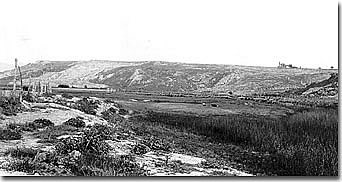
    <summary type="html"><![CDATA[<p><strong><em>The Fancher Party set out from Arkansas in April 1857, determined to reach the fertile fields of California- but they never reached their destination. Instead, they met their deaths at the hands of Mormon settlers and Paiute Indians near Mountain Meadows, an area just south of present day Cedar City, Utah on September 11, 1857. </em></strong></p><img src="https://www.intermountainhistories.org/files/fullsize/7681cb75268f4cde17eeec5e1d4a5372.jpg" alt="John D. Lee " /><br/><p>The mid-1850s relationship between Latter-day Saints (or Mormons) and the United States government, who felt that they were growing too powerful, was tense. In response to the growing power of the leaders of the LDS Church in Utah, the federal government sent a large Army to Utah in 1857 to assess the situation and suppress any potential rebellions against the United States. With the army's approach, fear and anxiety spread among Mormon settlers in Utah Territory.</p><p>It was in this atmosphere that the Fancher party crossed Utah Territory on their way to California. Contention abounded between the Fancher Party and the Mormon communities through which they passed on their journey west. The emigrants chided Mormon settlers that the army was coming to suppress the religious group, and boasted that members in their group had persecuted Joseph Smith, the Church’s first leader. Their threats to steal from Mormon communities further enraged the Saints, creating a climate that resulted in extra-legal vigilantism.</p><p>In response to the perceived threats, LDS leaders in Cedar City and Parowan took matters into their own hands. Isaac C. Haight, William Dame, and John D. Lee solicited the aid of local Paiute Indians to steal the settlers’ stock while the local community plotted to attack the emigrant train encamped at ‘the Meadows.’ Under the ruse of a white flag, Lee led the Indians in the raid.  Then, the local men disarmed the wagon train and killed around 120 emigrants on September 11, 1857. Only seventeen members of the party survived, all children too young to remember the attack. After the massacre, word came from Brigham Young in Salt Lake City for the Saints and the Paiutes to let the emigrant train pass unmolested.  Unfortunately, his letter came too late to save the emigrant party from disaster. Some debate Young's knowledge and timing of the letter.</p><p>A series of cover-up stories allowed those responsible for the massacre to escape prosecution for years. John D. Lee faced trial in 1875, though the court did little to address the situation. A second trial commenced in 1878.  This time the court attributed full responsibility for the massacre to Lee, ruling that his actions qualified as murder. The jury sentenced Lee to death and the federal representatives executed Lee on March 23, 1877.  The involvement and role of Paiute auxiliaries is still debated to the present. The other men responsible for the massacre escaped legal punishment. Most of the massacre survivors eventually rejoined relatives in Arkansas and California.  Representatives of the participants dedicated a memorial commemorating the tragedy and honoring the families who died at Mountain Meadows in 1999.</p><p><em><strong><a href="https://www.intermountainhistories.org/items/show/22">For more (including 5 images) view the original article</a></strong></em></p>]]></summary>
    <published>2017-02-15T17:21:51+00:00</published>
    <updated>2026-04-17T19:31:58+00:00</updated>
    <link rel="alternate" type="text/html" href="https://www.intermountainhistories.org/items/show/22"/>
    <id>https://www.intermountainhistories.org/items/show/22</id>
    <author>
      <name>Rachel Hendrickson, Brigham Young University </name>
    </author>
  </entry>
  <entry>
    <title type="html"><![CDATA[Reexamining the Bear River Massacre  ]]></title>
    <summary type="html"><![CDATA[<p><strong><em>January 29, 1863, dawned bright and cold. Encased in snow and silence, the Shoshone Indian camp located near the banks of Bear River near present-day Franklin, Idaho, had little idea what that fateful day held in store for them. In the early dawn hours, screams, gun smoke, and the feverish sounds of a pitched battle pierced the air. Within a few minutes, California militiamen had burned the Shoshones’ homes, shot their husbands and sons, raped and killed women, and blood stained the white snow, bringing immense sorrow and grief to the Shoshones. </em></strong></p><img src="https://www.intermountainhistories.org/files/fullsize/d3796127175afa2318b9c9a5b1ba1316.jpg" alt="Bear River Massacre site, looking east " /><br/><p>Colonel Patrick Edward Connor, upon hearing miner’s charges that Shoshones had stolen good and animals from them, had led his California Volunteers north from Fort Douglas in Utah Territory to Bear Hunter’s Shoshone village adjacent to the Bear River.  Connor, already antagonistic towards Indians and Mormons, had decided to attack the Indians in their winter encampment in order to participate in some form of military combat during the Civil War. </p><p>Connor’s men approached the Indian encampment early that morning. Upon seeing the approaching militia, the Indians quickly gathered up their weapons and the battle commenced. Once their ammunition ran out, the Indians asked to surrender, but received no mercy. The battle quickly turned into a massacre as the militia slaughtered 250 Shoshone men, women, and children while they California Volunteers suffered eighteen casualties. </p><p>At the sight of the confrontation, a national monument was to be erected, bearing the words “Battle of Bear River.” Mae T. Parry, a granddaughter of one of the chief Indians involved in the massacre, has begun to fight for the name of the Bear River Battle to be called the Bear River Massacre. “When you attack a sleeping village of Indian men, women and children, you can't call that a battle” Parry noted.  Her ongoing fight to right the wrongs of history reflects the ongoing struggles of her people against the American government and for the inclusion of Indian point-of-view into the national narrative. </p><p>In 2008 the Shoshone Nation acquired the site and commemorated the 150 year anniversary at the site in 2013. </p><p><em><strong><a href="https://www.intermountainhistories.org/items/show/23">For more (including 5 images) view the original article</a></strong></em></p>]]></summary>
    <published>2017-02-15T17:34:06+00:00</published>
    <updated>2026-04-17T19:31:58+00:00</updated>
    <link rel="alternate" type="text/html" href="https://www.intermountainhistories.org/items/show/23"/>
    <id>https://www.intermountainhistories.org/items/show/23</id>
    <author>
      <name>Kiya Mercado, Brigham Young University  </name>
    </author>
  </entry>
  <entry>
    <title type="html"><![CDATA[Colonel Patrick Edward Connor and the Bear River Massacre]]></title>
    <summary type="html"><![CDATA[<p><strong><em>On 29 January 1863 Colonel Patrick Edward Connor led a contingent of California militiamen against a Northwestern Shoshone village in present day Cache Valley, Idaho.  Connor and his men destroyed and burned the village, killing roughly 250 Indian men, women, and children over the space of four hours. The militiamen hopelessly outmatched the Northwestern Shoshone warriors who had only “bows and arrows, tomahawks, and a few rifles.”  Connor’s men, on the other hand, possessed 16,000 rounds of ammunition for their rifles and handguns, and additional ammunition for their mountain howitzers.  Historians refer to the events of this fateful day as the Bear River Massacre.</em></strong></p><img src="https://www.intermountainhistories.org/files/fullsize/b898db3530c02cc31fcbf5599aab4c2a.jpg" alt="Chief Sagwitch " /><br/><p> President Abraham Lincoln placed Connor in charge of the 3rd California Volunteer Infantry at the outbreak of the American Civil War in 1861. Fearing that the Confederates would try to isolate the newly formed state of California from the rest of the Union, Lincoln ordered Connor and his men to Salt Lake City to protect the overland mail routes from Indian attack. Incensed by this assignment, Connor pleaded with his superior officers to allow him to take his men east to fight in the main theater of the Civil War. He argued that the men under his command wanted to "serve their country in shooting traitors instead of eating rations and freezing to death around sage brush fires..." They longed for “the privilege of going to the Potomac and getting shot."  His request denied, he stayed in Utah Territory to protect the mail routes.  He ordered his men to construct Fort Douglas in Salt Lake City.</p><p>After two years without any military action, Connor instigated an opportunity to fight. The Northwestern Shoshone periodically traded with emigrant parties on the Oregon Trail, one of the primary routes under Connor’s protection, or defended themselves against unscrupulous miners traveling between Utah Territory and the future states of Idaho and Montana. Mormon settlement in Utah Territory and increased traffic along the Oregon Trail limited the resources available to the Northwestern Shoshone.  By the 1860s, the Shoshones had few choices but to exact a toll from emigrants and settlers utilizing Indian resources without compensating the tribe. Northwestern Shoshone warriors attacked a group of eight miners early in January 1863, killing two of them. The survivors made their way to Salt Lake City where they testified to Chief Justice John F. Kinney that Shoshones had attacked them. Kinney issued a warrant for the arrest of several Indian chiefs from the Northwestern Shoshone tribe including chiefs Bear Hunter, Sagwitch, and Sanpitch. The territorial marshal, Isaac L. Gibbs, recognizing that he would not be able to pursue and arrest the Shoshone chiefs by himself, requested the aid of Connor and his men.  Connor accepted enthusiastically. </p><p>Connor made it abundantly clear that because his superiors denied him the chance to fight Confederates in the South, he intended to fight Indian warriors instead. “Connor anticipated that a major fight with the Indians would give his bored troops an opportunity to exhibit their fighting prowess and might gain him new and more exciting appointments.”  He later admitted, “it was not my intention to take any prisoners.”  His expedition had nothing to do with protecting the overland mail routes, or arresting the Shoshone chiefs--he simply wanted a chance to fight but instead orchestrated a massacre.</p><p><em><strong><a href="https://www.intermountainhistories.org/items/show/24">For more (including 2 images) view the original article</a></strong></em></p>]]></summary>
    <published>2017-02-15T17:49:51+00:00</published>
    <updated>2026-04-17T19:31:58+00:00</updated>
    <link rel="alternate" type="text/html" href="https://www.intermountainhistories.org/items/show/24"/>
    <id>https://www.intermountainhistories.org/items/show/24</id>
    <author>
      <name>Erik Peterson, Brigham Young University </name>
    </author>
  </entry>
  <entry>
    <title type="html"><![CDATA[Camp Floyd and the Mormons]]></title>
    <summary type="html"><![CDATA[<p><strong><em>Driven from state to state, early coverts of The Church of Jesus Christ of Latter day Saints faced constant persecution for their religious beliefs in antebellum America.  Eventually, they fled west to the Rocky Mountains.  Within ten years, however, the federal government sent troops after them, fearing that Brigham Young, the Mormon prophet, was becoming too autonomous and powerful in the Utah Territory.  General Albert Johnston’s presence in the Utah Territory caused a great war of ideas—and sometimes arms—between the determined Saints and unsympathetic soldiers.  The establishment of Camp Floyd increased interactions between soldiers and Mormons and church leaders cautioned against the potential negative effects to the moral, social, and economic conditions on the Mormon Zion.</em></strong></p><img src="https://www.intermountainhistories.org/files/fullsize/8b854548a43b555632b0bbf8cffae768.jpg" alt="General Albert Sidney Johnston " /><br/><p>For nearly a decade prior to the army’s arrival in 1857, the Mormons had lived relatively isolated and undisturbed by outside influences. Of early concern to church leaders, Fairfield, a satellite town of Camp Floyd, was viewed as bringing moral decay to some Mormons.  Termed “Frogtown” by the Saints and army, it became a den of gambling houses, dance halls, brothels, and saloons frequented by soldiers, teamsters, emigrants, and even some settlers. Theft, prostitution, and murder frequently filled the streets and back halls. Church leaders mourned the spread of moral and social deterioration throughout the valley.  One member said, “Camp Floyd Fairfield was full of rotteness and evil of every description and I'm sorry to say our people of both sexes mixed up with them largely and of how bad it did look to see young ladies whose parents were faithful.”  </p><p>Despite the fear of moral and social turmoil that the army brought to Mormon communities, the Saints benefited economically from the army's occupation in the territory. The soldiers began building the immense fort at Camp Floyd as soon as they arrived. The fort consisted of buildings for headquarters, infantry and artillery units, storehouses, stables, corrals, workshops, powder magazines, a theatre, aqueduct, and so on. </p><p>At its height, Camp Floyd was perhaps the largest military installation in the United States prior to the Civil War. The Saints helped build the fort, laboring as artisans, carpenters, and mechanics, which allowed them to profit from trade with the army as Camp Floyd provided business opportunities for enterprising Saints. John Carson, for example, built the Stagecoach Inn, offering a simple yet comfortable environment for higher class visitors and military personnel alike. The inn later became an Overland Stage and Pony Express stop. </p><p>The commencement of the Civil War in 1861 struck the death knell for the army's military occupation in Utah Territory, and with it went a major source of conflict for the territory’s inhabitants. Johnston's army had opened the floodgates for travelers to pour into the territory, effectively ending the Mormons' isolation. Moral decay and social tension spread at an alarming rate from the camp to the Saints. Amidst all the social discord, however, the military presence had a positive impact on the territory's economy without which the Mormons would have struggled to keep their agricultural market afloat.  Conversely, the success of the fort depended upon Mormon laborers and consumers.  In the end, the Saints and Gentiles needed each other for Utah to grow and develop into a thriving territory.</p><p><em><strong><a href="https://www.intermountainhistories.org/items/show/25">For more (including 3 images) view the original article</a></strong></em></p>]]></summary>
    <published>2017-02-15T18:01:44+00:00</published>
    <updated>2026-04-17T19:31:58+00:00</updated>
    <link rel="alternate" type="text/html" href="https://www.intermountainhistories.org/items/show/25"/>
    <id>https://www.intermountainhistories.org/items/show/25</id>
    <author>
      <name>Lorin Groesbeck, Brigham Young University </name>
    </author>
  </entry>
  <entry>
    <title type="html"><![CDATA[The Moulin Rouge: A Symbol of Las Vegas&#039; Civil Rights Struggle<br />
]]></title>
    <summary type="html"><![CDATA[<p><strong><em>The Moulin Rouge was the first racially-integrated hotel and casino in Las Vegas. It was located three miles from the Las Vegas Strip in the city’s Westside district. Although the casino was open for only six months, to this day it continues to represent the promise of racial integration in Las Vegas.</em></strong></p><img src="https://www.intermountainhistories.org/files/fullsize/e1f09cbbef1338d8bd5213a747141349.jpg" alt="Facade " /><br/><p>The Moulin Rouge was opened in 1955 amidst a civil rights battle in Las Vegas. The city’s black residents insisted that Las Vegas officials pass a civil rights ordinance which would allow African Americans to dine, gamble, and stay at Strip hotels. The city’s practice of segregation, which began in the 1930s, had earned it the moniker “The Mississippi of the West.”  While Las Vegas hotels and casinos employed black employees in behind-the-scenes jobs, the workers who dealt with the public, like dealers and servers, were all white. The most visible African Americans employed by the hotels were entertainers like Sammy Davis Jr., Nat King Cole, and Ella Fitzgerald. Even though their names appeared on hotel marquees, black performers were not permitted in the front door and were required to stay in boarding houses in city’s Westside, the neighborhood where Las Vegas’s black population was restricted. A group of white investors led by Will Max Schwartz saw the business potential of an integrated hotel and casino in Las Vegas. Former heavyweight boxing champion Joe Louis was recruited to serve as the Moulin Rouge’s spokesman and purported co-owner.</p><p>From its opening night on May 24, 1955, the Moulin Rouge attracted a mixed clientele of black and white patrons. Celebrities such as Ella Fitzgerald, Frank Sinatra, Harry Belafonte, Bob Hope, Dean Martin, Milton Berle, Dorothy Lamour, Judy Garland, and Marlene Dietrich all made their way to the Moulin Rouge during its short period of operation. The reason why the Moulin Rouge was such a magnet for performers was because it was the only hotel where black and white entertainers could socialize with one another in Las Vegas. Strip hotels attempted to ban its headliners from visiting the Moulin Rouge. White performers such as Tallulah Bankhead were issued ultimatums, but most refused to comply.  Black entertainers who graced the Moulin Rouge’s showroom include Lionel Hampton, Dinah Washington, Gregory Hines, and the Platters. The Moulin Rouge also offered employment opportunities for residents of the Westside. Black Las Vegans found employment as dealers, cocktail waitresses, bartenders, security guards, and managers.</p><p>The Moulin Rouge, named after the famed Parisian cabaret, had 110 rooms, a swimming pool, a 60-foot-high neon Eiffel Tower and a neon sign designed by Betty Willis in the googie style emblematic of the 1950s. The most popular attraction at the Moulin Rouge was its marquee number, a colorful African-themed late night show called The Tropi Can Can which featured Las Vegas’s only all-black chorus line. In June 1955, showgirls from the Moulin Rouge even made the cover of Life magazine.</p><p>In November 1955, financial mismanagement forced the Moulin Rouge’s closure.  By December, the hotel had filed for bankruptcy. Although it was only open for six months, the Moulin Rouge offered its guests a brief glimpse of what a racially-integrated Las Vegas resort looked like.</p><p>In 1960, black Las Vegans, inspired by the wave of civil rights activism sweeping across the country, threatened to march on the Las Vegas Strip unless the city took action to end segregation. A march would not only block access to the Strip, but also embarrass the city and damage its tourism industry.  In March 1960, days before the planned march, the still-shuttered Moulin Rouge served as the venue for a meeting which included NAACP branch president Dr. James McMillan, Nevada Governor Grant Sawyer, and the city’s powerful gaming executives. At the meeting, mediated by Las Vegas Sun editor Hank Greenspun, casino bosses agreed to end their discriminatory policies and allow African Americans to patronize their establishments. </p><p>In the decades since the Moulin Rouge’s initial closure, a number of different owners have attempted to re-open it and restore the hotel to its former glory. The building fell victim to an arsonist in 2003. In 2010 city officials declared the hotel’s decorative tower a risk to public safety and had it torn down. Despite its long period of dormancy, the Moulin Rouge remains an enduring symbol of racial integration and Las Vegas’s civil rights struggle. </p><p><em><strong><a href="https://www.intermountainhistories.org/items/show/26">For more (including 6 images) view the original article</a></strong></em></p>]]></summary>
    <published>2017-02-17T18:29:57+00:00</published>
    <updated>2026-04-17T19:31:58+00:00</updated>
    <link rel="alternate" type="text/html" href="https://www.intermountainhistories.org/items/show/26"/>
    <id>https://www.intermountainhistories.org/items/show/26</id>
    <author>
      <name>Alan Mattay, University of Nevada, Las Vegas </name>
    </author>
  </entry>
  <entry>
    <title type="html"><![CDATA[The Las Vegas Courthouse and Post Office]]></title>
    <summary type="html"><![CDATA[<img src="https://www.intermountainhistories.org/files/fullsize/9b949b6fdc4d133edc9c750b25e722aa.jpg" alt="External Facade " /><br/><p>Located at 300 Stewart Ave, the Las Vegas Federal Courthouse and Post Office, opened on November 27th 1933 and remained in constant use until 2005. Prior to President Franklin Roosevelt’s appointment of a Federal Judge in Las Vegas the state had only one full time federal court in the state capitol, Carson City. Instead, judges from adjacent states rotated through Las Vegas hearing federal cases in the absence of a full time jurist. Judge Roger Thomas Foley’s Appointment in 1945 signified a greater projection of federal power into the “Battle Born State” and more specifically into Las Vegas. Locally, the Courthouse served both to give locals access to Federal offices but is also noteworthy due to the overwhelming federal oversight of Nevada’s natural resources and often contentious relations between the Federal Government and local residents. </p><p>The courthouse also played host to two events of national importance. On November 15th 1950 the Kefauver Hearings on Organized Crime convened in Las Vegas. Although this installment of Tennessee Senator Estes Kefauver’s investigation lacked the theatre of previous episodes it provided insight into sports wire operations overseen by Organized Crime thereby underscoring the national nature of the Mob.  The Kefauver Hearings, apart from providing “must see television” spurred congress to pass gambling bans thereby solidifying Las Vegas’ role as the capital of American gambling. Authors Ed Reid and Ovid Demaris estimate in their book The Green Felt Jungle that organized crime invested more than $300 million in gambling operations in Las Vegas by 1962. </p><p>Later, on April 13, 1955 Hank Greenspun, publisher of the Las Vegas Sun, faced an “inciting murder” indictment over his editorials criticizing Senator Joe McCarthy at the height of his power. Prosecutors cited headlines reading “Is Senator McCarthy a Secret Communist” as evidence that the author, Greenspun, sought to incite McCarthy’s assassination. The council for the defense countered with the First Amendment to the United States Constitution, the guarantee of Free Speech, while also citing the ruin McCarthy brought to one hundred and eight State Department employees that he accused of Communist ties without any evidence. This contention thereby proposed that rather than inciting McCarthy’s murder their client was a journalist with the courage to speak truth to unchecked power. In a small victory for decency Greenspun was acquitted on the first ballot. </p><p>The Las Vegas Federal Courthouse and Post Office was recognized by the Federal Registry of Historic Places on February 10, 1983 (#83001108). The building served as a courthouse until 1965 and as a  Post Office until it was purchased, re-purposed and refurbished into the National Museum of Organized Crime and Law Enforcement. Museum visitors trace the evolution of Organized Crime and Law Enforcement from localized phenomenons to national movements while simultaneously exploring criminal influence both in illegal activities and in shaping American pop culture.</p><p><em><strong><a href="https://www.intermountainhistories.org/items/show/27">For more (including 3 images) view the original article</a></strong></em></p>]]></summary>
    <published>2017-02-17T18:57:49+00:00</published>
    <updated>2026-04-17T19:31:58+00:00</updated>
    <link rel="alternate" type="text/html" href="https://www.intermountainhistories.org/items/show/27"/>
    <id>https://www.intermountainhistories.org/items/show/27</id>
    <author>
      <name>James Steele, University of Nevada, Las Vegas </name>
    </author>
  </entry>
  <entry>
    <title type="html"><![CDATA[Forced Relocation and The Owens Valley: Numu (Paiutes) and Japanese-Americans and Forced Relocations to and from the Owens Valley]]></title>
    <summary type="html"><![CDATA[<p><strong><em>The Japanese-American workers pictured in the featured image are standing, stooping, and kneeling in the shadows of the eastern Sierra Nevada mountains in Owens Valley, California - and their presence on the land highlights colonial and capitalist themes that underpin the history of the valley itself. Their forced removal and internment during World War II to this isolated rural area is not a unique history to the Owens Valley. Nor is it the only local story of removal. </em></strong></p><img src="https://www.intermountainhistories.org/files/fullsize/00219c688b8f7ec61b8ac671978dba96.jpg" alt="Farming by Mt. Williamson" /><br/><p>Adjacent to the Manzanar Relocation Center is the site of a colonial military project in the valley called Fort Independence. The creation of the fort in 1862 focused on quelling violent skirmishes between Numu (Owens Valley Paiute) and ranchers and farmers who invaded Numu homelands and devastated their food resources. The destruction of seed bearing plants, the deforestation of pine nuts for timber, and the Anglo settlements on Numu irrigated lands and agricultural fields created the atmosphere of violence that Civil War California Volunteers then exacerbated. The colonial focus on terminating Numu land rights and removing them from the valley only temporarily kept them from their homeland, they returned months after their removal in 1863 to salvage their property and enter wage-work on farms, ranches, and within the growing mining industry.          </p><p>While the Numu had been removed from the valley in 1863, Japanese-American citizens were forcibly relocated to the valley in 1942. The ethnocentric experiences are similar: confined to a block of land away from their homes, a military presence policing their lives, the use of labor to create a self-sufficient federal reservation, and the incorporation of their labor into U.S. capitalist production. These colonial policies, like Native reservation life throughout the U.S., brought diverse families together to build a community through work and non-work activities. The mixed memories of internees toward their lives in the camp highlight the connection to place created within Manzanars two-year lifespan.          </p><p>Jeanne Wakatsuki Houston, a co-author of the memoir "Farewell to Manzanar," documented her families experiences there. She remembered her brother Woody declare, “If we’re gonna live in this place, we better get to work,” and she described in detail her family plugging the holes of their barracks, and community creations of bathroom dividers for privacy, public parks, gardens, farms, schools, and churches for recreational and spiritual socializing. However, she also contested positive memories taking place under guard towers and beside barbed wire, “you could measure your liberty by how far they’d let you go.” The creation of community at Manzanar focused on labor and non-labor activities, which Jeanne Houston’s quotes embody. </p><p>Other residents such as Nob Kamibayashi remembered, “We met new friends from throughout the camp. To this day I have friends who were in the same class as me;” Victor Muraoka added, “My job was washing dishes, sweeping, mopping, and helping the cooks. I worked there the longest and hated to leave,” and Saburo Sasaki and Chiyeko “Chickie” Hiraoka Matoba respectively stated, “[We went to the co-op] for ice cream and soda pop, a haircut, or buy a new pair of shoes,” and “School was sort of [the] center of my activities; and so was sports. There were a lot of sports.” These memories concern work and non-work practices, and the positive memories of life and community under civil and military rule. The differences between reservation, concentration, and internment camps consist of the actual mobility of people confined in each place. However, a similarity of all three focus on aspects of family creation and communal work, which for Japanese-citizens at Manzanar created community outside of their California, Oregon, and Washington homes. </p><p><em><strong><a href="https://www.intermountainhistories.org/items/show/28">For more (including 11 images) view the original article</a></strong></em></p>]]></summary>
    <published>2017-02-17T19:31:19+00:00</published>
    <updated>2026-04-17T19:31:58+00:00</updated>
    <link rel="alternate" type="text/html" href="https://www.intermountainhistories.org/items/show/28"/>
    <id>https://www.intermountainhistories.org/items/show/28</id>
    <author>
      <name>Lee Hanover, University of Nevada, Las Vegas </name>
    </author>
  </entry>
  <entry>
    <title type="html"><![CDATA[Atomic Liquors ]]></title>
    <summary type="html"><![CDATA[<p><strong><em>Walk into this aptly themed bar in 2016 and you will find something unique for the city of Las Vegas: an authentic part of its history. While it has expanded in recent years, Atomic is one of those rare historical specimens that has managed to survive, and even thrive, in a city that continuously reinvents itself for the changing tides of tourism. The bar has kept the same look, and many of the same relics of its past, down to the classic neon sign that has adorned the building since Joe and Stella Sobchik opened it in the early 1950s. </em></strong></p><img src="https://www.intermountainhistories.org/files/fullsize/0cbc06ed75225977ab5afc469a76d5d7.jpg" alt="Atomic Neon at Night " /><br/><p>It started in 1945 as Virginia’s Café, named after Stella’s mother who acquired the property in an inheritance from a local judge she cared for during his final years of life. Stella ran the restaurant for her mother with her husband Joe, while Virginia managed other endeavors on the property. At this time, federal military-industrial spending helped the Las Vegas economy to boom, along with many cities in the American West during the Cold War. The arrival of the Nevada Test Site (NTS) in 1951 was one aspect of this federal military involvement in the Las Vegas community, which continued from the World War II establishments of Basic Magnesium Inc. and Nellis Airforce Base. </p><p>Public opinion of the NTS was initially marked by worry of the possible side effects of radiation and fallout. The quick acceptance and even excitement over being a part of the nation’s defense grew from active efforts by the Atomic Energy Commission, along with the generally increased anti-Communist sentiment in the United States. Fears were easy to quell through created images of the American West as simultaneously an empty wasteland made for testing, and a beautiful sunny oasis. </p><p>The development of the NTS contributed to a prominent nuclear culture, a form of patriotic pride in the city, from which Atomic Liquors directly grew. While the NTS was dropping its first above ground test-bomb, Joe and Stella grew tired of cooking food and looked towards selling alcohol. Initially in the form of a liquor store in 1952, by 1954 the Sobhiks had established Atomic Liquors as a full-service bar, complete with a rooftop to watch mushroom clouds rise 60-70 miles outside of town while sipping popular “atomic cocktails” that marked the era.</p><p>As above-ground testing ended in 1963, the “atomic hairdos,” “Miss Atomic Bomb Contests,” and “atomic cocktails” that marked the era’s culture fell-out of popularity. Atomic Liquors, however, remained. Consistently a hangout for mobsters, celebrities, and other Fremont Street laborers, the bar continued as a popular neighborhood staple for a few decades. As the Fremont Street District hit harder economic times, it lost out to the popularity of the Strip, and Atomic Liquors became a little-known neighborhood watering-hole most locals and tourists alike had not heard of, or did not want to venture into. When the Sobchiks passed in 2010, the bar went to their son, Ron, who then sold it to a group of investors, reopening it in 2012, fully restored. Today locals and tourists alike can enjoy the nostalgia of a bygone classic Las Vegas era, while also embracing the new craft beers and cocktail menu that compliments the larger revitalization of Downtown Las Vegas. </p><p><em><strong><a href="https://www.intermountainhistories.org/items/show/29">For more (including 9 images) view the original article</a></strong></em></p>]]></summary>
    <published>2017-02-27T17:36:37+00:00</published>
    <updated>2026-04-17T19:31:58+00:00</updated>
    <link rel="alternate" type="text/html" href="https://www.intermountainhistories.org/items/show/29"/>
    <id>https://www.intermountainhistories.org/items/show/29</id>
    <author>
      <name>Billy Marino, University of Nevada, Las Vegas </name>
    </author>
  </entry>
</feed>