<?xml version="1.0" encoding="UTF-8"?>
<feed xmlns="http://www.w3.org/2005/Atom">
  <title type="text">Intermountain Histories</title>
  <updated>2026-08-18T15:51:51+00:00</updated>
  <generator uri="http://framework.zend.com" version="1.12.20">Zend_Feed_Writer</generator>
  <link rel="alternate" type="text/html" href="https://www.intermountainhistories.org/"/>
  <link rel="self" type="application/atom+xml" href="https://www.intermountainhistories.org/items/browse?output=rss2"/>
  <id>https://www.intermountainhistories.org/</id>
  <author>
    <name>Intermountain Histories</name>
    <uri>https://www.intermountainhistories.org</uri>
  </author>
  <link rel="hub" href="https://pubsubhubbub.appspot.com/"/>
  <entry>
    <title type="html"><![CDATA[Zitkala-Ša’s (Gertrude Simmons Bonnin) Sojourn in Utah<br />
]]></title>
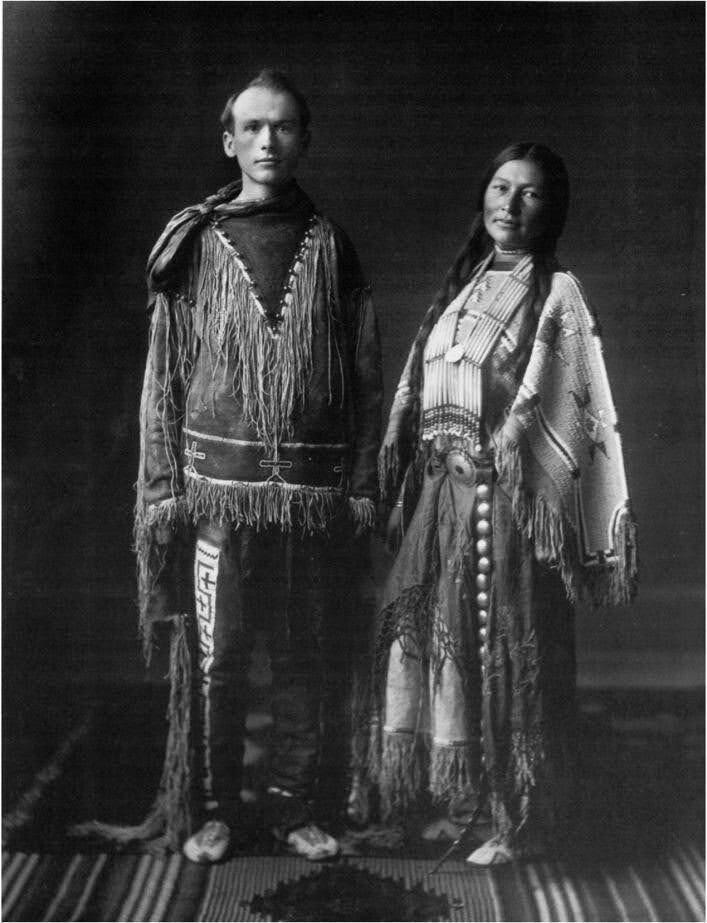
    <summary type="html"><![CDATA[<p><strong><em><span style="font-weight:400;">Zitkala-Ša, or Gertrude Simmons Bonnin, is a celebrated Yankton Dakota writer and activist. She lived in Utah from 1902-1917.</span></em></strong></p><img src="https://www.intermountainhistories.org/files/fullsize/45b71b8be1582e338eb8a6eee61bb4cc.jpg" alt="William F. Hanson and Zitkala-Ša" /><br/><p><span style="font-weight:400;">Born on the Yankton Sioux Reservation in South Dakota in 1876, Gertrude Simmons or Zitkala-Ša left the reservation at age eight to attend White’s Manual Labor Institute in Indiana. This assimilation-focused boarding school instilled Euro-American and Christian values in its students. She attended Earlham College and became an increasingly skilled writer and musician.</span> <span style="font-weight:400;">She taught at the Carlisle Indian Industrial School. After a while, she became critical of the emphasis on assimilation and acculturation and resigned. She began writing under the name Zitkala-Ša (Red Bird) around 1889, publishing essays in national magazines such as </span><i><span style="font-weight:400;">Harper’s Monthly</span></i><span style="font-weight:400;">. Her writings often criticized the practice of many reformers and stressed the importance of Native identities.</span>
<span style="font-weight:400;">Zitkala-Ša married Raymond Bonnin in 1902 and they moved to </span><span style="font-weight:400;">Whiterocks, Utah, where Raymond worked for the Indian Bureau on the Uintah and Ouray Reservation. In 1903, they had a son, Raymond “Ohiya” Bonnin. A young, orphaned Ute boy named Oran Curry and Old Sioux, a survivor of the Battle of the Little Bighorn, also lived with them. </span>
<span style="font-weight:400;">The Bonnins lived in Utah from 1902 to 1917, except for several months spent on the Standing Rock Reservation in the Dakotas. It was while away at Standing Rock that she converted to Catholicism. After returning to Utah, she kept up a correspondence with Father William Ketcham, director of the Bureau of Catholic Indian Missions, expressing her wish to introduce Catholicism to the Utes.</span>
<span style="font-weight:400;">In 1908, she met music teacher William Hanson</span><span style="font-weight:400;">. They eventually collaborated in writing and composing the </span><i><span style="font-weight:400;">Sun Dance Opera</span></i><span style="font-weight:400;">, which debuted in Vernal, Utah, in 1913. The Sun Dance is a religious ceremony practiced by some Natives, especially Plains Peoples. The opera combined Native rituals with European-styled performances. It is unclear what motivated her to collaborate on this opera, which could be viewed as a violation of religious respect. Interestingly, the Sun Dance was outlawed on the Uintah and Ouray Reservation at this time, and the opera allowed Ute performers to participate in it to some degree. At the time of its debut, a Vernal newspaper praised it as greatly pleasing the audience.</span>
<span style="font-weight:400;">During her first few years in Utah, Zitkala-Ša taught at the Whiterocks Boarding School. She also spent time working for the Indian Service. In 1913, she joined the Society of American Indians, a national organization advocating for Native rights. She was elected secretary of the SAI in 1916. After moving to Duchesne, Utah, in 1915, she created a Ute community center. While in Utah, she began an anti-peyote campaign. Zitkala-Ša and her husband Ray moved to Washington, D.C., where she continued her activism. Zitkala-Ša’s time in Utah was one of “relative obscurity." Yet, during her fourteen years there, she continued to evolve and to advance the causes she believed in.</span></p><p><em><strong><a href="https://www.intermountainhistories.org/items/show/888">For more (including 3 images) view the original article</a></strong></em></p>]]></summary>
    <published>2025-04-21T15:25:26+00:00</published>
    <updated>2026-04-17T19:32:20+00:00</updated>
    <link rel="alternate" type="text/html" href="https://www.intermountainhistories.org/items/show/888"/>
    <id>https://www.intermountainhistories.org/items/show/888</id>
    <author>
      <name>Emmaretta Barnett, Brigham Young University</name>
    </author>
  </entry>
  <entry>
    <title type="html"><![CDATA[Zion Lodge]]></title>
    <summary type="html"><![CDATA[<p><strong><em>There are sixty-one registered historic structures in Zion National Park, the buildings of the Zion Lodge complex being among them.</em></strong></p><img src="https://www.intermountainhistories.org/files/fullsize/b99f86cd2dbd3a60e1905a3de5eb0e89.jpg" alt="Probable dedication of Zion Lodge" /><br/><p>The Union Pacific Railroad and its subsidiary, the Utah Parks Company, completed a railway line near Cedar City in 1923, granting visitors of Zion National Park an easy and convenient method of travel from the railway station to the park by motorbus. The Union Pacific also collaborated with the Park Service to build hotels along its routes to attract customers for each company, resulting in the construction of Zion Lodge, an in-park hotel where guests could stay during their travels. Stephen Mather, director of the National Park Service, initially balked at Union Pacific’s desired size for the lodge and requested something smaller. In the end, each side compromised to build a medium-sized lodge that blended into its natural surroundings inside the heart of the canyon. 
Gilbert Stanley Underwood, an American architect who studied at Yale and Harvard, worked with the Utah Parks Company to design the structure, and construction began in 1923. Underwood envisioned the lodge as a warm and inviting atmosphere for guests. The building incorporated 265,000 board feet of lumber from the Colorado Plateau brought down by the Cable Mountain Draw Works, a mechanism of wires and pulleys extending from the top of the canyon to an area 2,000 feet below. Construction teams finished the lodge in May 1925, and the park held a small dedication ceremony on the front lawn. The later addition of individual cabins to the lodging accommodations in Zion signaled a milestone in park success and development.
The original lodge featured natural wood design, locally sourced stone for the entrance columns, and a green roof that harmonized the building with its surrounding canyon and forest environment. The original structure served visitors and staff for over forty years until it was lost to a fire on January 26, 1966. But in only 108 days, crews constructed a new building to replace the original lodge. The new lodge continues to offer a variety of accommodations.
In addition to being the only place inside Zion that serves food, at the lodge visitors can also attend or embark on ranger-led activities such as patio talks, guided hikes, shuttle bus tours, and outdoor evening programs. To access the lodge, visitors who are staying overnight must present a permit that allows car access up the Zion Canyon Scenic Drive. Otherwise, catching a ride on the shuttle takes visitors to the lodge and nearby trailheads. The park’s swift move to replace Zion Lodge after the fire and maintain accommodations shows the Service’s commitment to visitors and the importance of the lodge to Zion National Park.</p><p><em><strong><a href="https://www.intermountainhistories.org/items/show/602">For more (including 4 images) view the original article</a></strong></em></p>]]></summary>
    <published>2022-06-09T22:21:29+00:00</published>
    <updated>2026-04-17T19:32:13+00:00</updated>
    <link rel="alternate" type="text/html" href="https://www.intermountainhistories.org/items/show/602"/>
    <id>https://www.intermountainhistories.org/items/show/602</id>
    <author>
      <name>Jennifer John, Northern Arizona University</name>
    </author>
  </entry>
  <entry>
    <title type="html"><![CDATA[Zion Human History Museum at Zion National Park]]></title>
    <summary type="html"><![CDATA[<p><strong><em>Zion Human History Museum at Zion National Park began its existence in 1961 as a visitor center, one among many such centers built as part of the Mission 66 initiative to renew national parks.</em></strong></p><img src="https://www.intermountainhistories.org/files/fullsize/fe2d6602811fd2201e5b4fde4ded078a.jpg" alt="Visitor Center plans" /><br/><p>By the early 1900s, the scenic qualities of the two-thousand-foot Navajo Sandstone cliffs in Zion Canyon had been recognized as a potential destination for tourism. In 1909, President Theodore Roosevelt signed an executive order designating Mukuntuweap (Zion) National Monument in Zion Canyon. However, accessing the monument was difficult due to poor road conditions and no railway connection. In 1917, the Utah State Road Commission constructed a new highway which allowed motorists to reach the first visitor lodging in Zion Canyon, Wiley Camp. In 1919, President Woodrow Wilson signed a congressional bill changing the name of the monument to Zion and designating it a National Park. In the 1930s, the newly completed Zion Mount Carmel highway allowed motorists access to travel through Zion to Bryce Canyon. The highway was one of the greatest engineering feats of its time and included a 1.1-mile tunnel through the vertical sandstone cliffs.</p><p>Staff at Zion National Park had been proposing a new information point in the late 1940s before the start of the Mission 66 program which funded the Park Service to establish new modern visitor centers that could accommodate new visitor demands after World War II. By the time President Dwight D. Eisenhower signed the bill to fund the project, Zion Park Staff were no longer discussing whether a new hub was needed, but where it would be located. Controversy over where to locate the new building continued for a year as Park Service Director Conrad Wirth wanted to place it across the road from the museum located near the entrance of the park, but Zion Superintendent Paul Franke argued the main reason for a new setting was due to traffic and overcrowding on the main entry roadway. He argued that the new visitor center needed to be in an area that could accommodate the high volumes of park traffic without causing interference with the main road. The new location placed it outside of the canyon where natural beauty and scenic attractions could be incorporated into the design of the building. </p><p>Park Service designer Cecil Doty presented preliminary designs for the tourist point in 1957. During the next year, Doty's designs for the Zion Visitor Center were handed over to the architectural firm of Cannon and Mullen of Salt Lake City. Construction began in April 1959 but in October a steel strike delayed the modern steel framework in the lobby, and the architects were forced to change their material to aluminum in order to open on time. Cannon and Mullen completed construction in June 1960 and opened to the public that same month. The Park Service dedicated the Zion Visitor Center on June 17, 1961, a year after it had been open to the public. The construction features a large auditorium, exhibit room, lobby for visitors, and an office wing for the park employees. Designs in the lobby featured big glass windows that enabled visitors to view the surrounding canyons and encouraged them to walk outside onto the balcony to get a view of the beautiful mountain range. To blend the modern style of the center with its surrounding environment, the architects incorporated red stone veneers around the bathrooms and the top of the building. The Zion Visitor Center has been renovated and reopened as the Zion Human History Museum.</p><p>Since then, the Zion Visitor Center has been renovated and reopened as the Zion Human History Museum. The museum features permanent exhibits about people who once dwelled in what is now Zion National Park, including southern Paiutes and nineteenth-century pioneers, and about how the area became a national park. Temporary exhibits also offer a range of historic information about the park and its lands and people.</p><p><em><strong><a href="https://www.intermountainhistories.org/items/show/519">For more (including 3 images) view the original article</a></strong></em></p>]]></summary>
    <published>2021-10-16T04:38:01+00:00</published>
    <updated>2026-04-17T19:32:11+00:00</updated>
    <link rel="alternate" type="text/html" href="https://www.intermountainhistories.org/items/show/519"/>
    <id>https://www.intermountainhistories.org/items/show/519</id>
    <author>
      <name>Jennifer John, Northern Arizona University</name>
    </author>
  </entry>
  <entry>
    <title type="html"><![CDATA[Zay Philbrook, Female Homesteader<br />
]]></title>
    <summary type="html"><![CDATA[<p><strong><em>“If you have ever ridden up some mountain canyon when your trail led far above the aspen tops into higher silence… in an open world that seemed so full of God and happiness that you wanted to laugh and sob with the joy of living, then I’m sure you understand why we who have been here must always come back.” Zay Philbrook was one of those eternally drawn to the open mountains of the West.</em></strong></p><img src="https://www.intermountainhistories.org/files/fullsize/f970bb5e9d36a2bdc2f98b41a02e367e.jpg" alt="Sketch of Zay Philbrook’s Homestead Cabin" /><br/><p>Zay Philbrook had limited capital but a limitless love for the “glorious heart of Wyoming.” After boarding with a ranger and his family the summer of 1914, Zay was so smitten with her time in the Big Horn mountains that she wanted to stay. With her sister, she rented a small cabin near the town Ten Sleep and searched for land to homestead that suited her means and capabilities. Zay was realistic in her approach to settlement, considering costs of improvements and the physical demands of their completion. The restraints on her funds and time led her to consider a “Timber and Stone” claim. Such claims ranged from 40-160 acres and cost the appraised value of the land and its natural timber or stone. There were no requirements for improvements or time spent occupying the property, so Zay could purchase the patent outright.</p><p>With the help of a ranger, Zay discovered a “quiet, happy little valley fenced by red rimrock and timbered buttes, opening to the south to give a view of the Big Horn basin.” At the head of the valley were several springs that emerged from the hillside, forming a stream that ran the length of the valley. Zay wrote that even with her excitement about the property and its future, she hesitated, asking herself, if once started, she could “see the thing through to the end.” She “looked up at the mountains... measured the responsibility,” and decided she could. Zay had found her claim and, in her words, “All the rest was gladness.”</p><p>A surveyor came out to inspect the property and establish the claim. Zay, like other “timber and stone” claim holders, had to wait nine months before her patent was officially approved. At that time, she made the necessary payments which totaled $520.70 and included surveying, water and timber rights, the property, and all other fees. She paid an old trapper to build her simple one room cabin and made her own closet, shelves, table, and benches. The single room served many purposes and could be adapted to suit a single woman or a half dozen visitors passing through. Zay described it as such a “cosy, warm little room that one forgets winter is drifting down over long miles of mountainside.”</p><p>Economy was considered in all of Zay’s proceedings. She explained her thrift, saying, “Few of us lovers of the West can afford to start such a place just for the pleasure there is in it; we must look for some return for our time and money.” Improvements were viewed as an investment. The property, if necessitated, could be sold for a dude ranch or lambing ground, but Zay’s intentions were to establish a self-supporting ranch. She bought as many horses as she could afford, mainly yearlings. The homestead had only 5-6 irrigable acres and these were cleared of sage brush for a small hay pasture, a vegetable garden, and hardy fruit trees. Vegetables lasted into November and late spring frosts were more of a risk than early fall ones. </p><p>Homestead life was often marked by labor, loneliness, and difficulty, but it was also fulfilling and rewarding. Zay counseled prospective homesteaders to “expect some strenuous days,” but also to “know that every day brings fresh happiness, as you help the claim to grow, as the mountains become more friendly.”</p><p><em><strong><a href="https://www.intermountainhistories.org/items/show/450">For more (including 4 images) view the original article</a></strong></em></p>]]></summary>
    <published>2021-02-03T02:32:12+00:00</published>
    <updated>2026-04-17T19:32:09+00:00</updated>
    <link rel="alternate" type="text/html" href="https://www.intermountainhistories.org/items/show/450"/>
    <id>https://www.intermountainhistories.org/items/show/450</id>
    <author>
      <name>Anna Bailey, Brigham Young University </name>
    </author>
  </entry>
  <entry>
    <title type="html"><![CDATA[Yukio Shimomura: Topaz Internment Camp<br />
]]></title>
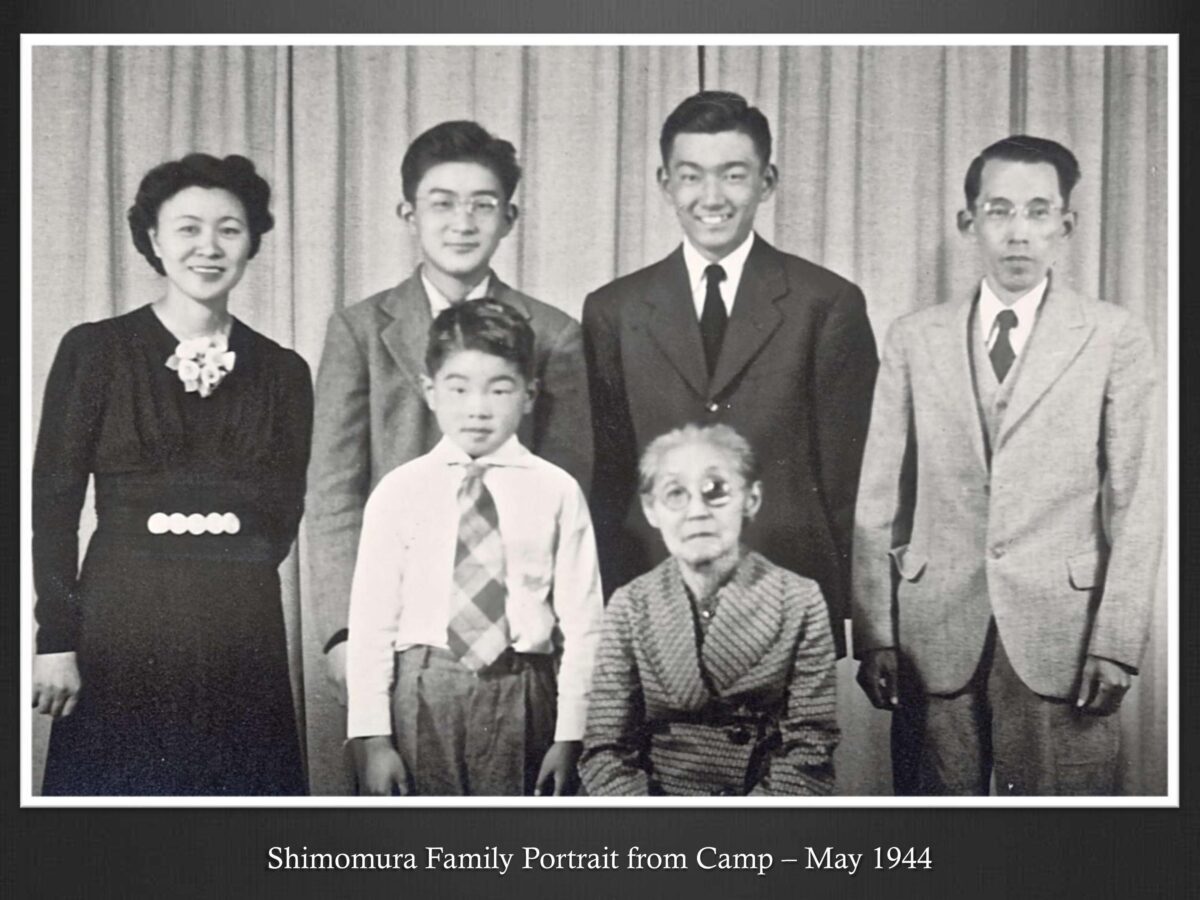
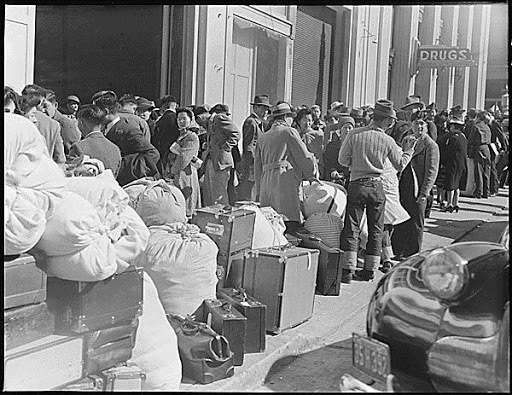
    <summary type="html"><![CDATA[<p><strong><em><span style="font-weight:400;">Following the attack on Pearl Harbor, President Franklin Roosevelt issued Executive Order 9066 on February 19, 1942. This order authorized the forced evacuation of all Japanese descendents into internment camps. Families were forced to leave everything behind to go to an unfamiliar location for an unknown length of time. Yukio Shimomura was a young boy who was sent to Topaz and in 2023 still remembers his experiences. </span></em></strong></p><img src="https://www.intermountainhistories.org/files/fullsize/d39b15a82bd920eefe950be6ed920dde.jpg" alt="Shimomura Family Portrait from Camp - May 1944" /><br/><p><span style="font-weight:400;">On December 7th, 1941, the Japanese military bombed Pearl Harbor bringing the United States into the Second World War. On February 19th, 1942, President Franklin Roosevelt issued Executive Order 9066, forcing all people of Japanese descent living on the West Coast to relocate to internment camps. They took only what they could carry and left their homes in May 1942, having no idea where they were going or whether they would ever return. Yukio Shimomura was one of the victims of this order.</span>
<span style="font-weight:400;">Prior to arriving in Topaz, Utah, many of the Japanese Americans were held in the Tanforan Race Track in San Bruno, California, where they lived in washed-out horse stables lined with linoleum. Yukio Shimomura explained the experience: “All you had was one lightbulb…. Using scrap wood, many made nightstands and other shelves to hold their stuff. Beds were bags filled with hay, and if you couldn’t sleep on that, you slept on the floor… Lots of lines. Lines, lines, lines for everything. We were only there a short time, but it was traumatic… For those living in the horse stalls, they had it bad; they stunk when they came out… you could separate them from those living in the barracks [by their smell]… we were lucky.” Shimomura and his family stayed at Tanforan for a short time before being relocated to the Topaz Internment Camp near Delta, Utah. They remained there for three years behind barbed wire and armed guards. </span>
<span style="font-weight:400;">In Topaz, the Japanese “internees” were separated into blocks and barracks. Each block had twelve barracks, a recreation hall, latrines for men and for women, and a mess hall. The barracks were sectioned into six apartments of different sizes to accommodate families of two, four, or more people. Larger families were given two or more rooms. The six rooms came in three sizes, 20’ by 14’, 20’, or 26’.</span> <span style="font-weight:400;">Shimomura later explained that the walls separating the rooms did not reach the ceiling so that you could hear everything from everyone all the time. He remembered, “there were 300 children born in the camp, so you figure couples realized they had to do what they needed to do.” Privacy was absent in the camp, as there were no doors or stalls in any of the bathrooms or showers. </span>
<span style="font-weight:400;">At the camp, many tried to make life as normal as possible. This included working at different jobs around the camp for roughly $14 to $19 a month, depending on the job. Children went to school, played around the camp, and all lent a helping hand in whatever needed to be done. No matter how hard they tried to make life as normal as possible, the internees understood they were not free. “Topaz was chaotic,” Shimomura summarized as he explained the death of an elderly man who did not understand the order given to turn around when approaching the barbed wire fence. After a third confusing warning, he was shot and killed. While this was the only shooting to occur at Topaz, it scarred all who were there. </span>
<span style="font-weight:400;">In January 1943, President Roosevelt asked for volunteers at Topaz to serve in the United States Army. Shimomura remembers that all who were at the camp were given a questionnaire to determine their loyalty to the United States, with question 28 asking, “Will you swear unqualified allegiance to the United States of America and faithfully defend the United States from any or all attack by foreign or domestic forces and forswear any form of allegiance or obedience to the Japanese emperor or any other foreign government, power or organization?” If the answer was yes, internees could leave the camp for military service. One hundred and five young men, including some young fathers, signed up to fight and were allowed to leave the camp for the first time. The loyalty of Japanese American soldiers who served in the war raised questions about the purposes of the internment camps. In 1943, many others gained sponsors and were allowed to leave the camp to attend universities or enter employment.</p><span style="font-weight:400;">The Topaz Internment camp closed its doors in October 1945, and the barracks were moved by the end of 1947. The Japanese American Citizen League erected a monument in 1976 to commemorate those who had stayed there. In August of 1988, President Ronald Reagan signed the Civil Liberties Act that was later enforced by President George H.W. Bush. It issued a formal apology and gave $20,000 to all those who were still alive, like Shimomura, a small compensation for all they had lost and suffered as a result of internment. </span></p><p><em><strong><a href="https://www.intermountainhistories.org/items/show/793">For more (including 4 images) view the original article</a></strong></em></p>]]></summary>
    <published>2024-03-18T19:58:54+00:00</published>
    <updated>2026-04-17T19:32:17+00:00</updated>
    <link rel="alternate" type="text/html" href="https://www.intermountainhistories.org/items/show/793"/>
    <id>https://www.intermountainhistories.org/items/show/793</id>
    <author>
      <name>Abby Tribe, Brigham Young University </name>
    </author>
  </entry>
  <entry>
    <title type="html"><![CDATA[Yellowstone’s Favorite President’s Monument: Roosevelt Arch: Story 1 of 8 of the President Theodore Roosevelt in the West Tour]]></title>
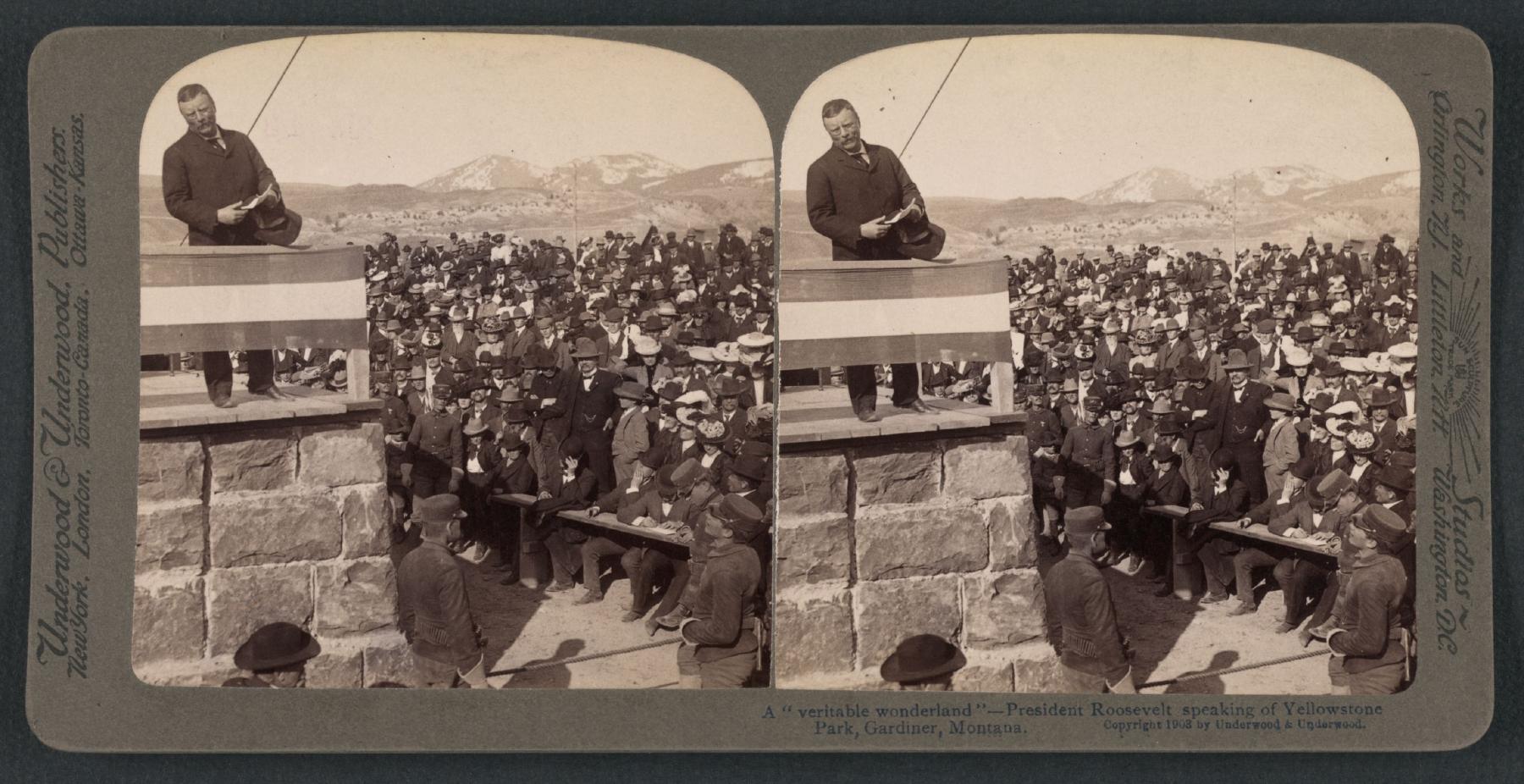
    <summary type="html"><![CDATA[<p><strong><em>Yellowstone receives an upgraded welcome with the Roosevelt Arch and gets a surprise visitor, Theodore Roosevelt, to dedicate it. </em></strong></p><img src="https://www.intermountainhistories.org/files/fullsize/f5ae52940338461ed18d1b83497abbb0.jpg" alt="President Roosevelt addresses a crowd at the dedication of Roosevelt Arch" /><br/><p>“Dedicated and set apart as a public park or pleasuring-ground for the benefit and enjoyment of the people.” Roosevelt Arch is a hearty welcome on the North entrance side of Yellowstone National Park. Standing at 52 feet, this monument is a symbol ofthe cultural and natural significance of the Park. Erected in 1903, the arch spanned what was at the time the park’s only entrance. Visitors passed under the arch from Gardiner, Montana, taking stagecoaches into Yellowstone. Army Co Engineer, Hiram M. Chittenden, the idea man, said, “...the natural features of the country at this portion of the boundary are about the least interesting of any part of the Park, and the first impression of visitors upon entering the Park was very unfavorable.” Accordingly, he proposed the arch as a beautiful park entry. Construction began on February 19, 1903 and a dedication ceremony was planned for April 24, 1903 to coincide with Roosevelt's planned visit to the park.</p><p>Yellowstone Park officials asked Roosevelt to participate in the event. This was a perfect opportunity for his conservation efforts and love for the park. With great fanfare, Roosevelt shared, “The geysers, the extraordinary hot springs, the lakes, the mountains, the canyons, and cataracts unite to make this region something not wholly to be paralleled elsewhere on the globe.” His love for the land was shared with the visitors there. They added a time capsule in the arch containing local newspapers, a bible, Masonic documents, a picture of President Roosevelt, and U.S. coins, among other items.
Roosevelt Arch still stands as a ceremonial welcoming committee to Yellowstone. Although not as popular as it was in the 20th century because of changing traffic patterns, automobiles couldn’t take the route like stagecoaches had, it is still a valuable spot to visit when exploring the park. Multiple entrances being added make this an out-of-the-way stop for those accessing the park from the more popular southern and western entrances. Yellowstone is visited by approximately 4 million people annually, and the arch continues to be a popular destination, especially for those visiting the Mammoth area or arriving from points north. It was added to the National Register of Historic Places in 2002 and is a potent symbol and reminder that National parks are “For the benefit and enjoyment of the people” as Theodore Roosevelt referenced the Act Congress passed in 1872 making Yellowstone a public park in his speech, and is not engraved on a place at the top of the arch itself.</p><p><em><strong><a href="https://www.intermountainhistories.org/items/show/919">For more (including 4 images) view the original article</a></strong></em></p>]]></summary>
    <published>2025-10-24T15:03:17+00:00</published>
    <updated>2026-08-18T15:51:51+00:00</updated>
    <link rel="alternate" type="text/html" href="https://www.intermountainhistories.org/items/show/919"/>
    <id>https://www.intermountainhistories.org/items/show/919</id>
    <author>
      <name>Jessika Cole, Brigham Young University</name>
    </author>
  </entry>
  <entry>
    <title type="html"><![CDATA[Yellowstone Lake’s Steamships and the Legacy of E.C. Waters]]></title>
    <summary type="html"><![CDATA[<p><strong><em>Yellowstone Lake, in Yellowstone National Park, is the largest high-elevation lake in North America. Visitors arrive eager to take in the mountains, glacial waters, and wildlife that surround it. Concessionaire E.C. Waters ran a lucrative steamship operation transporting guests across its waters for two decades, but his business practices and violations of park regulations led to its downfall.</em></strong></p><img src="https://www.intermountainhistories.org/files/fullsize/68c1a5bf36f9944b8e2ad2d694d1d81e.jpg" alt="Map of Yellowstone Lake area, National Park Service (modified)" /><br/><p>Congress established Yellowstone in 1872 as the country’s first and largest national park. Soon after, potential concessionaires flocked to build visitor services within park boundaries. In choosing leaseholders, early administrators strove to balance conservation and tourist accessibility. Increased transportation options would bring more people to the area, companies argued, and encourage the government to allocate funds to protect Yellowstone from vandalism and poaching. In 1886, following a decade of haphazard operations, the Yellowstone Park Association (YPA) took advantage of the park’s rise in popularity. The Northern Pacific Railroad-financed company took over property leases from the previous bankrupt concessionaire. The sites spanned across the park, including one at Yellowstone Lake.
E.C. Waters began as the general manager of the YPA’s hotels in 1887. Aiming to improve the quality of park-wide accommodations, the company planned a sophisticated hotel located on Yellowstone Lake. The site’s remoteness called for boat transportation, as stagecoach travel could be uncomfortable and slow. In 1889, the YPA named Waters president of its Yellowstone Lake Boat Company to meet this demand.
The entrepreneur, though, was already making enemies across the company and the Interior Department. In 1890, the YPA fired him for extortion, poaching, and a geyser’s eruption by throwing soap into it. Yellowstone officials barred him from the park, but his connection with President Benjamin Harrison’s son got him reinstated that same year. In 1892, the Interior Department granted him a permit to transport visitors on his steamship, the <em>Zillah</em>, from Thumb Bay to the Lake Hotel area. The 125-passenger vessel was sent piece-by-piece from Minnesota and reassembled at the lake. By 1896, the <em>Zillah</em> was making stops at E.C. Waters' “zoo” on Dot Island. It was a little more than some corralled bison and elk, which he shipped in from outside the park. Passengers were unknowingly charged extra by Waters for the quick stop. To make matters worse, the bison and elk starved as his finances declined and operations fell into disrepair. Park administrators and visitors questioned the <em>Zillah</em>’s lakeworthiness, Waters’ concession license, and his overall moral character.
Regardless, Waters built another steamship, the <em>E.C. Waters</em>, in 1905. It could carry 500 passengers, a violation of the park’s capacity limits. Fed up with his antics, park administrators refused to reinstate his lease and booted Waters from Yellowstone in 1907. A 1921 storm berthed the <em>E.C. Waters</em> on an island close to the hotel without ever transporting a single visitor. Park officials salvaged its parts over the next decades, most notably its boiler, which heated the Lake Hotel until the mid-twentieth century. What exactly became of the <em>Zillah</em> is unknown. Boat concessions continued after E.C. Waters sold his company in 1907, but the days of steamships and zoos were gone. Now, officials restrict lake operations to a tour boat, some motorboats, and paddle sports like kayaks. Visitors can still spot the skeleton of the <em>E.C. Waters</em> where it was shipwrecked years before, a testament to the hubris and ambition of its namesake.</p><p><em><strong><a href="https://www.intermountainhistories.org/items/show/889">For more (including 6 images) view the original article</a></strong></em></p>]]></summary>
    <published>2025-09-23T15:30:18+00:00</published>
    <updated>2026-04-17T19:32:20+00:00</updated>
    <link rel="alternate" type="text/html" href="https://www.intermountainhistories.org/items/show/889"/>
    <id>https://www.intermountainhistories.org/items/show/889</id>
    <author>
      <name>Anaëlle DePoint, Northern Arizona University</name>
    </author>
  </entry>
  <entry>
    <title type="html"><![CDATA[Y Mountain]]></title>
    <summary type="html"><![CDATA[<p><strong><em>The construction of the Y Mountain in Provo, Utah is significant to the history and culture of Brigham Young University and Provo.</em></strong></p><img src="https://www.intermountainhistories.org/files/fullsize/a1a9daef1d4a15c98769c2216efd270b.jpg" alt="Y Mountain" /><br/><p>In the early 1900s, a common Latter-day Saint legend described how settlers in Provo were told by Native Americans that they had seen angels who declared that the people in this town would be blessed. Some of those blessings came about through Provo’s Y Mountain. In 1906, the Junior Class of BYU wanted to paint "‘07" on the mountain, upsetting members of the senior class. The President of Brigham Young University at the time, George H. Brimhall, and Brigham Young High School Principal Edwin S. Hinckley settled the argument by deciding that the letters “BYU” would be painted on the mountain. After 6 hours of painting, only the “Y” was completed, so the two other letters “B” and “U” were forgotten, the full plan discontinued. After the completion of the “Y,” students hiked up the mountain annually to re-paint the Y, creating a BYU Y Day tradition. More traditions and plans for the Y mountain would follow for the city of Provo, Utah and its residents. </p><p>The mountain plays an important role in BYU culture and the culture in Provo, Utah. It is the site of many traditions, such as lighting the Y for the holidays, BYU Homecoming, or the success of a school sports team. The tradition of lighting up the Y began in 1924. Another tradition for the incoming Freshman class at BYU involves dedicating a day for a Y mountain hike to celebrate their becoming a BYU Cougar. This tradition has carried through the years. Y mountain has been a symbol for Brigham Young University and the city of Provo, serving as one of the areas main tourist attractions. The traditions that revolve around the Y are important to BYU and Provo culture.</p><p><em><strong><a href="https://www.intermountainhistories.org/items/show/391">For more (including 3 images) view the original article</a></strong></em></p>]]></summary>
    <published>2020-02-18T02:51:08+00:00</published>
    <updated>2026-04-17T19:32:07+00:00</updated>
    <link rel="alternate" type="text/html" href="https://www.intermountainhistories.org/items/show/391"/>
    <id>https://www.intermountainhistories.org/items/show/391</id>
    <author>
      <name>Kayla M. Beck, Brigham Young University</name>
    </author>
  </entry>
  <entry>
    <title type="html"><![CDATA[Wyoming State Capitol in Cheyenne]]></title>
    <summary type="html"><![CDATA[<p><strong><em>The Wyoming State Capitol building is the seat of the Wyoming State Legislature and the Governor’s Office. This modest and comparatively inexpensive Capitol of the smallest U.S. state by population is a working government building and symbol of Wyoming and its past.</em></strong></p><img src="https://www.intermountainhistories.org/files/fullsize/8ecc0a262ac751f87a33d08199fb94e9.jpg" alt="Wyoming Capitol" /><br/><p>The land that became Wyoming was originally the territory of Native peoples. Wyoming’s modern Native tribes include the Ute, Arapaho, Cheyenne, Shoshone, and Crow. The California Trail, Oregon Trail, and Mormon Trail all passed through Wyoming and brought droves of white settlers through the area on their way to the West Coast and Utah the mid-nineteenth century, though few took up residence in the Wyoming area itself. The U.S. Government negotiated the Treaty of Fort Laramie in an effort to protect settlers moving through the area by compensating tribes and building forts. The U.S. Government soon reneged on these treaty obligations and on those of a second Fort Laramie Treaty, causing an escalating cycle of violence. The U.S. Government eventually forced the remaining Native peoples of Wyoming into the reservation system.
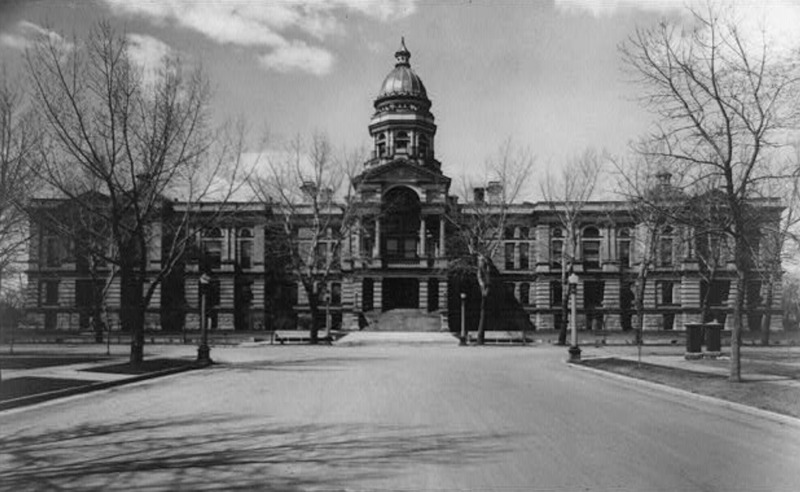
Cheyenne began as a stop along the Union Pacific Railroad line in 1867 and quickly surpassed other population centers to become the Territorial Capitol and then State Capitol, as well as Wyoming’s largest city. Ranching, mining, and agriculture continued to draw a trickle of settlers, but the harsh environment, scarce arable land, and temperature extremes restricted the population. Wyoming became its own territory on July 25, 1868 under Andrew Johnson’s presidency and inaugurated its first government May 19, 1869. It achieved statehood July 10, 1890 despite disputes over whether it had achieved the minimum population threshold at that time. In 1886, the Territorial Legislature created a Capitol Commission to organize construction of a capitol building. It chose David W. Gibbs & Co. to design the Capitol and Adam Feick & Bros. to construct it at a bid of only $150,000, worth a little over $4,000,000 in 2020. The Territorial Legislature used the building even before its completion in 1890. By 1915, the State Legislature had outgrown the building and voted to add the House and Senate chambers to the structure, which were completed in 1917.
The Capitol is a Renaissance Revival structure made of both native and Colorado sandstone with a copper dome, which was later gilded in 1900. The interior is finished in marble with a beautiful cherrywood staircase with murals decorating many of the walls. An enormous stuffed bison stands in part of the rotunda, and a bronze bison sculpture stands outside. The bison was a critical part of the diet and culture of the Native people of Wyoming and the intentional near extinction of the animal by white hunters was a severe blow to them. Now, the bison is a symbol of the state and adorns its flag.
In 2016 the Capitol underwent a major renovation which restored decorative elements, added more accessibility with additional elevators and restrooms, and upgraded technology resources. These improvements, completed in 2019, will ensure that the State Capitol building can continue to function as the working seat of government for the people of Wyoming for many years to come.</p><p><em><strong><a href="https://www.intermountainhistories.org/items/show/509">For more (including 4 images) view the original article</a></strong></em></p>]]></summary>
    <published>2021-10-10T09:05:30+00:00</published>
    <updated>2026-04-17T19:32:10+00:00</updated>
    <link rel="alternate" type="text/html" href="https://www.intermountainhistories.org/items/show/509"/>
    <id>https://www.intermountainhistories.org/items/show/509</id>
    <author>
      <name>David Cady, Northern Arizona University</name>
    </author>
  </entry>
  <entry>
    <title type="html"><![CDATA[World War II Navy Education at Flagstaff&#039;s Arizona State Teachers College]]></title>
    <summary type="html"><![CDATA[<p><strong><em>During World War II, many colleges became training centers for the expanding American military. Northern Arizona University in Flagstaff, then known as Arizona State Teachers College, was one such school.</em></strong></p><img src="https://www.intermountainhistories.org/files/fullsize/f3847859071276dfb9a409f1dfad01ac.jpg" alt="The V12 Program" /><br/><p>World War II affected many aspects of American life. The enlistment and drafting of so many young men after America’s entry into the war caused the college-enrolled population to rapidly decrease. Almost every institution of higher learning in the United States saw its student body shrink, though smaller state institutions, with their significantly lower funding and already small student bodies, were particularly affected. One such institution hard hit by the loss of so many young men to the military was Arizona State Teacher’s College (ASTC) in Flagstaff, now Northern Arizona University. The school lost so many students to the war effort that by the 1943-44 school year, the institution had shrunk to a student body of eighty-four, compared to a 1940 enrollment of 535 students. This reduction led many of the educators at the school, including President Thomas J. Tormey, to fear that the Arizona Board of Regents would shut the college down.</p><p>However, while the civilian educational institutes faced a dwindling population, the armed forces faced an opposite problem. The pre-war Army and Navy of the United States had been a small, underfunded force. With the declaration of war, the size of the United States Navy increased by seventy percent compared to its pre-war strength. This massive influx of new recruits overwhelmed the armed services pre-war training institutions. To address both of these problems, President Franklin Roosevelt encouraged the Departments of War and Navy to conduct the necessary training on the nation’s college campuses. </p><p>In 1942 the Navy selected ASTC as a site for the Navy College Training Program, designated the V-12 program. The Department of the Navy designed this program to train the swelling officer corps that would command the new two–ocean navy. The Navy chose enlisted men who had some college education for officer training. While ASTC effectively became a Navy base, the Navy allowed civilian students and teachers to remain on campus and to enroll in V-12 classes. </p><p>The institution became a strange intermediary between a naval base and a college. A geography class offered to sailors and regular students organized a Grand Canyon trip. When the program ended in October of 1945, 1,025 marines and sailors had passed through Flagstaff, 400 at a time. The influx of men and government funds kept the college afloat, with the Navy rental of dorm rooms bringing in an estimated $24,848 in profit, about $800,000 in current currency. Beyond the financial aspects, the influx of so many young servicemen changed life on the campus, turning it into a military institution. Many of the female students welcomed the influx of so many young and eligible men into the institution, with the local sororities often holding dances. After the war, many of the veterans returned to colleges on the G.I. Bill. In 1966, ASTC became Northern Arizona University. </p><p><em><strong><a href="https://www.intermountainhistories.org/items/show/55">For more (including 4 images) view the original article</a></strong></em></p>]]></summary>
    <published>2017-06-03T15:41:56+00:00</published>
    <updated>2026-04-17T19:31:58+00:00</updated>
    <link rel="alternate" type="text/html" href="https://www.intermountainhistories.org/items/show/55"/>
    <id>https://www.intermountainhistories.org/items/show/55</id>
    <author>
      <name>Christian Flanders, Northern Arizona University</name>
    </author>
  </entry>
  <entry>
    <title type="html"><![CDATA[Women’s Suffrage and Temperance in Idaho]]></title>
    <summary type="html"><![CDATA[<p><strong><em>The fight for women’s suffrage was closely tied to the temperance movement. Many women in Idaho supported both temperance and women’s suffrage, and although some suffragettes like Abigail Scott Duniway worried that the association between the two would prompt greater opposition from men, the WCTU helped win the right to vote for women in Idaho in 1896.</p></strong></p><img src="https://www.intermountainhistories.org/files/fullsize/3430039af5cc919129c52b625dbb981f.jpg" alt="Abigail Scott Duniway
" /><br/><p>In Idaho, like most states in the West, the Women’s Christian Temperance Union played an important role in the women’s suffrage movement. The WCTU advocated a variety of social reforms, such as prohibition of alcohol, for the purpose of creating a moral and clean society. Many Idaho women first became involved in the public sphere through participation in the WCTU, and later became suffragettes. The President of the Idaho Women’s Christian Temperance Union, Henrietta Skelton, encouraged local WCTU chapters in Idaho to incorporate women’s suffrage into their cause. The Idaho WCTU also helped push the territorial government to consider women’s suffrage. During Idaho’s Constitutional Convention in 1889, Henrietta Skelton gave a speech to the legislature requesting the following two clauses in the new state constitution: “No discrimination on account of sex shall be made; but citizens of both sexes, possessing the necessary qualifications, shall be equally eligible as electors;’ and “that manufacture, sale, or keeping of intoxicating liquors for use as a beverage is hereby prohibited.” For temperance activists in Idaho, women’s suffrage and prohibition were inseparable.</p><p>However, the connection of women’s suffrage to prohibition of alcohol by the WCTU created some problems. Due to this connection, liquor companies became some of the main opponents of female enfranchisement and some men viewed women’s suffrage in a negative light. When Henrietta Skelton argued for both suffrage and prohibition amendments in Idaho’s new state constitution, some suffragettes feared this would endanger the cause of women’s suffrage. One such suffragette was Abigail Scott Duniway. Abigail Scott Duniway had spent decades working for women’s suffrage in Washington, Oregon, and Idaho as a speaker and newspaperwoman, and previously spoke before Idaho’s legislature in 1887 in favor of women’s right to vote. In her autobiography, she recalled her reaction to the WCTU’s speech to the legislature: “I received a message from my Equal Suffrage co-workers in Boise, urging me to come to them at once. “The Woman’s Christian Temperance Union is spoiling everything,” the letter said. “They have arranged for a hearing before the convention, in advance of ours, asking for a clause in the new Constitution to prohibit the liquor traffic. They won’t get it, of course, but they will prohibit us from getting a Woman Suffrage plank, if you don’t come!” Duniway gave a speech to the legislature right after Skelton in which she attacked the idea that women’s suffrage and prohibition were connected and instead argued for the adoption of an independent women’s suffrage clause. Idaho did not give women the right to vote in the new state constitution, but Skelton and Duniway’s speeches reveal some of the tension in the relationship between women’s suffrage and temperance.</p><p>Despite the misgivings of Abigail Scott Duniway and other suffragettes, the Woman’s Christian Temperance Union remained an active part of the women’s suffrage movement in Idaho. The next president of the WCTU in Idaho, Rebecca Mitchell, convinced Lewis E. Workman, a Republican member of the state’s House of Representatives, to introduce another women’s suffrage bill to the legislature in 1893. Although that bill was not successful, the WCTU kept working with Idaho’s Equal Suffrage Association until women’s suffrage was successfully passed in 1896. The WCTU continued its social reform efforts with continued strength after women in Idaho won the right to vote. As public services and symbols of prohibition, they erected temperance water fountains, one of which still stands outside of Boise City Hall. In 1916, the WCTU achieved one of its main goals in Idaho when Governor Moses Alexander approved statewide prohibition.</p><p><em><strong><a href="https://www.intermountainhistories.org/items/show/250">For more (including 4 images) view the original article</a></strong></em></p>]]></summary>
    <published>2019-01-18T03:43:46+00:00</published>
    <updated>2026-04-17T19:32:04+00:00</updated>
    <link rel="alternate" type="text/html" href="https://www.intermountainhistories.org/items/show/250"/>
    <id>https://www.intermountainhistories.org/items/show/250</id>
    <author>
      <name>Sarah Rounsville, Brigham Young University</name>
    </author>
  </entry>
  <entry>
    <title type="html"><![CDATA[Women&#039;s Gymnasium]]></title>
    <summary type="html"><![CDATA[<p><strong><em>The BYU Women’s Gymnasium has served the Provo community for over a century thanks to locals invested in the building and its history. </em></strong></p><img src="https://www.intermountainhistories.org/files/fullsize/83c155f005a23e4ce3c2ac565c957070.jpg" alt="Ladies Gymnasium 1912 West of Lower Campus" /><br/><p>In the early 1900s, BYU sporting events and dances were held in the Training Building and BYU High School. In 1912, President George H. Brimhall acknowledged that a new building was needed to accommodate the growth of the school. He set aside the corner of University Avenue and Fifth North for a new building that would hold both women’s sports and social events. The BYU Ladies’ Gymnasium was dedicated on Friday, September 19, 1913. </p><p>During the day, the building was used for ladies sporting classes. Focused on facilitating athletics, the original building design included one hundred coil springs underneath the gymnasium floor. It did not work out as expected. Movement sheared off the nails, and blocks were used to hold the floor in place. Despite other problems and leaks, the building served the community well. The men’s basketball team later used the building for games because the bleachers in the Gymnasium held more people than the Training Building. </p><p>At night, the Ladies’ Gymnasium was a center for social events. Dances on Fridays went from 8:00 p.m. to 11:00 p.m. and cost thirty-five cents for couples and ten cents for additional ladies. Some of the dances were very memorable. In 1925, a junior-senior dance was centered on the theme Wild West. So many blank cartridges were fired throughout the event that the neighbors complained about the noise. In that same year, BYU alumnus Dave Rust brought his two adopted cougar cubs to a dance, and there was some panic in the Gymnasium when Cleo and Tarbo were released onto the floor. </p><p>In the early thirties, the term women replaced the term ladies, and community members began referring to the building as the Women’s Gymnasium. When it was built, the building was labeled Ladies’ Gymnasium in metal lettering, so President Harris scheduled for the letters to be changed to match the trend. The new name remains on the building today.</p><p>The Women’s Gymnasium held more than social and sporting events over the years. During World War I, The Army Training Corps occupied the building for several months, and the outbreak of Spanish Influenza across the country caused them to be quarantined during their stay. During World War II, the United States Air Cadets lodged in the gym for a short time. They were moved to another site because of the growing number of female students that needed the building for classes. The building continued to serve as a women’s gymnasium for several decades. </p><p>In 2007, the Women’s Gymnasium was scheduled for demolition to make way for a new Zion’s National Bank. Leslie and Michael Gledhill came forward and bought the Gymnasium for $1 million. Leslie had an attachment to the building, having herself spent afternoons there as a child watching college girls during their gymnastics lessons. The couple had the bricks power scrubbed and the inside polished. The original floor was left to preserve the building’s character. The Gledhills saved the building and turned it into the headquarters for their online thrift store: Cherry Lane Keepsakes. </p><p>In 2016, the building was sold to Case Lawrence, the owner of Circus Trix. Another $1 million was spent in renovations to make the building a corporate office. Lawrence showed a dedication similar to the Gledhills when he said, “I firmly believe that the best way to preserve a building is by making it relevant for the modern day.”  When the original windows and doors were replaced during the renovation, Provo City halted the construction. Despite controversy over preservation, renovations continued and the Women’s Gymnasium gained a new look with a patio cover. </p><p>The century-old BYU Women’s Gymnasium has been kept relevant in Provo by leaders and business owners who value the building’s character and ability to serve the needs of the community. </p><p><em><strong><a href="https://www.intermountainhistories.org/items/show/195">For more (including 10 images) view the original article</a></strong></em></p>]]></summary>
    <published>2018-06-02T01:00:38+00:00</published>
    <updated>2026-04-17T19:32:02+00:00</updated>
    <link rel="alternate" type="text/html" href="https://www.intermountainhistories.org/items/show/195"/>
    <id>https://www.intermountainhistories.org/items/show/195</id>
    <author>
      <name>Emily Cook, Brigham Young University</name>
    </author>
  </entry>
  <entry>
    <title type="html"><![CDATA[Women in Virginia City<br />
]]></title>
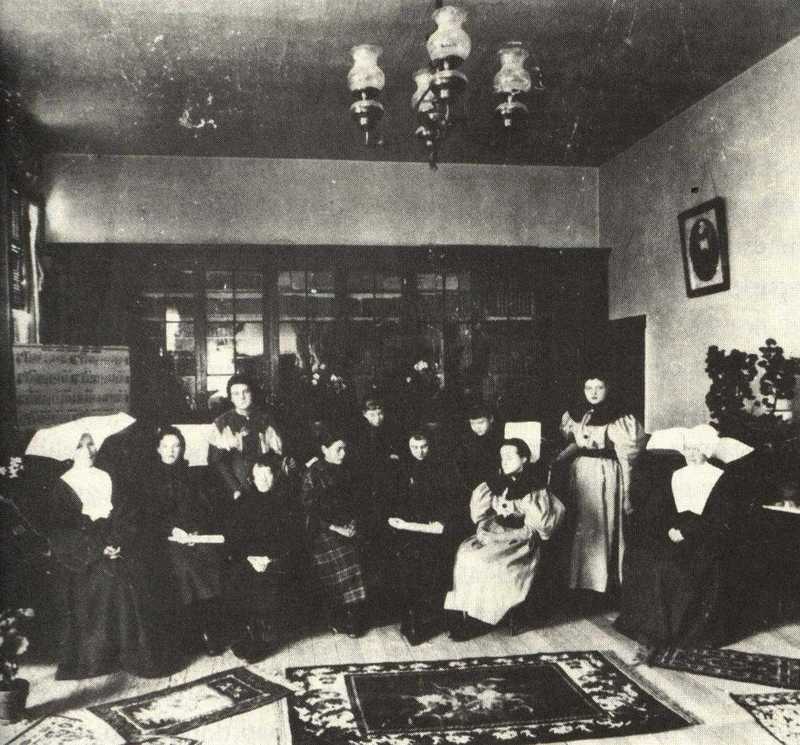
    <summary type="html"><![CDATA[<p><strong><em> Contrary to popular belief, soiled doves did not rule the nest in Virginia City. Further historical analysis shows that the majority of women in Virginia City and other mining communities came from diverse backgrounds and participated in number of reputable professions, such as homemaking, teaching, housekeeping, and the liberal arts. </p></strong></p><img src="https://www.intermountainhistories.org/files/fullsize/643a68ceb2b8c350ad27841787d5ccfc.jpg" alt="Daughters of Charity" /><br/><p>Historically, prostitution and other unsavory occupations have been connected to the reputations of women in the Wild West. The reputation of women living in Virginia City was no exception. Several sources reported that “there was always a large class of poor, misguided, prostitutes” living throughout the city. In modern-day Virginia City, a museum commemorates the famous soiled dove, Julia Bulette, and the red light district. However, the historical narrative too often focuses on the fallen feminine denizens of the West and neglects to tell the story of the other women who lived during the period. While prostitution was a practice that did exist in many towns, it was not the major practice during the early days of Virginia City, nor was it the most popular profession for women in the later years.   </p><p>During the founding years of Virginia City, the population was heavily male dominated. The 1860 census recorded that there were 111 women living in the Virginia City and Gold Hill area.  However, of the one hundred and eleven, eighty-three were recorded as married women, and forty-three households recorded children in the home. This shows that the majority of women were married, not single. Those who were single found occupations in households and boarding houses, working as maids and laundresses. According to recent historians, prostitution did not come into effect “until a mining district demonstrated that it would last.” It seemed that many prostitutes did not want to establish roots in a community unless they felt it was worth investing in. </p><p>The women of Virginia City occupied themselves in various professions. As mentioned before, housekeeping and laundry work were popular professions. Some women chose to be teachers, seeking to educate the children in the city. Other women chose to start their own businesses, such as opening boarding houses and dress shops. While Virginia City was considered uncouth to eastern standards, the women of the Comstock sought to bring sophistication and refinement from the East. Needlework became the third most popular profession among women on the Comstock. By 1870, reports showed that there were 71 businesses of needlework, accounting for seamstresses, dressmakers, milliners, and sewing women. They served the women of the upper class in Virginia City like Marie Louis Mackay, the wife of bonanza king John Mackay, who could afford such luxuries. Along with bringing eastern couturier to the city, women also formed social societies and clubs that were popular in the west. They organized charities, orphanages, and temperance societies. Many of these societies were backed by the local congregations, such as the Catholic Church. Their charity, the Daughters of Charity of Virginia City, sought to serve the men working in the mines. They provided care for injured miners and their families. They were determined to “carry to [the miners’] poor ‘shanties’ little delicacies, and words of consolation,” hoping to ease the harsh realities that every miner faced living on the Comstock. </p><p>The women of Virginia City also came from diverse backgrounds. While a majority came from an Anglo-American background, women of Chinese, African American, and Native American descent also occupied the city. While many claimed that those from foreign descent participated in immoral practices, such as prostitution and opium dens, many continued to work in similar occupations that white American women enjoyed. Chinese women mostly occupied themselves with housekeeping, working in boarding houses throughout the city. Women of the Comstock involved themselves in a number of professions, and through them they built a strong and lively community. </p><p><em><strong><a href="https://www.intermountainhistories.org/items/show/248">For more (including 4 images) view the original article</a></strong></em></p>]]></summary>
    <published>2019-01-17T23:51:13+00:00</published>
    <updated>2026-04-17T19:32:04+00:00</updated>
    <link rel="alternate" type="text/html" href="https://www.intermountainhistories.org/items/show/248"/>
    <id>https://www.intermountainhistories.org/items/show/248</id>
    <author>
      <name>Rachel Hendrickson, Brigham Young University</name>
    </author>
  </entry>
  <entry>
    <title type="html"><![CDATA[Women at Geneva Steel]]></title>
    <summary type="html"><![CDATA[<p><strong><em>Though the women were always outnumbered at the plant, they made no small contribution to Geneva Steel.</em></strong></p><img src="https://www.intermountainhistories.org/files/fullsize/76415ffad4a19bc31b74f31037481888.jpg" alt="Provo/Orem Aerial view, ca. 1950" /><br/><p>Geneva Steel was a wartime steel plant built for World War II that continued operation until 2002. After more than doubling the population of Orem in the 1940s, Geneva remained an important part of Utah Valley’s silhouette for decades. It replaced agriculture with industry and farmland with subdivisions. Most of all, it was appreciated as a much-needed source of employment in a Depression-ravaged country. Over the years, Geneva provided jobs to tens of thousands of people. While steel-working was traditionally a male-dominated industry, many women were employed at the plant as well in its 60 years of operation. </p><p>Women were employed at the plant during World War II simply because there was such high demand for workers. Many of them didn’t stay in their positions after the war, and went back to more traditionally accepted women’s roles. However, several women did stay working there and many others would follow in coming years. Patty Ivie is one former worker who is still in close contact with the other female laborers that worked beside her. She was raised doing hard work on a ranch, and it wasn’t hard for her to prove herself as an equal to the men working at the plant. “Once the guys knew that we were going to do the job, they were fine with us.” One of her former coworkers reflected, “We might have done things a little differently, but we got them done.” </p><p>While Geneva would always be a male-dominated environment, the women who worked there played a valuable role, both inside and outside the factory. Many of them were single mothers or helping support their families, and were glad to find a job that paid more than traditionally female-dominated positions. One woman reflects on her time as a young, single mother—she would commute to Salt Lake City from Orem to get to her minimum wage job in a restaurant. Once she found the much higher wages available to her if she took a job at Geneva, “I just couldn’t pass it up.”</p><p>The reasons for taking jobs at Geneva in the 40s and afterward are varied. Some just wanted the experience of working while abundant openings arose during the war; for others, it was a matter of supporting their families. Just as these women forged strong steel behind Geneva’s walls, Geneva forged these individuals into strong, hard-working women.</p><p><em><strong><a href="https://www.intermountainhistories.org/items/show/81">For more (including 2 images) view the original article</a></strong></em></p>]]></summary>
    <published>2017-08-14T22:41:45+00:00</published>
    <updated>2026-04-17T19:31:59+00:00</updated>
    <link rel="alternate" type="text/html" href="https://www.intermountainhistories.org/items/show/81"/>
    <id>https://www.intermountainhistories.org/items/show/81</id>
    <author>
      <name>Aubrey Glazier, Brigham Young University</name>
    </author>
  </entry>
  <entry>
    <title type="html"><![CDATA[Women and the Colorado Coalfield Strike<br />
]]></title>
    <summary type="html"><![CDATA[<p><strong><em>While it is true that all miners who participated in the Colorado Coalfield Strike of 1913–14 were men, women were also embroiled in the controversy and consequences of the movement. Wives of miners, sympathetic locals, and even a famous union agitator involved themselves in remarkable ways throughout the strike.</em></strong></p><img src="https://www.intermountainhistories.org/files/fullsize/275364180e69f96a7008fa29fa529432.jpg" alt="Business Section of Trinidad, Colorado" /><br/><p>When the United Mine Workers of America (UMWA) strike was called in September, women enthusiastically joined the cause of their male family members. They harassed strikebreaking miners—“scabs”—and beat one scab, tracklayer John Hale, so badly that some newspapers erroneously reported that he had died. Meanwhile, other women organized their new homes in the various tent colonies throughout the area. The deprivations suffered by the women and children in those colonies were probably no worse than what they faced in company housing, apart from the thin canvas tents. The thin tents could do little to protect them from the cold and a record-breaking four-foot snowfall in December 1913.</p><p>To make matters worse, women were unable to leave the colonies without a male escort because they feared assault by militiamen. Hungry, tired, cold, and scared, women were desperate to see the results of a successful strike. Mother Jones, a seventy-six-year-old famous union agitator, “pepped up” women of the tent colonies several times as she encouraged them to keep up the fight. After the arrest of Mother Jones in January 1914, the UMWA encouraged the women to participate in a peaceful demonstration for the release of the elderly Mother Jones. General John Chase consented to a procession through downtown Trinidad with the expectation that the women would not approach the San Rafael hospital where Mother Jones was being kept prisoner. As the women marched, the militiamen on horseback blocked the way to the hospital. As General Chase shouted at the women to stop, he fell from his horse—much to the delight of the women. Infuriated, he ordered his troops to charge. Women began hurling stones, bottles, and bricks at the soldiers, provoking the frightened cavalrymen to slash at the projectiles and the women with their sabers. Instantly, the parade turned into a full-blown riot as sympathetic townspeople jumped into the fray. Eleven men and eight women were arrested for inciting a riot. Dozens of women and children were injured, but no deaths were reported. </p><p>Troubles persisted after the women’s march, but the militia now included women and children on their enemies list. 	</p><p><em><strong><a href="https://www.intermountainhistories.org/items/show/220">For more (including 5 images) view the original article</a></strong></em></p>]]></summary>
    <published>2018-06-12T22:31:22+00:00</published>
    <updated>2026-04-17T19:32:03+00:00</updated>
    <link rel="alternate" type="text/html" href="https://www.intermountainhistories.org/items/show/220"/>
    <id>https://www.intermountainhistories.org/items/show/220</id>
    <author>
      <name>Natalie Larsen, Brigham Young University</name>
    </author>
  </entry>
  <entry>
    <title type="html"><![CDATA[Willie Ito: From Topaz to Disney]]></title>
    <summary type="html"><![CDATA[<p><strong><em>Internees at Topaz went to school and participated in all kinds of classes, including art. One art student at Topaz went on to illustrate one of the most iconic Disney animation scenes of all time.</p></strong></p><img src="https://www.intermountainhistories.org/files/fullsize/1cc7d8583516881c7661310b76cbf7b9.jpg" alt="Preparing to Leave San Francisco" /><br/><p>The devastation of Pearl Harbor and the hysteria of the Second World War set the stage for white Americans to indulge their racist attitudes. Despite Japanese Americans showing no verifiable signs of sedition, many American citizens saw them as enemies who could not be trusted. Those of Japanese ancestry who lived along the Pacific coast were forced to enter inland internment camps like Topaz, Utah, for the duration of the war. Despite having had their rights disregarded, many of these prisoners continued to develop their talents. One such prisoner was a boy named Willie Ito, who went on to create a piece of art that would be seen by millions of Americans for years to come. </p><p>Willie was born in 1934 and grew up in San Francisco California. One of the most influential experiences in young Willie’s life was going to a movie theater in San Francisco and seeing the film Snow White and the Seven Dwarfs (1937). It was then that he knew that he wanted to be an animation cartoonist. After President Roosevelt signed Executive Order 9066 in February 1942, Willie and his family were interned at Tanforan racetrack in San Francisco. A few months later the government relocated the Tanforan prisoners to a permanent camp in Topaz, Utah. In Topaz Willie went to school and took art classes. While many of the kids liked to play games and baseball after school, Willie liked to go back to his family’s assigned barrack and draw. Willie would draw on the Sears Roebuck catalogs that were delivered every three months, making flipbooks in the margins of the expired catalogs.</p><p>Willie and his family left Topaz in early 1945. While studying at Chouinard Art Institute in Los Angeles, Willie landed the dream job of working at Walt Disney Studios. One of his first projects was animating the famous spaghetti scene in the film Lady and the Tramp. Willie also worked at Warner Bros and Hannah-Barbera Studios before returning to Walt Disney to work on consumer products. More recently Willie has illustrated two children's books, Hello Maggie (2007) and Boy of Heart Mountain (2010). These books detail some of the experiences of the people of Japanese descent who were incarcerated during World War II. Willie has chosen to use his artistic skill to educate others on the great injustices done to him and many other Americans of Japanese descent who were here at Topaz as well as the other internment camps across the country.</p><p><em><strong><a href="https://www.intermountainhistories.org/items/show/299">For more (including 3 images) view the original article</a></strong></em></p>]]></summary>
    <published>2019-02-13T10:34:59+00:00</published>
    <updated>2026-04-17T19:32:05+00:00</updated>
    <link rel="alternate" type="text/html" href="https://www.intermountainhistories.org/items/show/299"/>
    <id>https://www.intermountainhistories.org/items/show/299</id>
    <author>
      <name>Marcus Vanderholm and Jillian Manley, Brigham Young University</name>
    </author>
  </entry>
  <entry>
    <title type="html"><![CDATA[William Henry Jackson’s Hot Spring and Castle Geyser]]></title>
    <summary type="html"><![CDATA[<p><strong><em>Providing the earliest photographs of Yellowstone as he participated in the Hayden Geological Survey, William Henry Jackson was influential in creating America’s first National Park. Hayden, the leader of the survey, remarked that “collecting photographs was similar to collecting fossils and natural history specimens,” a convincing way to influence the United States government to protect these specimens found in Yellowstone. One of Jackson’s best photographs is Hot Springs and Castle Geyser. Castle Geyser is located in the Upper Basin of Yellowstone National Park, near Old Faithful Geyser. </em></strong></p><img src="https://www.intermountainhistories.org/files/fullsize/9452e04037751e30e91a3fc86069e9fb.jpg" alt="Hot Springs and Castle Geyser (color)" /><br/><p>As a member of the Hayden Geographical Survey in 1871, William Henry Jackson was the first photographer in Yellowstone. His photographs informed the government of the landscape and geological sites in Yellowstone, and provided artists on the survey like Thomas Moran with references to the sites so they could complete their works after the survey in their studios. Moran credits the accuracy of his paintings to Jackson’s photographs. Jackson’s photographs were also important to the creation of Yellowstone National Park. “As an intelligent, ambitious, and gifted individual working in a medium of great influence, Jackson became a powerful progenitor of the changes in the American conception of the West and of landscape in general,” writes the historian Peter Bacon Hales.</p><p>William Henry Jackson wrote, “Pictures were essential to the fulfillment of the doctor's plan for publicizing this Survey; but the basic purpose was always exploration. I cannot be too careful in emphasizing the fact that in this [the 1871 expedition] and all the following expeditions I was seldom more than a sideshow in a great circus.” Perhaps humble, perhaps realistic, Jackson saw himself as a small part to a greater whole, yet his photographs have been cited again and again by participants in the survey, as well as historians today, as highly influential in the creation of Yellowstone National Park.</p><p>Hot Spring and Castle Geyser provides an excellent example of his work. Since much of Europe and the eastern United States do not have geysers as a part of their geological makeup, Hot Spring and Castle Geyser documented a unique aspect of Yellowstone. In fact, Yellowstone has the largest concentrated number of geysers in the world. Castle Geyser may be the oldest geyser in Yellowstone, and although its eruption schedule may not be as predictable as Old Faithful Geyser, Castle Geyser erupts about every 10–12 hours a day. Jackson’s photograph Hot Spring and Castle Geyser was the first photograph that shared geysers with a wide audience.</p><p><em><strong><a href="https://www.intermountainhistories.org/items/show/161">For more (including 5 images) view the original article</a></strong></em></p>]]></summary>
    <published>2018-05-07T22:34:56+00:00</published>
    <updated>2026-04-17T19:32:01+00:00</updated>
    <link rel="alternate" type="text/html" href="https://www.intermountainhistories.org/items/show/161"/>
    <id>https://www.intermountainhistories.org/items/show/161</id>
    <author>
      <name>Emma Tolman, Brigham Young University</name>
    </author>
  </entry>
  <entry>
    <title type="html"><![CDATA[White Ash Mine Disaster]]></title>
    <summary type="html"><![CDATA[<p><strong><em>A flood in the White Ash Mine, located in Colorado, killed ten men. Though not the worst mining disaster in Colorado history, the White Ash Mine disaster is remembered for a mysterious fire that thwarted an attempt to rescue the drowned miners.</em></strong></p><img src="https://www.intermountainhistories.org/files/fullsize/319b9bf4fa97e5419ff9cdd0e0e32404.jpg" alt="The mine and her miners" /><br/><p>On September 9, 1889, at about four o’clock in the afternoon ten men drowned in the White Ash Mine, a coal mine near Golden, Colorado. An engineer, Charles Hoagland, was the first to discover that something had happened. He had attempted to send down the elevator, but it wouldn’t go to the bottom, and then it wouldn’t rise. Hoagland attempted to contact the cage man who was at the bottom of the mine, but he did not respond. Hoagland phoned the foreman, Evan Jones. When Jones descended into the mine, he heard the roaring of water. Realizing the mine was flooding, he informed the general manager and gathered other men in an attempt to rescue the men trapped below. However, they were only able to travel about 300 feet down before they were hit with bad air and retreated. Around midnight, the mine inspector, John McNeil, and the general manager, Paul Lanious, descended into the mine.
They found out the mine, which was about 780 feet deep, was filled with CO2. The water had reached 140 feet high and was scalding hot at about 115 degrees Fahrenheit. At about 280 feet down, they felt a strong heat coming out of the walls; when they examined the area, they found that a portion of this level was on fire. The fire was getting closer to the shaft timbers, making it impossible to isolate the fire and put it out. McNeil and Lanious made it about 400 feet down before the gas became too much, forcing them to ascend.
As a result of the fire, the gas, and the height of the water, officials concluded the men could not have survived. With the mine considered too dangerous, officials suspended extraction efforts and instead sealed off the shaft. Their decision entombed the men in the mine.
In the aftermath, people wondered that had caused the disaster. Investigation revealed the most likely culprit was the Loveland Mine, attached to the White Ash Mine through coal veins. About ten years before the White Ash Mine flood and fire, the Loveland Mine had itself shut down due to flooding. Over the years, the underground
The biggest question that everyone had was what caused the disaster. The culprit was found to be the Loveland Mine which was attached to the White Ash Mine through coal veins. The Loveland Mine had been closed about ten years before the disaster on account of flooding. While White Ash passed inspections, showing no signs of potential flooding, over the years the coal walls separating Loveland and White Ash degraded. When they finally broke down, the floodwaters still inside Loveland poured into White Ash.
While the precise reasons the coals walls degraded is not known for certain, most people believe an underground fire had smoldered inside Loveland and slowly ate away at the coal separating the two mines. In fact, McNeil had discovered a smoldering fire between the walls a few years earlier, though he had it sealed up. However, there may have been a second fire that went unnoticed. This unchecked fire made the walls crumble, allowing the Loveland Mine’s water to drain into the White Ash.</p><p><em><strong><a href="https://www.intermountainhistories.org/items/show/537">For more (including 4 images) view the original article</a></strong></em></p>]]></summary>
    <published>2021-11-13T21:37:47+00:00</published>
    <updated>2026-04-17T19:32:11+00:00</updated>
    <link rel="alternate" type="text/html" href="https://www.intermountainhistories.org/items/show/537"/>
    <id>https://www.intermountainhistories.org/items/show/537</id>
    <author>
      <name>Megan Wagner, Northern Arizona University</name>
    </author>
  </entry>
  <entry>
    <title type="html"><![CDATA[Wesleyan Heritage Organ at First United Methodist Church: History and Community]]></title>
    <summary type="html"><![CDATA[<p><strong><em>Initially dedicated six months following the dedication of their new church building, the pipe organ at First United Methodist Church has a long and storied history. Having gone through many updates, improvements, and restorations over the last several decades, the organ remains a highlight of religious music culture in Salt Lake City, Utah. </em></strong></p><img src="https://www.intermountainhistories.org/files/fullsize/f60f373de01c4c6aa7aaf09c151e3200.jpg" alt="1930 Console and Organ Choir" /><br/><p>Perhaps the most nationally recognized organ in Utah is found at the Mormon Tabernacle on Temple Square. However, First United Methodist Church in the heart of downtown Salt Lake City, Utah is home to the oldest pipe organ in the state that features the most original components in their original location. The church building on the corner of 200 South and 200 East was built and dedicated in May of 1906. The dedication of the original church organ, made by George Kilgan & Sons, followed seven months later on December 7, 1906. The organ featured pipes painted in shades of green and highlighted by intricate stenciling, as well as a console close to the organ choir that faced the congregation. Between 1915 and 1960, the organ underwent enlargements, various color changes accentuated by gold paint, as well as the movement of the console closer to the congregation on the main floor of the chapel. During the period of 1924–1939, the First United Methodist Church organist and choir director was Dr. Frank W. Asper, who also was an organist for the Mormon Tabernacle during the years 1924–1965. The organ underwent significant renovation during what is called the sanctuary and chancel beautification project. A notable change to the organ included moving the organ pipes behind a screen. Further, the pipes were hidden by a wooden grill, crosses, and lights that highlighted the new front to the Church chancel and sanctuary. The beautification project also included the incorporation of permanent pulpits and flower boxes. </p><p>In 2009, First United Methodist Church made the decision to restore the organ back to its original style, parts, and feel as part of a larger effort to remodel and renovate an integral and central component of the church’s community, history, and tradition. At this time, fundraising efforts began with recitals performed by local organists, grants, and a crowdfunding campaign. First United Methodist’s principal organist, Scott Mills, attributes the success of the fundraising efforts to the community, similar to an outreach that led to the building and dedication of the Church building over one hundred years earlier in 1906. Later at the completion of the project, Mills said, “The donations came in from one penny to thousands of dollars. And so, this whole restored effort . . . it was done mostly by the widow’s mite, literally the widow’s mite was the efforts of people who came together and made this all possible.” By 2014, the church had raised an ample sum to hire local American Fork, Utah based organ builders, Bigelow & Co. The restoration effort consisted of finding necessary vintage parts at the local Salt Lake Masonic Temple, locating and purchasing a 1930 organ console from Old St. Mary’s Catholic Church in Cincinnati, Ohio, and the hiring of Tony Devroude to recreate the original stenciling on the organ pipes. In addition, the 1960 paneling and carpeting was removed, opening up the chancel area and exposing the organ façade.  The organ console was dedicated to the memory of the 1924–1939 director and organist, Dr. Frank W. Asper. Restored to its original look and vintage composition, the Wesleyan Heritage Organ at First United Methodist continues to serve the local Methodist community, a wide variety of community events, as well as amateur and professional organ recitals on a regular basis. </p><p><em><strong><a href="https://www.intermountainhistories.org/items/show/154">For more (including 3 images) view the original article</a></strong></em></p>]]></summary>
    <published>2018-05-04T02:18:30+00:00</published>
    <updated>2026-04-17T19:32:01+00:00</updated>
    <link rel="alternate" type="text/html" href="https://www.intermountainhistories.org/items/show/154"/>
    <id>https://www.intermountainhistories.org/items/show/154</id>
    <author>
      <name>Nicholas Shrum, Brigham Young University</name>
    </author>
  </entry>
  <entry>
    <title type="html"><![CDATA[Wendover Will]]></title>
    <summary type="html"><![CDATA[<p><strong><em>The Wendover Will mechanical cowboy stands as an iconic landmark of Wendover, Nevada. Wendover Will’s construction was a feat of advanced mechanical engineering for the time, and represents the lengths Americans were willing to go to in order to drive tourism, business, and growth to small western towns in the early-to-mid-20th century.</em></strong></p><img src="https://www.intermountainhistories.org/files/fullsize/27278f4a0e6c58a666a7517646bbcd83.jpg" alt="Wendover Will " /><br/><p><span style="font-weight:400;">The city of Wendover, Nevada sits on the border of Utah and Nevada. It houses the Wendover airfield, home to many World War II relics. Wendover also lies next to the Bonneville Salt Flats, a popular camping site for many Utahns and Nevadans. However, none of these sites are quite as eye-catching as the 63-feet-tall neon cowboy that rises over the city. “Wendover Will,” dubbed the World’s Largest Mechanical Cowboy, was named after</span> <span style="font-weight:400;">Mr. William “Bill” Smith, the founder of the city. In 1926 he established a service station in the area to help travelers on what is now the I-80. His meager establishment grew into a thriving gambling city when the city of Wendover was founded in July 1991. </span>
<span style="font-weight:400;">One of the early landmarks in Wendover was a large electric pole similar to those in Las Vegas. A light flashed on top of the pole to alert travelers to the presence of Smith’s service station. The electric pole remained a signature feature of the town as it grew from a service station meant to serve passersby to a town full of hotels, casinos, and cafes. Due to Wendover’s rapid expansion, the residents of the town felt they needed a fun attraction besides the casinos to encourage tourism. In 1951, construction began on the electric light pole as the Young Electric Sign Company converted it into Wendover Will. The company completed construction of Wendover Will in the spring of 1952, which was no small feat and included Will’s height at 63-feet-tall, a large cowboy hat, a gun in his holster, and a cigarette in his mouth. One enormous hand points to the town while the other beckons to the approaching freeway travelers. Both arms are powered by a ¾ motor and the monument has 1,184 feet of neon lights and tubing that enable it to be seen from miles away. For a monument created in 1952, this was ahead of its time in mechanical engineering. </span>
<span style="font-weight:400;"> Wendover Will made history in the “Guinness Book of World Records” as the “Largest Mechanical Cowboy in the Entire World, ” beating his rival, Vegas Vic, a similar neon cowboy on the Las Vegas strip. Wendover Will continues to appeal to the people on the Nevada-Utah border, welcoming all who travel through along I-80.</span></p><p><em><strong><a href="https://www.intermountainhistories.org/items/show/737">For more (including 3 images) view the original article</a></strong></em></p>]]></summary>
    <published>2023-04-06T17:30:50+00:00</published>
    <updated>2026-04-17T19:32:16+00:00</updated>
    <link rel="alternate" type="text/html" href="https://www.intermountainhistories.org/items/show/737"/>
    <id>https://www.intermountainhistories.org/items/show/737</id>
    <author>
      <name>Isaac Rex, Brigham Young University</name>
    </author>
  </entry>
  <entry>
    <title type="html"><![CDATA[Wendover Air Force Base]]></title>
    <summary type="html"><![CDATA[<p><strong><em>Wendover Air Force Base has a short, but rich history. It is responsible for the training of thousands of airplane pilots and bomb testings, including the fighter division that dropped the first atomic bomb in world history.</em></strong></p><img src="https://www.intermountainhistories.org/files/fullsize/76dc54ef567061c7fc9076443908fe68.jpg" alt="Wendover Air Field during World War II" /><br/><p>Created before the U.S. entry in World War II, Wendover Air Force Base [AFB] originally began as a small field in Wendover, Utah. Located on the Utah-Nevada border, the town had a population of only 103 people at the time. In 1941, newly acquired lands increased the base size to make it the largest bombing and gun range in the world at that time. The land was acquired despite the protests of local ranchers and farmers who claimed that it would be detrimental to their income. Wendover AFB’s purpose in WWII was that of a bombing and gun range, testing site, and research center for aircraft warfare. Some of the unique specialties included at Wendover AFB included remote controlled missiles and airplanes, but the main focus was on heavy bombing groups of B-17s and B-24s. Many bombing groups completed their training at the base, including some that flew in D-day and other worldwide operations. Three of the pilots that trained here later earned Medals of Honor for their military service. Wendover AFB also played a part in the preparation to drop the atomic bombs on Japan. Col. Paul W. Tibbets, who led the 509th composite group, chose Wendover for its size and isolation, both necessary for the security of the project. As the project came closer to fruition, the “Little Boy” bomb was assembled and tested at Wendover. After the conclusion of WWII, the use of the wartime air force bases around the nation was reduced. The case was the same for Wendover. Use by the Air Force ceased entirely after 1986, and now the base is used as a museum showcasing the base’s history.</p><p><em><strong><a href="https://www.intermountainhistories.org/items/show/42">For more (including 3 images) view the original article</a></strong></em></p>]]></summary>
    <published>2017-05-08T23:34:40+00:00</published>
    <updated>2026-04-17T19:31:58+00:00</updated>
    <link rel="alternate" type="text/html" href="https://www.intermountainhistories.org/items/show/42"/>
    <id>https://www.intermountainhistories.org/items/show/42</id>
    <author>
      <name>Westin Laing, Brigham Young University</name>
    </author>
  </entry>
  <entry>
    <title type="html"><![CDATA[Weippe Prairie Exploration ]]></title>
    <summary type="html"><![CDATA[<p><strong><em>Originally a major transportation and trade junction for the Nez Perce and their neighbors, Weippe Prairie became the location for a pivotal moment in US history in September 1805. The Nez Perce welcomed the Lewis and Clark expedition there and established a friendly relationship between the United States and the Nez Perce Nation that lasted into the 1850s. </em></strong></p><img src="https://www.intermountainhistories.org/files/fullsize/5bae0596c4e3ef4ffe9e5e6f4b994891.jpg" alt="Weippe Praire" /><br/><p>More than two hundred years ago, Weippe Prairie was a major transportation and trade junction for the Nez Perce Nation. The prairie was simply called Weippe by those living in the area (Weippe being derived from the Nez Perce term <em>Oyáyp</em>). Weippe Prairie was also one of the main root-gathering grounds, with American Indians from different bands making the journey to Weippe to harvest the root <em>qém’es, </em>later called the “camas” root by explorers.
On September 20, 1805, Lewis and Clark exited the Lolo Trail over the Bitterroot Mountains and entered Weippe Prairie. Clark took a scouting party and went ahead where they were met by Al-We-Yas, a Nez Perce village leader and the brother of Chief Twisted Hair. Al-We-Yas approached Clark’s group with caution. Unbeknownst to Clark, Chief Peo-Peo-Tah-Likt had strategically sent Nez Perce warriors to surround Clark’s group, waiting for any hostile movements. This is the first recorded historical meeting between Nez Perce leaders and US representatives. Al-We-Yas sent messengers to neighboring tribes announcing the coming of the Americans. This also represented a moment prophesied by American Indian spiritual leaders, which caused many chiefs and village leaders to make decisions concerning their relationship with the Americans. They debated whether to kill them or establish a peaceful and friendly relationship with them. Because Clark had made a favorable impression on Chief Twisted Hair and his son, the village leaders decided not to kill Lewis and Clark’s exploration group. This interaction was a pivotal moment in the life of Chief Twisted Hair’s son, Aleiya, who would later be known as Chief Lawyer. Chief Lawyer would go on to become one of the most influential advocates for an alliance between the US government and the Nez Perce Indians.
<span>Nez Perce were greatly generous toward Lewis and Clark’s exploration group. In addition to feeding the famished explorers, Nez Perce also provided geographical knowledge so they could navigate the Clearwater River. They also tended the expedition's horses throughout the winter while the group travelled to the coast and back.</span> On September 24, the Lewis and Clark exploration departed the Nez Perce village and continued via dugout canoes on to the Pacific. The following year on their return journey in 1806, Lewis and Clark reunited with the Nez Perce on their return journey and stayed with them for up to seven weeks while waiting for the snow to melt in the Bitterroot Mountains.</p><p><em><strong><a href="https://www.intermountainhistories.org/items/show/479">For more (including 3 images) view the original article</a></strong></em></p>]]></summary>
    <published>2021-09-11T08:44:58+00:00</published>
    <updated>2026-04-17T19:32:10+00:00</updated>
    <link rel="alternate" type="text/html" href="https://www.intermountainhistories.org/items/show/479"/>
    <id>https://www.intermountainhistories.org/items/show/479</id>
    <author>
      <name>Haley Hakala, Brigham Young University</name>
    </author>
  </entry>
  <entry>
    <title type="html"><![CDATA[Weber Stake Academy]]></title>
    <summary type="html"><![CDATA[<p><strong><em>The Weber Stake Academy is the foundational school for Weber State University. The Academy served thousands of students before transitioning to a University. </em></strong></p><img src="https://www.intermountainhistories.org/files/fullsize/a3f7e7f89f90a27f206a22893920b599.jpg" alt="Basketball State Champions" /><br/><p><span style="font-weight:400;">The Weber Stake Academy was founded in 1889 by the Church of Jesus Christ of Latter-Day Saints.  On the first day of classes, Jan. 7, 1889, approximately 100 students crowded into the red-brick church meetinghouse on the southwest corner of Grant Avenue and 26th Street, Ogden. The academy offered elementary and high school classes with a focus on training future teachers. Louis F. Moench was the first president.</span>
<span style="font-weight:400;">In 1890, Weber Stake Academy moved to the Ogden Tabernacle to accommodate a growing number of students, but this was short-lived for fear the government might confiscate the building if it was used for nonreligious purposes. The academy closed for 18 months while new buildings were constructed in downtown Ogden at 2447 Jefferson Avenue. Only the Gymnasium Building remains today.</span>
<span style="font-weight:400;">In 1901, it became Weber Academy and was divided into three departments: Primary, Intermediate, and Academic. According to a program published in 1909, the school's focus was to promote moral, intellectual, and physical development. The Academy included laboratories, a library, a carpenter shop, and a commercial school. The school was open to men, women, all nationalities, and all religious affiliations. The main requirement was that the person applying had to be of good moral character. </span>
<span style="font-weight:400;">The school changed its name to Weber Normal College in 1918, reflecting the school’s emphasis on teacher education. The name changed again in 1922, this time to Weber College. It was reorganized into two distinct departments – three years of senior high school work and two years of college work. The high school division was dropped the next year.</span>
<span style="font-weight:400;"> In 1928, football player Wallace Morris was nicknamed “Wildcat” Morris. As the team continued to refer to Morris as “Wildcat,” a local sportswriter referred to the team as “scrappy as a bunch of wildcats.” The name stuck, and the team became the Wildcats.</span>
<span style="font-weight:400;">In the 1931–1932 school year, during the Great Depression, Weber College President Aaron Tracy allowed tuition to be paid with produce and meat instead of money. In 1933, Weber College was transferred from the LDS Church to the State of Utah. At this time, Weber became a state-supported two-year college.</span>
<span style="font-weight:400;">In 1947, Weber College purchased 175 acres near Harrison Boulevard, between 37th and 40th Street, in Ogden (the site of today’s campus) for approximately $100,000. A 1953 public referendum deciding whether to return Weber College to the LDS Church or not after the Utah Legislature withdrew its support for the college resulted in 80,000 “yes” votes and 120,000 “no” votes. The outpouring of public support reversed the legislative decision.</span>
<span style="font-weight:400;">Classes begin at the new Upper Campus on Harrison Boulevard on Sept. 22, 1954, with the Lower Campus still in operation in downtown Ogden. The Ogden Bus Company transported students between the two campuses for 7 cents each way.</p><p>Today, Weber State University continues to provide an education to thousands of students each year. </span></p><p><em><strong><a href="https://www.intermountainhistories.org/items/show/663">For more (including 4 images) view the original article</a></strong></em></p>]]></summary>
    <published>2022-10-11T16:40:30+00:00</published>
    <updated>2026-04-17T19:32:14+00:00</updated>
    <link rel="alternate" type="text/html" href="https://www.intermountainhistories.org/items/show/663"/>
    <id>https://www.intermountainhistories.org/items/show/663</id>
    <author>
      <name>Deonno Avila, Weber State University</name>
    </author>
  </entry>
  <entry>
    <title type="html"><![CDATA[Weber River Railroad Bridge]]></title>
    <summary type="html"><![CDATA[<p><strong><em>The Weber River Railroad Bridge is a remnant of the extensive rail lines which made Ogden, Utah “Junction City.” It is the only Pegram truss bridge in Utah.</em></strong></p><img src="https://www.intermountainhistories.org/files/fullsize/33c5e9a629f54cd343def027d83beb5c.jpg" alt="The Weber River Bridge looking east" /><br/><p>The Weber River Railroad Bridge, also known  as the Ogden Pegram Truss Railroad Bridge, was built by Edge Moor Bridge Works (based out of Wilmington, Delaware) for the Oregon Short Line Railroad. It replaced an iron bridge that had been at that location for the Utah Central Railroad. The Pegram Bridge was made from timber, steel and asphalt that extended across the Weber River 157 feet in length. </p><p>The designer of the bridge, George H. Pegram (1855 - 1937) patented his truss design in 1887 -- with chords that are wider at the bottom but of the same length as each other at the top. Subsequently many Pegram truss bridges were built by various railroad companies -- 20 in 1890 for the Missouri Pacific alone. Pegram joined the Union Pacific in 1883 and spent considerable time in Utah, particularly in Ogden. He was involved in many engineering projects including a steel pipeline for the Pioneer Electric Company. </p><p>The railroad had a significant impact on Ogden. The city became known as Junction City because of the many major north-south and east-west lines which joined there. The Weber River Bridge was part of the original main line connecting Ogden with Salt Lake City in 1869. The line later became  a secondary line, the Evona Branch, providing a spur to the industrial sector west of Ogden. </p><p>Though the bridge is now currently out of use. The Weber River Railroad Bridge is an important reminder of the significance of railroads to the economic and cultural life of the area. The bridge was nominated to the National Register of Historic Places in 2015.</p><p><em><strong><a href="https://www.intermountainhistories.org/items/show/258">For more (including 4 images) view the original article</a></strong></em></p>]]></summary>
    <published>2019-01-25T03:54:23+00:00</published>
    <updated>2026-04-17T19:32:04+00:00</updated>
    <link rel="alternate" type="text/html" href="https://www.intermountainhistories.org/items/show/258"/>
    <id>https://www.intermountainhistories.org/items/show/258</id>
    <author>
      <name>Jadyn Williams, Weber State University</name>
    </author>
  </entry>
</feed>