<?xml version="1.0" encoding="UTF-8"?>
<feed xmlns="http://www.w3.org/2005/Atom">
  <title type="text">Intermountain Histories</title>
  <updated>2026-04-17T19:32:17+00:00</updated>
  <generator uri="http://framework.zend.com" version="1.12.20">Zend_Feed_Writer</generator>
  <link rel="alternate" type="text/html" href="https://www.intermountainhistories.org/"/>
  <link rel="self" type="application/atom+xml" href="https://www.intermountainhistories.org/items/browse?output=rss2"/>
  <id>https://www.intermountainhistories.org/</id>
  <author>
    <name>Intermountain Histories</name>
    <uri>https://www.intermountainhistories.org</uri>
  </author>
  <link rel="hub" href="https://pubsubhubbub.appspot.com/"/>
  <entry>
    <title type="html"><![CDATA[The 509th Composite Group at Wendover Air Force Base<br />
]]></title>
    <summary type="html"><![CDATA[<p><strong><em>In the words of historian Roger D. Launius, “America in the early 1940s was a nation on the move as never before. The exigencies of war reoriented virtually every aspect of the culture, economy, demographics, and politics of aviation in the United States.” The 509th Composite Group at Wendover Air Force Base played an integral role in this transformation by training new pilots, testing new aviation technologies, and successfully executing the Manhattan Project, bringing an end to the bloodiest war the world has ever seen.</em></strong></p><img src="https://www.intermountainhistories.org/files/fullsize/670f71176dece6eb09d290a00396650a.jpg" alt="[Untitled]" /><br/><p><span style="font-weight:400;">One of Utah’s most significant contributions to the American effort during WWII was the creation and training of the 509th Composite Group, “the only unit ever to drop an atomic bomb in combat.” Originally the 393rd Bombardment Squadron, the 509th was created by General Henry “Hap” Arnold, who selected Lt. Colonel Paul W. Tibbets to head the group. Lt. Col Tibbets was given the options of Mountain Home, ID; Fairmont, NE; and Wendover, UT to host his group, as “all three had acceptable facilities and runways for B-29 operations.” Lt. Col Tibbets ultimately chose the site in Utah based on its extensive bombing and gunnery range facilities, as well as the history of heavy bomber training in Utah. The required facilities were already in place in Wendover. The Utah site was also desirable because of its relative proximity to Los Alamos, NM; the site responsible for developing the nuclear payload Tibbets’ team would be delivering. Additionally, since Wendover was so isolated, the project could be kept secret from prying eyes, both foreign and domestic.  </span>
<span style="font-weight:400;">The 509th Composite Group trained from 1944-1945, dropping 5,000 to 10,000 pound dummy bombs, conducting rapid turns to avoid the nuclear blowback (though the crews weren’t told the reason for these maneuvers), and increasing accuracy to within 200 meters of their targets. On May 29, 1945 the group was relocated to Tinian in the Mariana Island chain. Afew months later they dropped two atomic bombs on Japan, effectively ending the world’s largest and bloodiest conflict. From the “History of the 509th Composite Group” written in 1945, there was an interview with Lt. Colonel Tibbets where he was asked about the success and contributions of the 509th Composite Group. When asked whether the group “measured up to expectations” regarding its contributions and fulfillment of the Manhattan Project, Lt. Colonel Tibbets replied:  </span>
<span style="font-weight:400;">The mission of the 509th was accomplished. Its success is now a matter of world history. In all probability this success surpasses the expectations of those intimately connected with the early phases of the project. It is safe to say that the 509th never held up the work of the project. Many times the 509th caused the project to speed up their efforts because the unit shaped up faster than expected and was committed to the theater ahead of schedule. The success of this organization is due to teamwork by all people in the outfit and the willingness with which they cooperated with the project people to accomplish our assigned mission.</span>
<span style="font-weight:400;">Following the successful conclusion of World War II, thanks in large part to the efforts of the 509th Composite Group, Wendover Air Force Base continued to train new generations of pilots, develop new technologies, and build the fledgling Army Air Corps into the most dominant Air Force the world has ever seen.  </span></p><p><em><strong><a href="https://www.intermountainhistories.org/items/show/794">For more (including 4 images) view the original article</a></strong></em></p>]]></summary>
    <published>2024-03-19T01:53:40+00:00</published>
    <updated>2026-04-17T19:32:17+00:00</updated>
    <link rel="alternate" type="text/html" href="https://www.intermountainhistories.org/items/show/794"/>
    <id>https://www.intermountainhistories.org/items/show/794</id>
    <author>
      <name>Joshua W. Sturgill, Brigham Young University</name>
    </author>
  </entry>
  <entry>
    <title type="html"><![CDATA[Yukio Shimomura: Topaz Internment Camp<br />
]]></title>
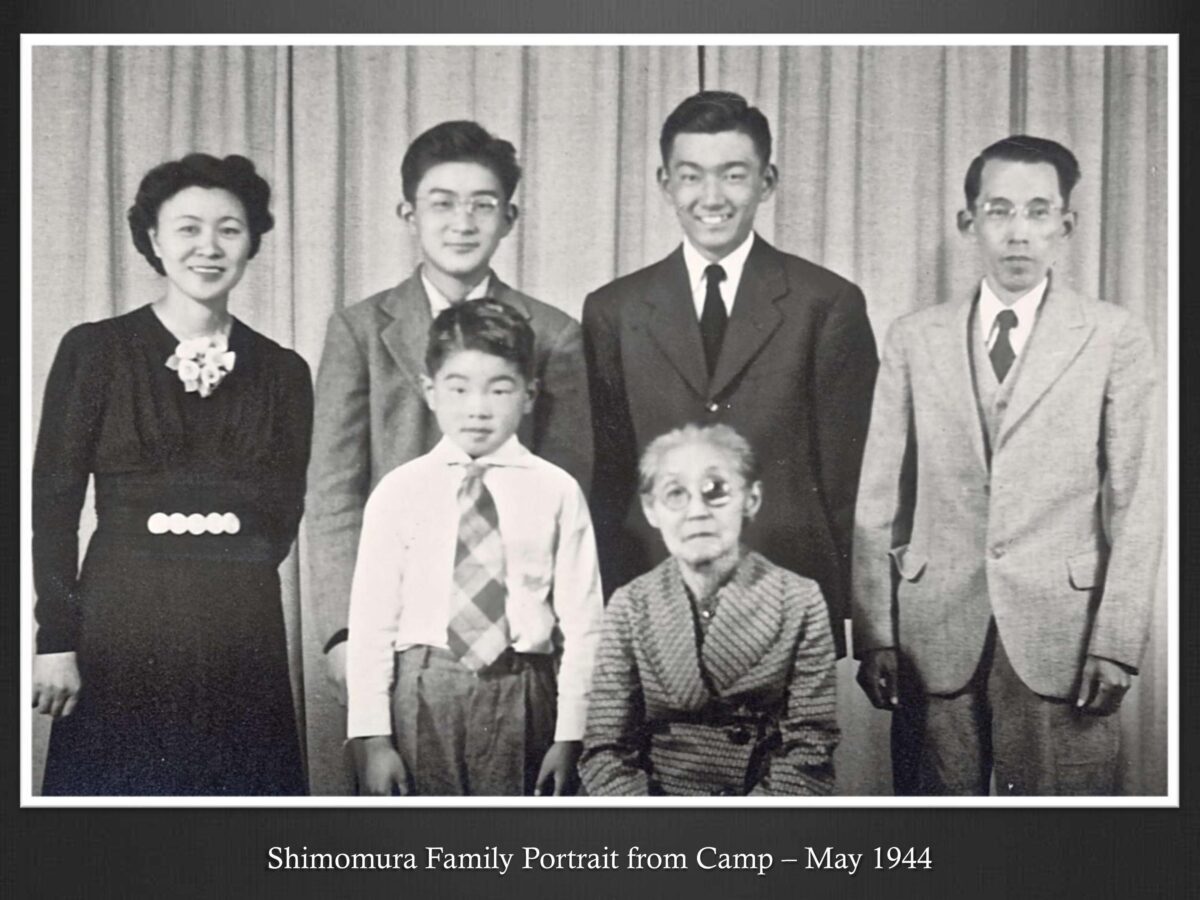
    <summary type="html"><![CDATA[<p><strong><em><span style="font-weight:400;">Following the attack on Pearl Harbor, President Franklin Roosevelt issued Executive Order 9066 on February 19, 1942. This order authorized the forced evacuation of all Japanese descendents into internment camps. Families were forced to leave everything behind to go to an unfamiliar location for an unknown length of time. Yukio Shimomura was a young boy who was sent to Topaz and in 2023 still remembers his experiences. </span></em></strong></p><img src="https://www.intermountainhistories.org/files/fullsize/d39b15a82bd920eefe950be6ed920dde.jpg" alt="Shimomura Family Portrait from Camp - May 1944" /><br/><p><span style="font-weight:400;">On December 7th, 1941, the Japanese military bombed Pearl Harbor bringing the United States into the Second World War. On February 19th, 1942, President Franklin Roosevelt issued Executive Order 9066, forcing all people of Japanese descent living on the West Coast to relocate to internment camps. They took only what they could carry and left their homes in May 1942, having no idea where they were going or whether they would ever return. Yukio Shimomura was one of the victims of this order.</span>
<span style="font-weight:400;">Prior to arriving in Topaz, Utah, many of the Japanese Americans were held in the Tanforan Race Track in San Bruno, California, where they lived in washed-out horse stables lined with linoleum. Yukio Shimomura explained the experience: “All you had was one lightbulb…. Using scrap wood, many made nightstands and other shelves to hold their stuff. Beds were bags filled with hay, and if you couldn’t sleep on that, you slept on the floor… Lots of lines. Lines, lines, lines for everything. We were only there a short time, but it was traumatic… For those living in the horse stalls, they had it bad; they stunk when they came out… you could separate them from those living in the barracks [by their smell]… we were lucky.” Shimomura and his family stayed at Tanforan for a short time before being relocated to the Topaz Internment Camp near Delta, Utah. They remained there for three years behind barbed wire and armed guards. </span>
<span style="font-weight:400;">In Topaz, the Japanese “internees” were separated into blocks and barracks. Each block had twelve barracks, a recreation hall, latrines for men and for women, and a mess hall. The barracks were sectioned into six apartments of different sizes to accommodate families of two, four, or more people. Larger families were given two or more rooms. The six rooms came in three sizes, 20’ by 14’, 20’, or 26’.</span> <span style="font-weight:400;">Shimomura later explained that the walls separating the rooms did not reach the ceiling so that you could hear everything from everyone all the time. He remembered, “there were 300 children born in the camp, so you figure couples realized they had to do what they needed to do.” Privacy was absent in the camp, as there were no doors or stalls in any of the bathrooms or showers. </span>
<span style="font-weight:400;">At the camp, many tried to make life as normal as possible. This included working at different jobs around the camp for roughly $14 to $19 a month, depending on the job. Children went to school, played around the camp, and all lent a helping hand in whatever needed to be done. No matter how hard they tried to make life as normal as possible, the internees understood they were not free. “Topaz was chaotic,” Shimomura summarized as he explained the death of an elderly man who did not understand the order given to turn around when approaching the barbed wire fence. After a third confusing warning, he was shot and killed. While this was the only shooting to occur at Topaz, it scarred all who were there. </span>
<span style="font-weight:400;">In January 1943, President Roosevelt asked for volunteers at Topaz to serve in the United States Army. Shimomura remembers that all who were at the camp were given a questionnaire to determine their loyalty to the United States, with question 28 asking, “Will you swear unqualified allegiance to the United States of America and faithfully defend the United States from any or all attack by foreign or domestic forces and forswear any form of allegiance or obedience to the Japanese emperor or any other foreign government, power or organization?” If the answer was yes, internees could leave the camp for military service. One hundred and five young men, including some young fathers, signed up to fight and were allowed to leave the camp for the first time. The loyalty of Japanese American soldiers who served in the war raised questions about the purposes of the internment camps. In 1943, many others gained sponsors and were allowed to leave the camp to attend universities or enter employment.</p><span style="font-weight:400;">The Topaz Internment camp closed its doors in October 1945, and the barracks were moved by the end of 1947. The Japanese American Citizen League erected a monument in 1976 to commemorate those who had stayed there. In August of 1988, President Ronald Reagan signed the Civil Liberties Act that was later enforced by President George H.W. Bush. It issued a formal apology and gave $20,000 to all those who were still alive, like Shimomura, a small compensation for all they had lost and suffered as a result of internment. </span></p><p><em><strong><a href="https://www.intermountainhistories.org/items/show/793">For more (including 4 images) view the original article</a></strong></em></p>]]></summary>
    <published>2024-03-18T19:58:54+00:00</published>
    <updated>2026-04-17T19:32:17+00:00</updated>
    <link rel="alternate" type="text/html" href="https://www.intermountainhistories.org/items/show/793"/>
    <id>https://www.intermountainhistories.org/items/show/793</id>
    <author>
      <name>Abby Tribe, Brigham Young University </name>
    </author>
  </entry>
  <entry>
    <title type="html"><![CDATA[The Deseret Hospital]]></title>
    <summary type="html"><![CDATA[<p><strong><em>When pioneer Utahns realized their lack of medical knowledge, Brigham Young sent women to the East to obtain medical degrees. Upon their return, many set up private practices, but they wanted to have an official hospital. This desire led to the construction of the Deseret Hospital in 1882 and its operation for 12 years until it closed in 1894. In 2003, a replica of the building was constructed at This is the Place Heritage Park in Salt Lake City. </p></strong></p><img src="https://www.intermountainhistories.org/files/fullsize/84306f5df0e3c988b3178f132247e081.jpg" alt="LDS Hospital - a Full-Service Community Hospital - Salt Lake City, Utah" /><br/><p><span style="font-weight:400;">During Utah’s territorial years, the pioneer settlers lacked medical knowledge which led to high maternal and infant mortality rates. This problem led Brigham Young to encourage a few women to go to the Eastern United States to obtain medical degrees. Some of the women who heeded the call were Martha H. Cannon, Romania P. Penrose, Ellis R. Shipp, Ellen B. Ferguson, and Elvira S. Barney. When they returned to Utah, several opened private practices but they all recognized the need for an official hospital. With the support of the scores of women who convinced church leaders of the need, the women gained their hospital in 1882. </span>
<span style="font-weight:400;">The Deseret Hospital was established by the Latter-day Saint Relief Society and was dedicated in July 1882 by LDS apostle Franklin D. Richards. It was located in a building previously used by the nuns of the Holy Cross Hospital. At the dedication, Ellen B. Ferguson was set apart as the resident physician and Romania P. Penrose as the resident surgeon and visiting physician. </span>
<span style="font-weight:400;">The hospital treated illnesses such as rheumatism, typhoid fever, and diphtheritic tonsillitis, among other diseases. It was also used as a maternity home and training facility for midwives. Women who wanted to learn midwifery but who could not pay for instruction could give fifty days of charity work instead. The hospital was supported by donations that supplied it with the materials necessary to operate. The Relief Society also organized the Deseret Hospital Association, which any woman in good standing could join by paying one dollar annually. Patients were charged $3-6 a week for board, room, and nursing, and the hospital’s maximum capacity was about 40-50 patients. </span>
<span style="font-weight:400;">In 1884 the hospital was moved to a different location, but a lack of funds forced its closure in 1894. The midwifery school continued to operate until 1905 when W. H. Groves purchased land to build a new LDS Hospital. This hospital continued to expand until it had fifteen branches under the direction of The Church of Jesus Christ of Latter-Day Saints. In 1975, the Church transferred the operation of the hospitals to Intermountain Health Care. </span>
<span style="font-weight:400;">A replica of the Deseret Hospital was constructed at This is the Place Heritage Park in 2003. The first floor of the building shows a replica of the hospital and the second floor contains a collection from the Utah Quilt Guild. Elder Russell M. Nelson dedicated the structure on October 25, 2003, to highlight the contributions of the women who traveled to the East to obtain an education and to commemorate the original Deseret Hospital.</span></p><p><em><strong><a href="https://www.intermountainhistories.org/items/show/791">For more (including 4 images) view the original article</a></strong></em></p>]]></summary>
    <published>2024-03-03T04:30:48+00:00</published>
    <updated>2026-04-17T19:32:17+00:00</updated>
    <link rel="alternate" type="text/html" href="https://www.intermountainhistories.org/items/show/791"/>
    <id>https://www.intermountainhistories.org/items/show/791</id>
    <author>
      <name>Madison Sterzer, Brigham Young University</name>
    </author>
  </entry>
  <entry>
    <title type="html"><![CDATA[The Great Salt Lake Shorelands Preserve]]></title>
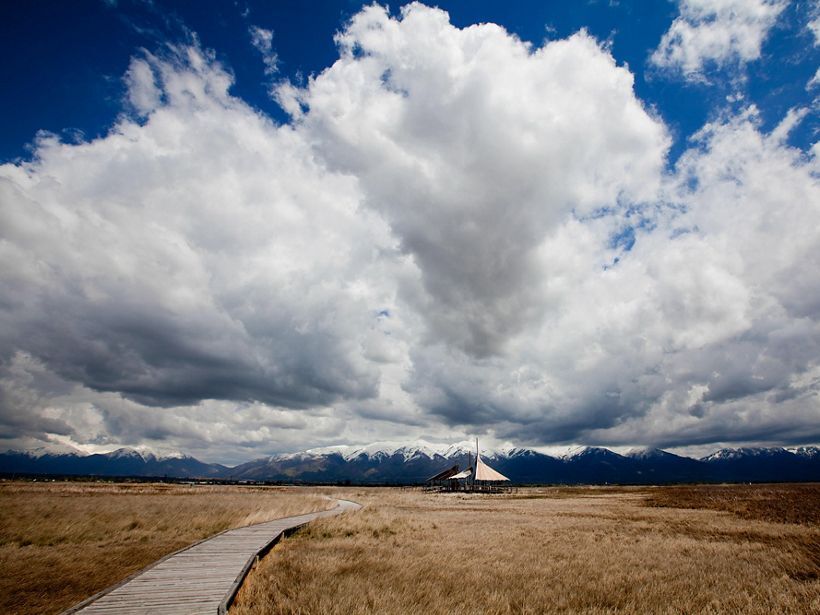
    <summary type="html"><![CDATA[<p><strong><em>Nicknamed “the Bird Refuge,” The Great Salt Lake Shorelands Preserve in Layton, Utah is a rest stop for 4-6 million birds migrating annually. The protected land has also become a recreational spot for tourists and locals to bird watch and enjoy the wetlands of the Great Salt Lake.</em></strong></p><img src="https://www.intermountainhistories.org/files/fullsize/3ea1ff3a8d741ab1d715b39c0db58c87.jpg" alt="Great Salt Lake Pavilion " /><br/><p><span style="font-weight:400;">In 2003, a group called “The Nature Conservancy” gained custody of 4,400 acres of wetlands fed by the waters of the Great Salt Lake. The wetlands lie on the eastern shore of the lake near Farmington Bay and Antelope Island State Park. Nicknamed “the Bird Refuge,” this preserve’s mission is to provide refuge to 4-6 million birds as they make their annual migrations on routes that span from the Arctic to Central and South America. Bird watchers have documented 250 species visiting the Shorelands preserve to feed or rest and 93 species that nest there. The number of birds passing through the area has increased by 25% since 2020, showing the importance of the preserve. </span>
<span style="font-weight:400;">The Shorelands Preserve includes a circular boardwalk spanning about 1 mile. Two wooden structures serve as stops along the boardwalk, one hosting a 30-foot viewing tower for visitors to better observe the surrounding area and to increase their chances of spotting birds. The other is a large wooden pavilion. Informative signs dot the boardwalk, helping visitors identify the birds that frequent the Preserve. They also provide information about the ecosystem of the area. </span>
<span style="font-weight:400;">In May 2020, the Mitigation Commission released a statement turning over ownership of The Nature Conservancy to the federal government. Giving the federal government stewardship over The Nature Conservancy was viewed as a better way to protect the lands from future development. This was crucial at a time when Utah’s Department of Transportation was considering expanding the West Davis Corridor, a road system. The drought-driven shrinking of the Great Salt Lake poses an additional risk to the region. The Nature Conservancy is in the process of developing strategies to divert water to the preserve to help the wetlands and aid the bird species that rely on it.</span></p><p><em><strong><a href="https://www.intermountainhistories.org/items/show/790">For more (including 4 images) view the original article</a></strong></em></p>]]></summary>
    <published>2024-03-03T03:57:53+00:00</published>
    <updated>2026-04-17T19:32:17+00:00</updated>
    <link rel="alternate" type="text/html" href="https://www.intermountainhistories.org/items/show/790"/>
    <id>https://www.intermountainhistories.org/items/show/790</id>
    <author>
      <name>Gabby Segura, Brigham Young University</name>
    </author>
  </entry>
  <entry>
    <title type="html"><![CDATA[The History of Sundance]]></title>
    <summary type="html"><![CDATA[<p><strong><em><span style="font-weight:400;">Sundance, Utah is a small resort in the North Fork of Provo Canyon that has a rich history, particularly within its ownership. The area was originally populated by members of the Ute nation. It then passed into the hands of the Stewart family who arrived with the Latter-day Saints. Most recently it has been the site of a ski resort owned and operated by Hollywood actor Robert Redford. </span></em></strong></p><img src="https://www.intermountainhistories.org/files/fullsize/70ba18fee03d691bf08a4bb9fb530537.jpg" alt="Sundance from Stewarts Cascades Trail, Jun 16" /><br/><p><span style="font-weight:400;">Nestled in Provo Canyon, what is known today as Sundance has a rich history that reflects the different eras of Utah settlement. The land was occupied by the Ute nation beginning in 1,400 AD. Sundance was in an area where the Utes would visit in the summer to enjoy the cool mountain temperatures and lush forests filled with game. The arrival of Latter-day Saint pioneers pushed the Utes out of the area, leaving Sundance to be settled by the Stewart family. </span>
<span style="font-weight:400;">The Stewarts were Scottish immigrants that came to Utah in the mid-1800s. Andrew Jackson Stewart Jr. and his sons surveyed land in Provo Canyon and felt particularly drawn to the area. Through the Homestead Act of 1862, the Stewarts were each able to secure 160 acres of land within the canyon. Other families joined them, and by 1911, there were 2,200 acres of settled land in the North Fork of Provo Canyon that were then known as Stewart Flats. </span>
<span style="font-weight:400;">Stewart Flats began to be recognized for its recreational draw in the 1930s and 40s. In 1944, S. Paul Stewart and his brother and sister-in-law Ray and Ava Stewart opened up Timp Haven, a small ski area that operated for 20 years. Timp Haven was greeted by a noteworthy guest in the 1950s when Hollywood actor Robert Redford accidentally stumbled on the area due to a miscalculated turn on a road trip through the West. </span>
<span style="font-weight:400;">Redford purchased a sizable portion of the Stewart family land in 1969 and renamed the area Sundance, after his character in the western film </span><i><span style="font-weight:400;">Butch Cassidy and the Sundance Kid</span></i><span style="font-weight:400;">. According to Redford, one of his major goals for Sundance was “to develop a little and preserve a great deal.” Instead of succumbing to overdevelopment with hotels and condominiums, Redford’s focus at Sundance was environmental conservation and the promotion of the arts. </span>
<span style="font-weight:400;">In 1978 Redford increased his Utah presence by founding the Sundance Film Festival, held annually in Park City, building on his Sundance legacy. In 2020, Redford sold 2,600 acres, including the Sundance Mountain Resort, to Broadreach Capital Partners and Cedar Capital Partners with an agreement that they would continue Sundance’s pursuit of environmental preservation and conscientious development. </span></p><p><em><strong><a href="https://www.intermountainhistories.org/items/show/789">For more (including 4 images) view the original article</a></strong></em></p>]]></summary>
    <published>2024-03-03T03:43:20+00:00</published>
    <updated>2026-04-17T19:32:17+00:00</updated>
    <link rel="alternate" type="text/html" href="https://www.intermountainhistories.org/items/show/789"/>
    <id>https://www.intermountainhistories.org/items/show/789</id>
    <author>
      <name>Britain Schwarz, Brigham Young University</name>
    </author>
  </entry>
  <entry>
    <title type="html"><![CDATA[Founding of the Utah People’s Party]]></title>
    <summary type="html"><![CDATA[<p><strong><em><span style="font-weight:400;">19th-century tensions between members of the Church of Jesus Christ of Latter-day Saints and opponents of the church in Utah led to the creation of two political parties in 1870, the People’s Party and the Liberal Party. The founding of these parties was controversial in that members of the Church flooded their opponents’ meeting in order to form their own party. </span></em></strong></p><img src="https://www.intermountainhistories.org/files/fullsize/59e45fffcfef628985ad3c07fba0226b.jpg" alt="William Godbe" /><br/><p><span style="font-weight:400;">In 1870, tension between the members of the Church of Jesus Christ of Latter-day Saints and non-members living in Utah was high. Church members voted as a block, which made it nearly impossible for non-members of the church to find a voice in government through traditional democratic means. </span>
<span style="font-weight:400;">The foundation of what some called the New Movement, or the Godbeites aggravated the tensions. The Godbeites were former members of the LDS Church, newfound spiritualists, and reformists. They were a unique splinter group within the Church who wanted to reform the Church rather than destroy it, as many of its enemies hoped to do. The Godbeites preached education and reform to Utah’s LDS and non-LDS residents as well as to the federal officials in the state. </span>
<span style="font-weight:400;">The Godbeites gained little traction against the the Church of Jesus Christ of Latter-day Saints, which maintained a large majority of the population in Utah, but it did capture the attention of non-members who sought to create a coalition to counter church political dominance. Godbeites joined non-member businessmen, miners, and others unaffiliated with the Church, bound by little other than their goal of disrupting the dominance of the Church of Jesus Christ in political matters. </span>
<span style="font-weight:400;">On the evening of February 10, 1870, the Godbeites and their partners gathered at the Walker Dry Goods Store on the corner of 3rd South and Main Street in Salt Lake City, Utah. The Godbeites and their new allies intended to form a new political party—one for the “People” as they advertised it. Church members caught word. Editors of the Deseret News and other church leaders organized a protest. Many members showed up at the meeting and managed to get in the doors before anyone else. They occupied all the seats, elected their own candidates, and formed a new party, calling themselves the “People’s Party” as a tongue-in-cheek reference to the Godbeites earlier advertisements. </span>
<span style="font-weight:400;">After their peaceful protest, the Saints left and the non-members organized the “Liberal Party.” One member of the new party remarked that the move by LDS leaders to flood their meeting was the “cleverest thing.” Luckily, the event did not devolve into violence, but the tension between these two parties would continue for their two decades of existence. Newspapers as far away as Sacramento, California wrote about the tension, predicting incorrectly that conflict between the competing factions spelled “impending doom.”</span></p><p><em><strong><a href="https://www.intermountainhistories.org/items/show/788">For more (including 4 images) view the original article</a></strong></em></p>]]></summary>
    <published>2024-03-02T01:46:51+00:00</published>
    <updated>2026-04-17T19:32:17+00:00</updated>
    <link rel="alternate" type="text/html" href="https://www.intermountainhistories.org/items/show/788"/>
    <id>https://www.intermountainhistories.org/items/show/788</id>
    <author>
      <name>Elle Morgan, Brigham Young University</name>
    </author>
  </entry>
  <entry>
    <title type="html"><![CDATA[Indigenous People of Bryce Canyon]]></title>
    <summary type="html"><![CDATA[<p><strong><em><span style="font-weight:400;">The place known today by millions of people as Bryce Canyon National Park has been known by different names to many other people over centuries. The history of those who have journeyed along the canyon before paths were paved there still have a deep connection to the land. And over the past century, an increasing number of people admire the beauty and appreciate such a connection.</span></em></strong></p><img src="https://www.intermountainhistories.org/files/fullsize/83f8b3ce41456cf4cf8fa80c55f1fc6d.jpg" alt="[Untitled]" /><br/><p><span style="font-weight:400;">Unka tumpee wun-nurrx tungwatsini xoopakichu ahnax, Sikyaatutukwi, Bios to chi bi kool, Angka-ku-wass-a-wits, Bryce’s Canyon. </p><p>These are the former names of the geographic marvel now known as Bryce Canyon National Park. Southern Paiutes, Hopi, Zuni, Ute, and Navajo tribes all lived in this region and enjoyed its natural beauty and wonders. Even before these nations, other ancient peoples lived here for centuries. The Indian names, meaning “place of yellow points,” “red painted faces,” and “red rock standing like a man in a hole,” come from ancient legends of the rock formations now called “hoodoos,” meaning scary or a bad omen. Some claimed that the hoodoos were once people who had been turned to stone. This incredible landscape provided a place for indigenous peoples to hunt and gather grass seeds and other foods, creating a deep connection with the land. </span>
<span style="font-weight:400;">Sadly, from 1850 to 1890, through various laws, acts, and atrocities, Native Americans were forced from Bryce Canyon, some to distant reservations. Those that were far removed from Bryce Canyon, like the Navajo, remembered its beauty through oral histories. The Paiutes were not driven out until about 1880, five years after LDS Scottish Rancher Ebenezer Bryce settled there. From the turn of the century onward, new people began coming into the area to settle or sight-see. In 1916, with help from the Union Pacific Railroad, lodges and rest stations began to be built, providing a place for visitors to stay. In 1923, Bryce Canyon became a National Monument and in 1928 it became a National Park, with the boundaries expanded in 1931 and again in 1942. In 1934 workers of the Civilian Conservation Corps created much of the infrastructure that helped make Bryce Canyon more accessible to the public. Today this beautiful National Park is visited by over 1.5 million people annually.</span>
<span style="font-weight:400;">Though this park is now accessible to many people, the indigenous nations that once lived there still have a great connection to the land through their histories and traditions. In past decades most members of those nations lack the resources needed to visit Bryce Canyon, though more indigenous people are able to visit these sacred sites today. They continue to pass on the traditions and stories to new generations. Some Paiutes have returned to the area and still live nearby. Dozens of people currently reside within Bryce Canyon's lands. Leigh Kuwanwisiwma, a member of the Hopi Tribe, teaches “This is our heaven. This is the human people’s heaven, and we need to appreciate that.” A sacred place to many tribes, and now a nationally protected park, Bryce Canyon deserves respect and reverence as visitors admire its wonders.</span></p><p><em><strong><a href="https://www.intermountainhistories.org/items/show/787">For more (including 3 images) view the original article</a></strong></em></p>]]></summary>
    <published>2024-03-01T23:35:49+00:00</published>
    <updated>2026-04-17T19:32:17+00:00</updated>
    <link rel="alternate" type="text/html" href="https://www.intermountainhistories.org/items/show/787"/>
    <id>https://www.intermountainhistories.org/items/show/787</id>
    <author>
      <name>Rachel Feilbach, Brigham Young University</name>
    </author>
  </entry>
  <entry>
    <title type="html"><![CDATA[Museum of Mormon Mexican History]]></title>
    <summary type="html"><![CDATA[<p><strong><em><span style="font-weight:400;">Tucked away on a Provo side street, the Museum of Mormon Mexican History is a hidden gem. This museum walks through a private collection of historical memorabilia relating to the history of the LDS church in Mexico. </span></em></strong></p><img src="https://www.intermountainhistories.org/files/fullsize/970d37f08694dd900a094665061039b2.jpg" alt="[Untitled]" /><br/><p><span style="font-weight:400;">Provo, Utah is home to an incredible variety of museums, historic sights, and other thrilling experiences. Most students attending either Brigham Young University or Utah Valley University have visited a museum or two, whether for church sponsored outings, a date night, or just looking for something fun to do with friends. However, one of Provo’s museums remains quiet. Established in 2011, the Museum of Mormon Mexican History sits between Brigham Young University campus and west campus housing. Many students pass this small museum daily on their walk to campus, but few have set foot inside its walls. </span>
<span style="font-weight:400;">The Museum of Mormon Mexican History houses the private collection of unique artifacts left by the founder’s paternal grandmother. Many of these come from the 19th and early 20th centuries, providing insight into the beginnings of the Church of Jesus Christ of Latter-Day Saints in Mexico and Latin America. </span>
<span style="font-weight:400;">The founder, Fernando R. Gomez explains that “The idea of establishing a museum of Mexican Mormon History came from a humble but unique collection left by my paternal grandmother's daughter, Consuelo. My cousin Raymond had been the keeper of such memorabilia. With his help and that of Sergio Pagaza Castillo, we founded a museum in Mexico City in 1991, and an extension was opened in Provo, Utah in 2011. The Mexico City museum closed in 2014; however, this endeavor has been a labor of love. We four, Raymundo, Sergio, my wife Enriqueta, and I have made a dream come true. We, with limited resources, have brought to life a forgotten history - a legacy for the future."</span>
<span style="font-weight:400;">The collection comprises items like traditional clothing, early sacrament trays, and original publications. There are also life size mannequins depicting certain scenes, such as the translating of the Book of Mormon into Spanish. There is a full exhibit dedicated to the people in El Paso, Texas, where the Mexican saints found refuge while fleeing persecution. The display placards in the museum are in both English and Spanish, providing a uniquely accessible experience for visitors. </span>
<span style="font-weight:400;">The museum is free for anyone to visit, but donations are appreciated. Museum operators advertise tours for Family Home Evening groups and other student events. While the museum appears small, there is an incredible wealth of information and artifacts within it. </span></p><p><em><strong><a href="https://www.intermountainhistories.org/items/show/786">For more (including 7 images) view the original article</a></strong></em></p>]]></summary>
    <published>2024-03-01T23:17:13+00:00</published>
    <updated>2026-04-17T19:32:17+00:00</updated>
    <link rel="alternate" type="text/html" href="https://www.intermountainhistories.org/items/show/786"/>
    <id>https://www.intermountainhistories.org/items/show/786</id>
    <author>
      <name>Mia Delli Gatti, Brigham Young University</name>
    </author>
  </entry>
  <entry>
    <title type="html"><![CDATA[Pleasant Grove Canning Company]]></title>
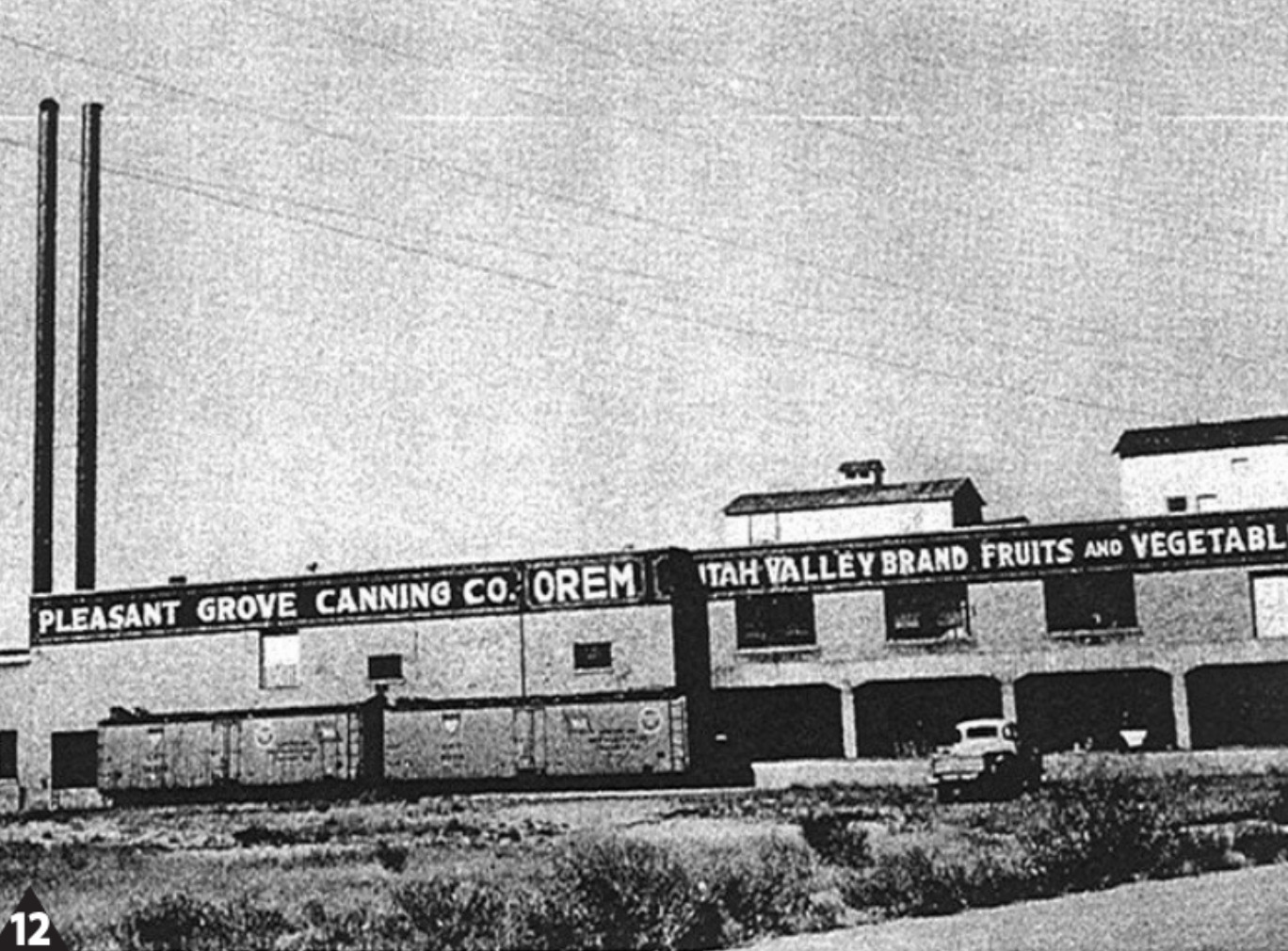
    <summary type="html"><![CDATA[<p><strong><em>Although no longer standing, the Pleasant Grove Canning Company was once a thriving business, canning large quantities of locally-grown produce and distributing it to many places around the country.</em></strong></p><img src="https://www.intermountainhistories.org/files/fullsize/00b1f46b83a87cfaed7060d882876abc.jpg" alt="Pleasant Grove Canning Company" /><br/><p><span style="font-weight:400;">The Pleasant Grove Canning Company, established in 1919 in Orem, Utah, marked a significant milestone as the town’s inaugural major industry. The canning industry had been growing in the United States for about 50 years before the Pleasant Grove Canning Company was created. By the time it opened, the preservation of produce through canning had been perfected. In the 1930s, during the Great Depression, there was little industry in Utah County, but the canning company took in produce from local farmers and farmers of the Provo Bench, canning, among other things, 75,000 cases of tomato paste. The company sold the tomato paste to the Campbell Soup Company.  </span>
<span style="font-weight:400;">The canning company underwent substantial changes in subsequent years as the industry in the state evolved.  In 1960, the Pleasant Grove Canning Company merged with Ogden’s Utah Canning Company and it became known as the Orem Plant of Utah Packers. Eventually, the decision was made to sell the company. In 1972, the company was sold to Booth Distributing Inc. and they used the building as a warehouse. </span>
<span style="font-weight:400;">Over the ensuing decades, the building was sold multiple times to different owners. In 1992, the once-thriving structure had fallen into disrepair and deemed a hazard by the city of Orem. Consequently, in 1993, the building was demolished, leaving behind only memories and a historic marker commemorating the site of the former Orem landmark. </span></p><p><em><strong><a href="https://www.intermountainhistories.org/items/show/785">For more (including 3 images) view the original article</a></strong></em></p>]]></summary>
    <published>2024-02-26T20:24:10+00:00</published>
    <updated>2026-04-17T19:32:17+00:00</updated>
    <link rel="alternate" type="text/html" href="https://www.intermountainhistories.org/items/show/785"/>
    <id>https://www.intermountainhistories.org/items/show/785</id>
    <author>
      <name>Trevor Sites, Brigham Young University</name>
    </author>
  </entry>
  <entry>
    <title type="html"><![CDATA[Origins of Bryce Canyon National Park]]></title>
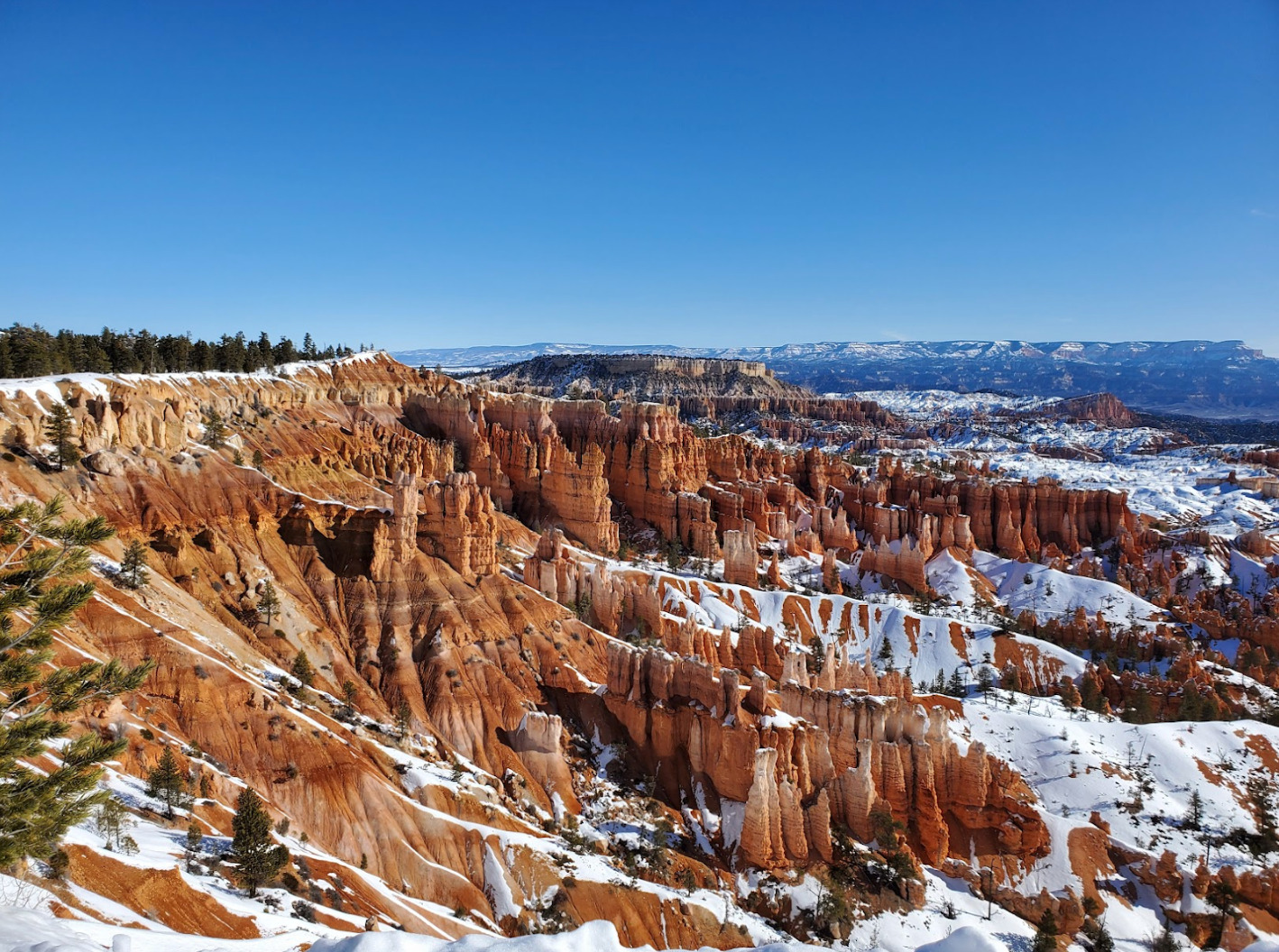
    <summary type="html"><![CDATA[<p><strong><em><span style="font-weight:400;">The land around Bryce Canyon was owned by Paiutes, Mormon settlers, the Union Pacific Railroad, and the federal government before it became a national park in 1924. This gorgeous geological wonder is now enjoyed by millions of visitors each year.</span></em></strong></p><img src="https://www.intermountainhistories.org/files/fullsize/4583d33941339bd9472eeb68144da8cd.jpg" alt="Snow on the Rim of Bryce Canyon" /><br/><p><span style="font-weight:400;">According to archaeological surveys, Bryce Canyon has been inhabited for at least 10,000 years. Paiutes hunted small game and gathered pine nuts in the area. After the Black Hawk War in the 1860s, Mormon settlers moved into areas previously occupied by the Paiutes. One such settler was Ebenezer Bryce, who built a road through the canyon that adopted his name. Mormons in the small settlement of Tropic built the Tropic Irrigation Ditch through Bryce Canyon in 1892. For decades, the beautiful scenery of Bryce Canyon was largely kept private due to the difficulty of travel and the harsh conditions of the area.</span>
<span style="font-weight:400;"> S. Forest Service Supervisor J.W. Humphrey pushed for Bryce Canyon to become a National Park after he first visited the land in 1915. He said, “You can perhaps imagine my surprise at the indescribable beauty that greeted us, and it was sundown before I could be dragged from the canyon view. You may be sure that I went back the next morning to see the canyon once more, and to plan in my mind how this attraction could be made accessible to the public.” After sending photographs and film to the federal Forest Service and the Union Pacific Railroad, the canyon began to attract national attention. Ruby and Minnie Syrett bought land along the rim of Bryce Canyon and built a lodge and an inn for tourists in the 1920s. The Union Pacific Railroad bought much of the land from the Syretts, but Ruby’s Inn still stands today.</span></p><p><span style="font-weight:400;">Bryce Canyon was declared a national monument in 1923 by President Warren G. Harding. On February 25, 1928, Bryce Canyon officially became a national park by an act of  Congress. The size of the park was increased in 1931 by President Hoover, to the current 35,835 acres. Today, over 2 million people visit the park each year to enjoy southern Utah’s stunning scenery and recreational opportunities.</span></p><p><em><strong><a href="https://www.intermountainhistories.org/items/show/784">For more (including 4 images) view the original article</a></strong></em></p>]]></summary>
    <published>2024-02-26T20:05:24+00:00</published>
    <updated>2026-04-17T19:32:17+00:00</updated>
    <link rel="alternate" type="text/html" href="https://www.intermountainhistories.org/items/show/784"/>
    <id>https://www.intermountainhistories.org/items/show/784</id>
    <author>
      <name>Renae Cameron, Brigham Young University</name>
    </author>
  </entry>
  <entry>
    <title type="html"><![CDATA[Martha Hughes Cannon Memorial Statue]]></title>
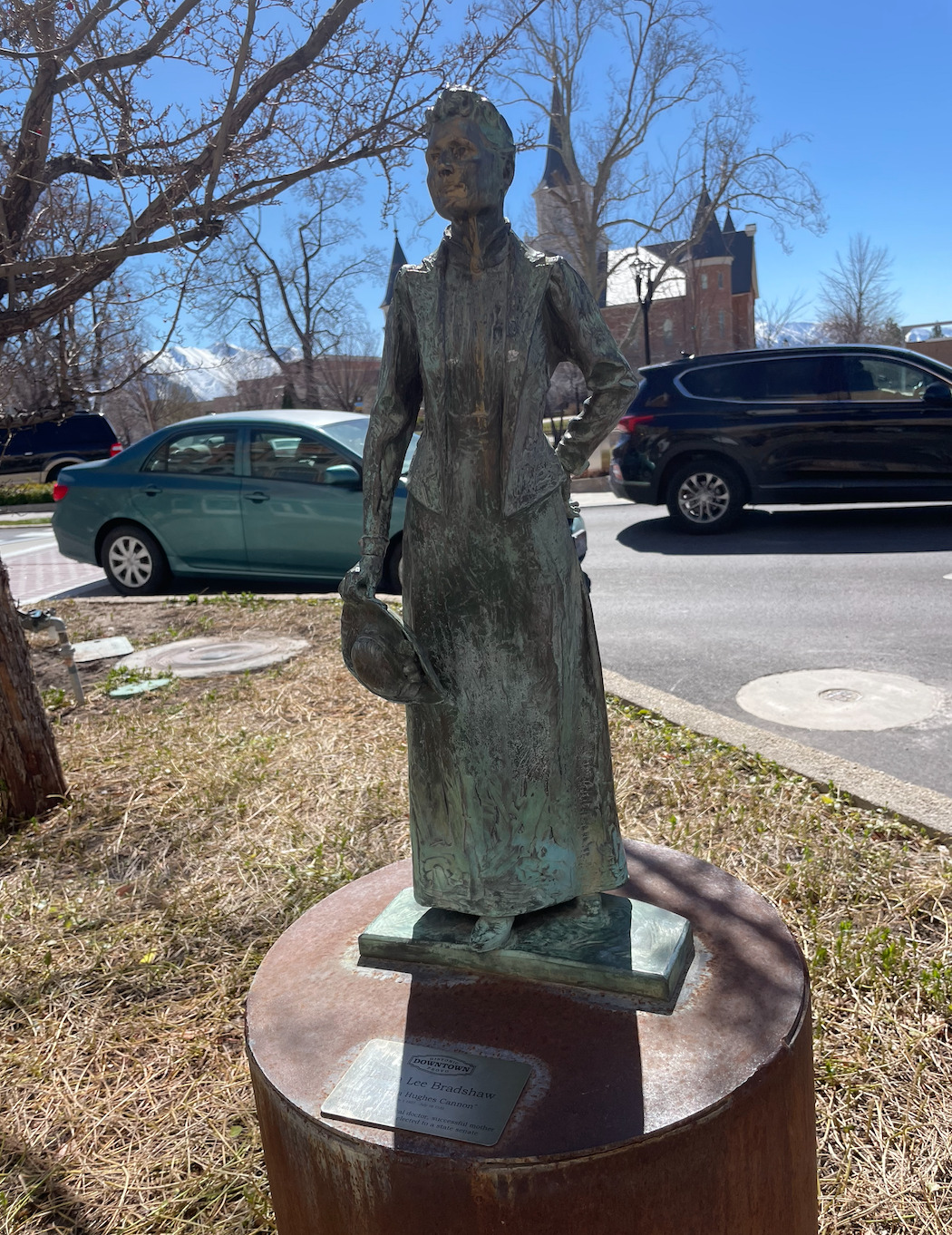
    <summary type="html"><![CDATA[<p><strong><em>Martha Hughes Cannon was an outstanding woman with great ambition and intelligence. As she gained an education and grew in the LDS religion, she capitalized on her position as an educated woman of faith to represent Utah women as they battled anti-polygamy legislation and public health issues.</em></strong></p><img src="https://www.intermountainhistories.org/files/fullsize/48b93f901ad49440cfe49a8350fd6fe1.jpg" alt="Martha Hughes Cannon Statue, Provo" /><br/><p>Martha Hughes Cannon was born in Wales on July 1st, 1857. During her infant years, Martha’s parents joined other new converts to the LDS faith on a long journey to Utah. Tragically, her father passed away only three days after arriving in Utah and surviving the arduous westward trek. By her teenage years, Martha had faced considerable hardship and poverty, but showed resilience and hope for the future. Martha’s young adult years were full of education. After graduating college with a degree in chemistry, Martha was accepted into the University of Michigan, one of few medical schools that admitted men and women. She also studied at the National School of Oratory, becoming a skilled public speaker. Her medical skills and oratorical skills would be great assets during her involvement in Utah politics. </p><p>Martha’s personal and professional life gave her a unique position in the eyes of the United States government. As the fourth wife to Angus M. Cannon, Martha faced considerable scrutiny from territorial officials. As a doctor, she delivered many children born to polygamist mothers and was seen as an important witness to prosecute polygamy. She lived out of state for many years to avoid testifying against and incriminating her husband, along with other polygamist families. The official outlawing of polygamy in 1890 allowed Martha to return to Utah and begin her career in politics.</p><p>A request from the Democratic party prompted Martha to run in the state senate election. Although her husband was running for the Republican party, this did not stop Martha from fulfilling what she viewed as an incredible civic opportunity. After winning the Democratic seat, Martha spent four years effectively advocating for public health and education causes in Utah. She authored bills to start the Utah Health Department, and schools for children with disabilities. Unfortunately, Martha’s political career came to an end with her third pregnancy. The nation viewed this as proof that Mormons were still practicing polygamy, and she was now an unacceptable representative. Although her time was cut short, Martha provided many valuable insights to Utah’s state legislature and was a voice for women across the state of Utah.</p><p><em><strong><a href="https://www.intermountainhistories.org/items/show/783">For more (including 3 images) view the original article</a></strong></em></p>]]></summary>
    <published>2024-02-26T19:39:54+00:00</published>
    <updated>2026-04-17T19:32:17+00:00</updated>
    <link rel="alternate" type="text/html" href="https://www.intermountainhistories.org/items/show/783"/>
    <id>https://www.intermountainhistories.org/items/show/783</id>
    <author>
      <name>Olivia Stockman, Brigham Young University</name>
    </author>
  </entry>
  <entry>
    <title type="html"><![CDATA[Times in Topaz: Daily Life in Utah&#039;s Japanese Internment Camp]]></title>
    <summary type="html"><![CDATA[<p><strong><em>Utah's only internment camp, Topaz, housed approximately 9,000 Japanese Americans for three years during World War II. People in Topaz attempted to maintain normalcy in their daily lives by having schools, recreational activities, a newspaper, and cultural associations.</em></strong></p><img src="https://www.intermountainhistories.org/files/fullsize/4bc10125afe0cd9d4aa8e8a7b72774dd.jpg" alt="Topaz Times Collection" /><br/><p><span style="font-weight:400;">Located behind a frail barbed wire fence fifteen miles out from the remote town of Delta, Utah, the Topaz internment camp is utterly isolated from the rest of the state. Topaz was an American concentration camp where approximately 9,000 Japanese and Japanese Americans primarily from California’s Bay Area were held during World War II. Open from September 1942 until October 1945, daily life in the Topaz internment camp was characterized by an attempt to maintain some sense of normalcy despite severe restrictions and unfair treatment. </span>
<span style="font-weight:400;">The main living area of Topaz was a 640-acre compound with rows of barracks that contained living quarters, communal bathrooms, and recreational areas. Topaz also had two elementary schools, a high school, and a library. Teachers were often camp residents or local adults. Students who graduated from Topaz High were sometimes allowed to leave Topaz to attend colleges in the East. The efforts to promote education despite incarceration reflect the attempts to maintain normalcy for Japanese people living in Topaz. </span>
<span style="font-weight:400;">Recreational activities in Topaz included participating in cultural associations, sports teams such as basketball and baseball, sumo wrestling, arts and crafts, and even the making of the traditional Japanese dessert mochi to celebrate the Japanese New Year. Many people in Topaz exhibited their creative work in art and hobby shows, which displayed traditional calligraphy, sculptures, painting, and jewelry. Many pieces of art from Topaz are still around today, showing the lasting impact and endurance of those who were in Japanese internment camps. </span>
<span style="font-weight:400;">Life in Topaz was recorded in the newspaper </span><i><span style="font-weight:400;">Topaz Times. </span></i><span style="font-weight:400;">Written by people in the camp, the paper documented news in Topaz including weather, events within the camp, new constructions and developments, new arrivals of people, sporting events, school, and recreational activities. This newspaper, with frequent updates about life and events within Topaz, is an excellent source of information about daily life behind the barbed wire. </span>
<span style="font-weight:400;">The lives of those forced into internment at Topaz were drastically altered, but many tried to maintain some sense of normalcy for those three years in order to survive. Today Topaz is gone, with only the foundations of barracks and some fencing indicating it was once an internment camp. It is important to remember the stories of those who were in Topaz to commemorate a darker side of Utah’s and the United States' history, to honor the resilience of those incarcerated, and to give a voice and identity to those who were once silenced. </span></p><p><em><strong><a href="https://www.intermountainhistories.org/items/show/782">For more (including 3 images) view the original article</a></strong></em></p>]]></summary>
    <published>2024-02-26T19:11:24+00:00</published>
    <updated>2026-04-17T19:32:17+00:00</updated>
    <link rel="alternate" type="text/html" href="https://www.intermountainhistories.org/items/show/782"/>
    <id>https://www.intermountainhistories.org/items/show/782</id>
    <author>
      <name>Kimball Yeates, Brigham Young University</name>
    </author>
  </entry>
  <entry>
    <title type="html"><![CDATA[Joseph F. Smith and the Islanders of Iosepa]]></title>
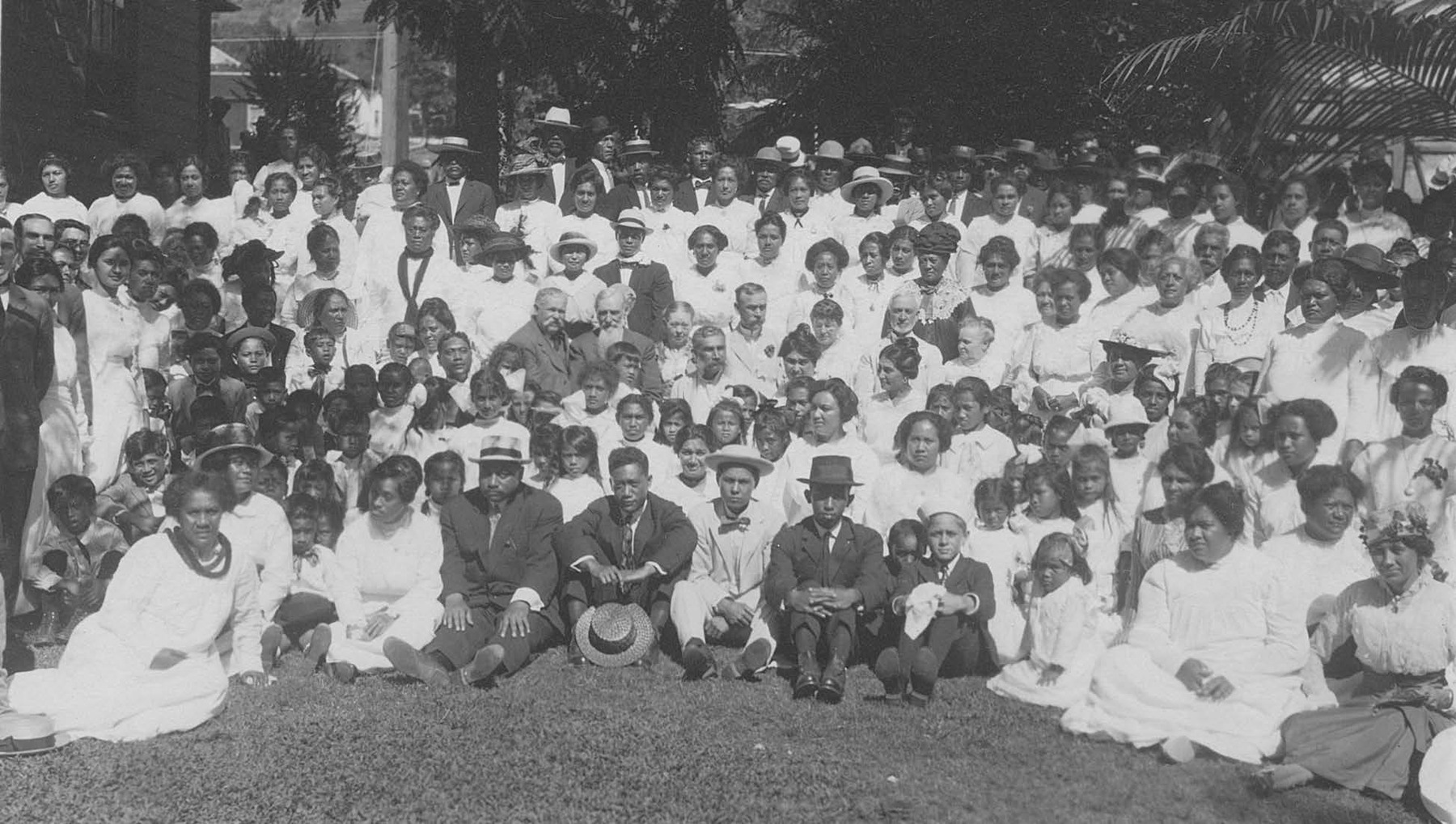
    <summary type="html"><![CDATA[<p><strong><em>The Hawaiian members of the Church of Jesus Christ of Latter-day Saints had a very special relationship with the Church’s sixth president, Joseph F. Smith. He was influential in Hawaiian migrations both to and from Utah, including during the time that many of them resided in Iosepa, a Hawaiian colony.</p></strong></p><img src="https://www.intermountainhistories.org/files/fullsize/c4441ee0af02c1fa09ac1230935470cc.jpg" alt="Joseph F. Smith and Hawaiian Saints" /><br/><p><span style="font-weight:400;">At the age of fifteen, Joseph F. Smith served as a missionary for the Church of Jesus Christ of Latter-day Saints in the Hawaiian Islands in the early 1850s. During his several missions, Smith learned the Hawaiian language and developed a loving relationship with the Native Hawaiians. Throughout his life, Smith traveled to Hawaii more often than any other place outside of the western United States. Smith was successful in converting many Hawaiians to the LDS Church. The doctrine of gathering to “Zion” was a central teaching preached by Joseph F. Smith and other missionaries at that time. When immigration laws allowed it, a few hundred Hawaiian Latter-day Saints migrated to Utah to gather with their fellow Saints and to follow the teachings they had received. The Islanders experienced racism, discrimination, job-turnover, and prejudice that led the LDS Church to seek solutions. In 1889, a settlement was established in Tooele County for the Pacific Islanders settling in Utah. It was to be named after Joseph F. Smith, which in the Hawaiian Language is “Iosepa.” At that time, Smith was a member of the Church’s First Presidency and would later become the President of the Church.</span>
<span style="font-weight:400;">In both public and private correspondence, Joseph F. Smith was explicit in expressing his love for the Iosepan Saints. With a letter to S. M. Kinimakalehua of Iosepa, Smith sent “some cloth pants for the cold time that is coming… This is only rags, but take it with my love.” He reported that “Canon [George Q. Cannon] is joining with my family and I in sending a lot of our love to you and Makaweli and all of the Saints in Iosepa.” During a visit to Hawaii in 1915, Smith became convinced of the need for a temple in Hawaii. Upon returning to Utah, he encouraged the Hawaiian Saints to move back to Hawaii and help build a temple in La’ie. Smith also thought that the future Church Presidents would not have the same love for the Hawaiians that he did, which influenced his encouragement of the Islanders to return to their homeland. The Saints trusted in the council of Joseph F. Smith, and most resettled near the temple site in Hawaii. The settlement of Iosepa was fully abandoned by 1917. In November of 1918, Joseph F. Smith passed away and one year later the La’ie Temple was completed. </span></p><p><em><strong><a href="https://www.intermountainhistories.org/items/show/780">For more (including 4 images) view the original article</a></strong></em></p>]]></summary>
    <published>2024-02-24T03:37:50+00:00</published>
    <updated>2026-04-17T19:32:17+00:00</updated>
    <link rel="alternate" type="text/html" href="https://www.intermountainhistories.org/items/show/780"/>
    <id>https://www.intermountainhistories.org/items/show/780</id>
    <author>
      <name>Jordan Castillo, Brigham Young University</name>
    </author>
  </entry>
  <entry>
    <title type="html"><![CDATA[The Salt Lake Theatre: Brigham Young&#039;s Love Letter to Theater Out West]]></title>
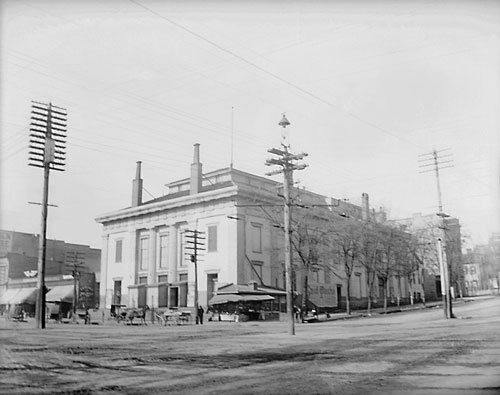
    <summary type="html"><![CDATA[<p><strong><em>The creation of the Salt Lake Theatre was led by Brigham Young and supported by the Church of Jesus Christ of Latter Day Saints in 1862. The Theatre was the most decorated building in Utah territory before the Salt Lake City Temple and Tabernacle were constructed. Its 66-year run brought entertainment and enjoyment to early Utah settlers.</em></strong></p><img src="https://www.intermountainhistories.org/files/fullsize/5d59a9a867f7c3f8c5b35d2310be0c7e.jpg" alt="An Exterior View of the Salt Lake Theatre. Salt Lake City, Utah, 1900. " /><br/><p>Early LDS church leaders were fond of artistic expression to bring culture, entertainment, and refinement to the Salt Lake Valley. In 1852, just a few years after settling in Utah, Brigham Young decided it was time to bring theater back into the lives of the saints, forming The Deseret Dramatic Association. These Saint-actors performed at the Social Hall for five years, marking a vital advancement to society in the West. Unfortunately, the Utah War made the stage go dark for a few years. It returned when Phill Margaretts created The Mechanics Dramatic Association in 1859, which sponsored plays that were not affiliated with the church. In response, Brigham Young decided it was time to create a permanent stage where he could control the actors, scripts, and overall impression of the theater.</p><p>It was the perfect timing in Utah History for the construction of a gathering place to enjoy the arts. Initially, Brigham Young intended to build a dance hall. Instead, he determined to create “a model playhouse for producing professional theatre.” Construction of the Salt Lake Theatre began in July 1861 and was completed by March the following year at a cost of around $100,000. The architect was William H Folsom, with E. L. T. Harrison designing the interior. The theatre had room to hold an audience of 1500. Throughout Utah’s territorial history, the LDS church and the growth of Utah’s economy went hand and hand. The theater was just one of many buildings and ventures that were sponsored by the church. Because Young used church funds to finance the Salt Lake Theatre he guided its operation.</p><p>A dedication was held to honor this “temple of drama,” built to bring wholesome amusement and moral guidance to its patrons. The theater became a huge success. Thomas Lyne, a professional actor who had joined the church and promoted theater in Nauvoo, was instrumental in the popularity of plays presented there. The success of The ‘Mormon theater’ sparked the interest of many famous actors and drew them to Utah throughout its 66-year run. Several famous actresses, including Maude Adams, who later pioneered the role of Peter Pan on Broadway, played their first roles in Salt Lake City. The building was used not only for local arts but it hosted political events and eventually touring performing groups coming through Salt Lake City. Despite Young’s original vision, over time the theater welcomed people of all religious backgrounds and secular attitudes. Throughout its history, the theater played a significant role in the culture of Salt Lake City. Unfortunately, the creation of many new vaudeville theaters and Utah’s economic downturn of 1920s drove the theater into deep debt. People desperate for basic needs could not afford to attend shows. In addition, the building needed renovations. The president of the Church, Heber J. Grant, closed the theater and sold the building. In 1928 it was demolished–a great loss of a cultural icon to Utah and the United States.</p><p><em><strong><a href="https://www.intermountainhistories.org/items/show/779">For more (including 4 images) view the original article</a></strong></em></p>]]></summary>
    <published>2024-02-23T15:13:08+00:00</published>
    <updated>2026-04-17T19:32:17+00:00</updated>
    <link rel="alternate" type="text/html" href="https://www.intermountainhistories.org/items/show/779"/>
    <id>https://www.intermountainhistories.org/items/show/779</id>
    <author>
      <name>Mikenzie Moon, Brigham Young University</name>
    </author>
  </entry>
  <entry>
    <title type="html"><![CDATA[Lagoon&#039;s Patio Gardens]]></title>
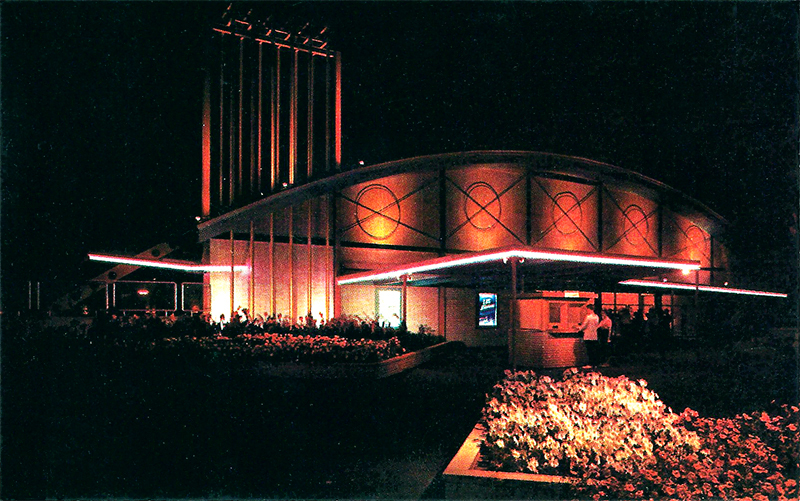
    <summary type="html"><![CDATA[<p><strong><em><span style="font-weight:400;">Utah’s Lagoon used to be more than just an amusement park; it once housed a large concert venue within its gates, hosting many performances by music legends from the 1950s to the early 1970s.</span></em></strong></p><img src="https://www.intermountainhistories.org/files/fullsize/22bf785d177cfc260f8fabc152cf11d6.jpg" alt="Postcard of Patio Gardens" /><br/><p><span style="font-weight:400;">In 1953 a fire tore throughout Lagoon, Utah’s only amusement park, and destroyed many buildings there. Then owner, Robert Freed, saw this as an opportunity to update the architecture of the park to something much more modern–to create the “New Lagoon.” One of the buildings constructed during the renovations was the Patio Gardens, a concert venue to replace an old, ruined Dancing Pavilion. While Lagoon had live performances before the 1950s, Patio Gardens, with its stage and dance floor, became the new house for concerts. The performances in Patio Gardens over the next two decades included some of the most popular national artists and would make Lagoon nationally known, especially within the 1960s counterculture music scene. </span>
<span style="font-weight:400;">One such popular group was the Beach Boys who, on September 7, 1963, thrilled their youthful Utah audience with their song “Salt Lake City,” claiming that Salt Lake City had “the grooviest kids.” The Beach Boys returned to Lagoon again and again with their final performance of fourteen appearances taking place on September 12, 1970.</span>
<span style="font-weight:400;">The Beach Boys were just one of many popular groups that performed at Patio Gardens. Other notable counterculture bands such as The Rolling Stones, The Monkees, The Who, Janis Joplin, and Jefferson Airplane also performed there. Even The Beatles were in discussions to perform at Lagoon, but their high asking price led to their exclusion. Patio Gardens also housed more classic acts, such as Benny Goodman, the Utah Symphony, and Ella Fitzgerald. </span>
<span style="font-weight:400;">Most bands had a good experience, with some even returning to perform again or immortalizing the venue in songs, as the Beach Boys did. However, there were also bands who hated the venue and, more importantly, the crowds. On May 25, 1968, The Doors performed to a crowd of about 3,500, nearing the venue’s 4,000-person capacity limit. Jim Morrison, the band’s lead singer, declared that the crowd was dead for his first performance of the day, hurled vulgar insults to the audience, and after three songs walked off of the stage, never to return. </span>
<span style="font-weight:400;">Regardless of the failure of The Doors concert, Patio Gardens is remembered fondly by many Utahns. Patio Gardens closed in 1973 after operating for twenty years. Where music legends used to perform is now the home of the dark ride Dracula’s Castle and Lagoon’s arcade. The original light fixtures and the top of the stage (the rest of which is hidden by a wall) are the only reminders of what helped make Lagoon so famous.</span></p><p><em><strong><a href="https://www.intermountainhistories.org/items/show/778">For more (including 3 images) view the original article</a></strong></em></p>]]></summary>
    <published>2024-02-22T22:07:05+00:00</published>
    <updated>2026-04-17T19:32:17+00:00</updated>
    <link rel="alternate" type="text/html" href="https://www.intermountainhistories.org/items/show/778"/>
    <id>https://www.intermountainhistories.org/items/show/778</id>
    <author>
      <name>Mikelle Andersen, Brigham Young University</name>
    </author>
  </entry>
  <entry>
    <title type="html"><![CDATA[Honeymoon Trail]]></title>
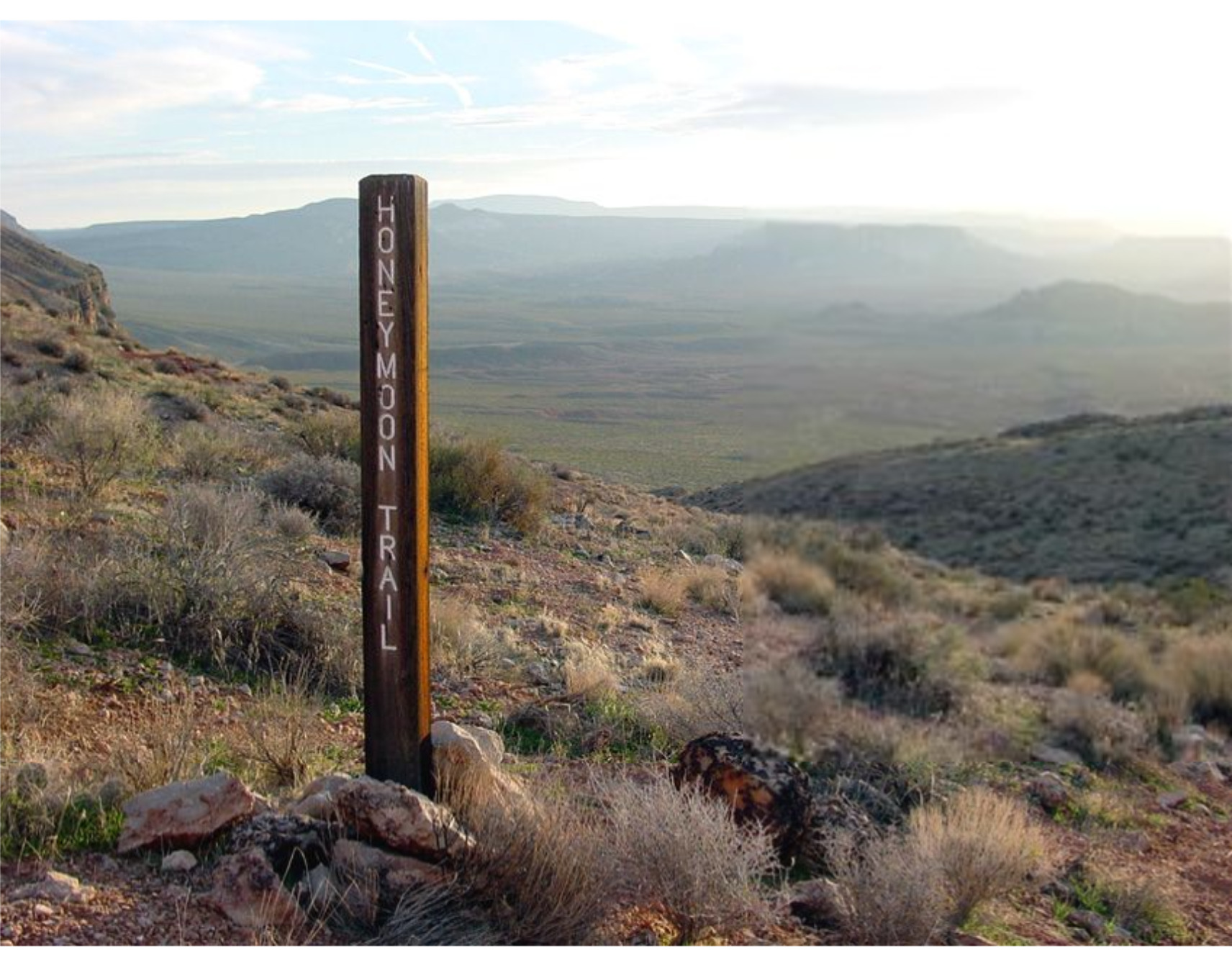
    <summary type="html"><![CDATA[<p><strong><em>The Honeymoon Trail connected Latter-day Saint communities in Arizona to St. George and was originally known as the Mormon Wagon Road. Will C. Barnes, an American historian, coined the term Honeymoon Trail as he studied the hundreds of couples who trekked along the trail to the St. George Temple to get married. Couples continued to make the hazardous journey until 1927, when the Mesa, Arizona temple opened. </em></strong></p><img src="https://www.intermountainhistories.org/files/fullsize/b5f9fbc2448e80d9a7874c071208e8c7.jpg" alt="Honeymoon Trail" /><br/><p><span style="font-weight:400;">In 1871, leaders of the Church of Jesus Christ of Latter-Day Saints announced that a temple would be built in St. George in 1871. While this was exciting for members in southern Utah, it was also exciting to the members scattered throughout Arizona who wanted to be married for eternity in a ceremony that could only take place in a temple. After the temple in St. George was completed in 1877, couples in Arizona traveled to St. George to participate in the marriage ceremony. Depending on their starting point in northern or southern Arizona, some couples traveled over 400 miles to be married.</span>
<span style="font-weight:400;">The Honeymoon Trail was difficult to traverse under the best conditions and was sometimes made worse by the weather. Couples had no choice but to cross deep muddy washes and traverse canyons and hills. They could choose between a shorter route across mountains or avoid them by extending their journey by many miles. Although the trail did have a hazardous river crossing, most of the trail lacked adequate drinking water. It was common for oxen to die from dehydration. Some couples made the most of this loss by trading dying or dead oxen to people along the trail for other needed goods. Some couples endured snowstorms while others endured sandstorms. For instance, Joseph Fish, who undertook the trail to marry Julia Reidheid, suffered vision loss due to the sandstorms encountered on the journey. Despite their father’s challenging experience, some of Fish’s children still chose to traverse the same trail to reach the temple, fully aware of the risks they would face.</span>
<span style="font-weight:400;">The physical trail was not the only danger faced by couples. Tensions stemming from the Black Hawk War, a violent confrontation between Latter-Day Saint settlers and the Ute, Paiute, and Navajo nations from 1865 until 1872, led to ongoing confrontations. Some travelers lost horses to Indigenous raiders. However, many of the interactions between travelers and the Natives were friendly. Still, stories of past violence exaggerated the expectations of hostile interactions and caused the travelers to fear. Not only were Natives a concern, but running into strangers and outlaws also brought fear to the lawless wilderness. Danger surrounded the couples and groups who journeyed to the temple in St. George. </span>
<span style="font-weight:400;">The efforts and dedication of the Saints of Arizona were observed by Church leaders. In 1918 they announced that a temple would be built in Mesa Arizona. At the time there were only six operating temples, marking a tremendous victory for the members scattered throughout Arizona. The completion of the Mesa Temple in 1927 brought to an end the colorful history of the Honeymoon Trail.</span></p><p><em><strong><a href="https://www.intermountainhistories.org/items/show/777">For more (including 4 images) view the original article</a></strong></em></p>]]></summary>
    <published>2024-02-02T00:19:57+00:00</published>
    <updated>2026-04-17T19:32:17+00:00</updated>
    <link rel="alternate" type="text/html" href="https://www.intermountainhistories.org/items/show/777"/>
    <id>https://www.intermountainhistories.org/items/show/777</id>
    <author>
      <name>Margie Brown, Brigham Young University</name>
    </author>
  </entry>
  <entry>
    <title type="html"><![CDATA[George Edward Anderson Photographs]]></title>
    <summary type="html"><![CDATA[<p><strong><em><span style="font-weight:400;">George Edward Anderson is known for pioneering early 20</span><span style="font-weight:400;">th</span><span style="font-weight:400;"> century photography in Utah. His collection shows what was important to Utahns, particularly to members of the Church of Jesus Christ of Latter Day Saints.</span></em></strong></p><img src="https://www.intermountainhistories.org/files/fullsize/718d4ca9986add3c0b25a832b99c478b.jpg" alt="George Edward Anderson" /><br/><p><span style="font-weight:400;">George Edward Anderson was born on October 28, 1860 to parents George Anderson and </span><span style="font-weight:400;">Mary Ann Anderson in Salt Lake City. He was raised a member of the Church of Jesus Christ of Latter Day Saints. As a boy he was apprenticed to Charles R. Savage, a pioneer in photography in Utah, and set up his own studio at the age of 17. In 1886, he established the <em>Temple Bazar </em>studio in Manti, and in 1888 moved it to Springville to the southwest corner of Main and 3rd South Streets. He also operated traveling tent studios.</p><span style="font-weight:400;">Early in his career he took many studio photographs of prominent and everyday Utahns. Later he began to travel and take photographs of significant historical LDS sites. However, his travels took a toll on his relationship with his wife, Olive Lowry Anderson, so he remained home for a period. However his church commissioned him to document new temple dedications in photography. Before going to what would be his last photo shoot, his wife urged him to stay home. He ignored her warning, traveling to the Mesa Arizona Temple dedication. Shortly after the ceremony, he suffered heart failure and died on May 9, 1928 after being transported home. In his obituary the Salt Lake Telegram recounted his accomplishments in photography: “he established a studio at Springville and also had studios at Spanish Fork and Manti... He devoted considerable time to a collection of L.D.S. church historical pictures.”</span>
<span style="font-weight:400;">After Anderson’s death, his collection of photographs changed hands many times. The significance of his images were apparent to many different groups, particularly the Church of Jesus Christ of Latter-Day Saints. A group of LDS seminary teachers in Provo bought Anderson’s collection from his wife in 1928, the year he died. Later Church Historians became aware of the collection and bought it from the seminary teachers. Representatives of the Church of Jesus Christ of Latter Day Saints worked to gather all of the negatives from Anderson’s collection and brought all of his photographs into one collection. After digitizing these negatives, the Church destroyed all but 444 of the glass negatives from the collection. Finally, the collection found a home in the L. Tom Perry Special Collections at Brigham Young University.</span></p><p><em><strong><a href="https://www.intermountainhistories.org/items/show/776">For more (including 6 images) view the original article</a></strong></em></p>]]></summary>
    <published>2024-01-25T05:07:20+00:00</published>
    <updated>2026-04-17T19:32:17+00:00</updated>
    <link rel="alternate" type="text/html" href="https://www.intermountainhistories.org/items/show/776"/>
    <id>https://www.intermountainhistories.org/items/show/776</id>
    <author>
      <name>Starrla Kay Pearson, Brigham Young University</name>
    </author>
  </entry>
  <entry>
    <title type="html"><![CDATA[Dave Tatsuno: Film at Topaz Internment Camp]]></title>
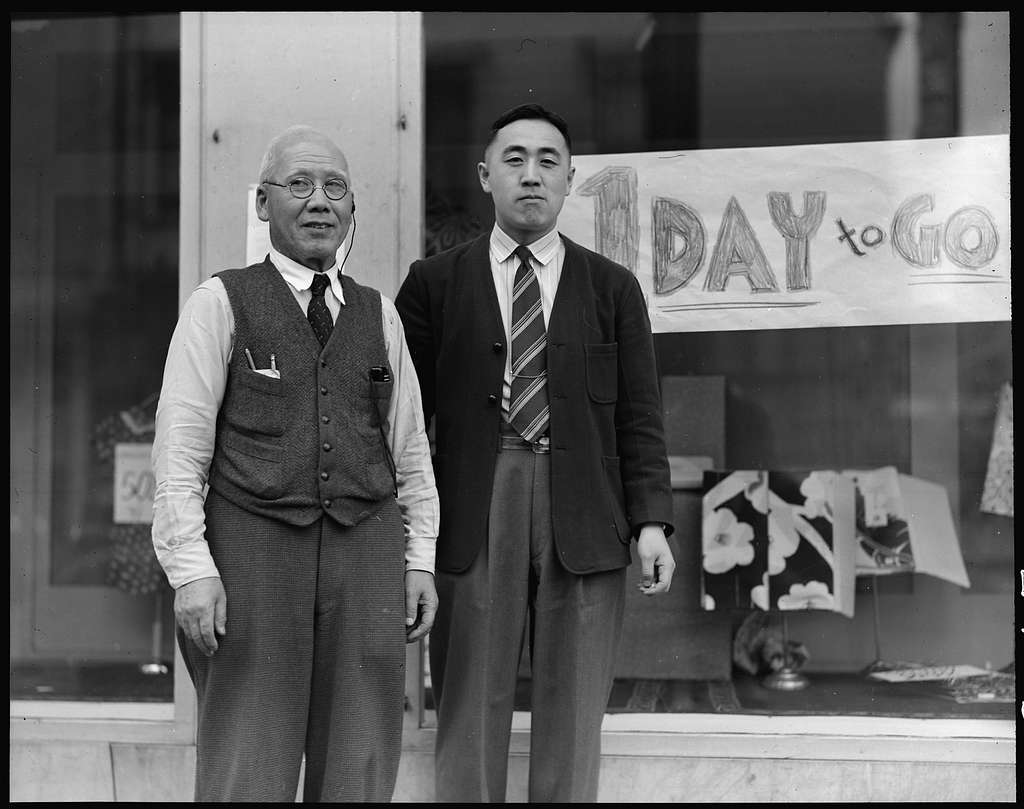
    <summary type="html"><![CDATA[<p><strong><em><span style="font-weight:400;">Dave Tatsuno was one of 11,000 Japanese and Japanese-Americans that were held in Topaz Internment Camp in Delta, Utah. His experience was unique in that he recorded some of his family’s experiences through a motion picture camera that he smuggled into camp. While never intended to be a documentary, his compiled film has since been added to the Library of Congress and further brings to light the conditions experienced by the Japanese in Topaz. </span></em></strong></p><img src="https://www.intermountainhistories.org/files/fullsize/152ee8719f930d9151064c1c1657e3d6.jpg" alt="Dave Tatsuno and his father, merchants of Japanese ancestry in San Francisco prior to evacuation " /><br/><p><span style="font-weight:400;">Born Masaharu Tatsuno in Japan in 1913, Tatsuno immigrated to the United States with his parents when he was only a few months old. Upon arrival in the Bay Area, and due to a clerical error that not even his family understands, he was given a U.S. birth certificate. At a young age, his mother abandoned his family and returned to Japan, leading him to become heavily involved in the YMCA. He decided to adopt the name “Dave” while in junior high. He married Alice Okada in 1938, and their first son, Sheldon, was born in 1940. Amateur filmmaking became a passionate hobby of his after the death of a close friend, when he realized that film had the potential to metaphorically “bring someone back to life.” </span>
<span style="font-weight:400;">Due to the Japanese attack on Pearl Harbor in 1941 (in addition to other Japanese imperialist activities) and racist attitudes towards the Japanese, President Franklin D. Roosevelt issued Executive Order 9066 in February 1942. This order divided the West Coast into military zones and gave the army authority to relocate civilians further inland. The Japanese were the main group affected by the order. Prior to evacuation and internment, Tatsuno helped his father, Shojiro, operate a dry goods store in the Bay area called “Nichi Bei Bussan.” In order to prepare to move, “Nichi Bei Bussan” had an evacuation day sale, where they were forced to sell their goods at incredibly low prices in order to get rid of inventory quickly. </span>
<span style="font-weight:400;">Tatsuno and his family were first held at Tanforan Racetrack and later relocated to Topaz in 1942. Tatsuno, who was familiar with running a business, became one of the managers of the co-op store in camp. While working, he met Walter Honderick, a War Relocation Authority official who owned a camera himself. Honderick encouraged Tatsuno to send for his camera under Honderick’s name. Tatsuno, while on a trip for supplies for the co-op, purchased film for the camera in Chicago. With camera and film, Tatsuno was able to participate in his old hobby again.</span>
<span style="font-weight:400;">In interviews, Tatsuno was adamant that his film in Topaz was never meant to be a documentary. Its focus was specifically on his family and friends. Despite that, the film does contain significant and telling scenes. One scene depicts several Japanese men digging a trench outside one of the barracks. Tatsuno’s narration (which was added to the film much later) relates that the men were repairing a broken pipe. This scene depicts the labor that the Japanese were expected to contribute in order to keep the camp running. Another scene, perhaps one of the most significant, shows Tatsuno’s brother, Masateru (or “Tut”) visiting the camp as an American soldier on his way to Germany. In later interviews, Tatsuno described that he found great irony and injustice in the fact that his brother, especially with his position as a U.S. soldier, had to visit his family behind barbed wire. </span>
<span style="font-weight:400;">Tatsuno and his family returned to the Bay Area in 1945, where they reopened “Nichi Bei Bussan” and sought to help other Japanese returning from internment camps transition back to everyday life. Tatsuno continued to serve as part of the Japanese American Citizens League (JACL) and the YMCA throughout the rest of his life. His film </span><i><span style="font-weight:400;">Topaz</span></i><span style="font-weight:400;"> was added to the Library of Congress in 1996. Tatsuno passed away in 2006, but his legacy of recording his experience at Topaz remains. </span></p><p><em><strong><a href="https://www.intermountainhistories.org/items/show/775">For more (including 3 images) view the original article</a></strong></em></p>]]></summary>
    <published>2024-01-23T05:03:04+00:00</published>
    <updated>2026-04-17T19:32:17+00:00</updated>
    <link rel="alternate" type="text/html" href="https://www.intermountainhistories.org/items/show/775"/>
    <id>https://www.intermountainhistories.org/items/show/775</id>
    <author>
      <name>Sara Davis, Brigham Young University</name>
    </author>
  </entry>
  <entry>
    <title type="html"><![CDATA[Daniel Thomas and Orem&#039;s Mammoth]]></title>
    <summary type="html"><![CDATA[<p><strong><em>While digging to connect his home to city water, Orem resident Daniel Thomas made a fascinating discovery. First finding a “large ancient tooth” himself, Thomas later invited excavators from the University of Utah to his property. They unearthed a complete Columbian mammoth skull and skeleton. Today, this mammoth discovery continues to shape Orem city’s identity.</p></strong></p><img src="https://www.intermountainhistories.org/files/fullsize/46e5de08e7ca215c800c29b66ca73be6.jpg" alt="Cast of the Huntington Mammoth" /><br/><p><span style="font-weight:400;">Utah is home to rich fossil deposits that describe the greater natural history of the region. Lake Bonneville and its shoreline were home to a wide variety of plant and animal species, many now extinct. Columbian mammoths were a large species of mammoth and are cousins with the modern-day African elephant. These beasts roamed throughout Utah along the ever-changing Bonneville shoreline until their extinction thousands of years ago.</span>
<span style="font-weight:400;">Daniel Thomas, an Orem resident who lived in what is now known as the Cherry Hill neighborhood, began digging an irrigation trench in his yard in 1937. Thomas’s goal was to connect his home to the city’s new municipal water supply system. What he was not expecting to find, however, was a remnant of a Columbian mammoth. Thomas himself found “a large ancient tooth,” and soon after invited excavators from the University of Utah. They recovered a full skull and skeleton, and the remains are currently owned by the University of Utah and housed in the Utah Museum of Natural History collection. A city marker is displayed at the original excavation site, in front of The Paper Store and More, where the Thomas home used to be.</span>
<span style="font-weight:400;">Today, mammoths and this particular mammoth find are still celebrated in Orem city. The Orem City “All Together Playground,” which opened in 2016, features a mammoth skeleton painted onto one of its prominent play structures. More recently, in the fall of 2021, Orem city unveiled their mascot, Mero the Mammoth. Mero, whose name is Orem spelled backwards, is described as “Orem’s first resident,” hallmarking the unique natural history of the area. Mero makes appearances at city and community events. He also appears on a variety of city marketing, signage, and web pages. The use of a mammoth as Orem’s mascot today (named Mero) shows the city’s desire to remember their home’s natural history.</span></p><p><em><strong><a href="https://www.intermountainhistories.org/items/show/774">For more (including 4 images) view the original article</a></strong></em></p>]]></summary>
    <published>2024-01-22T03:14:13+00:00</published>
    <updated>2026-04-17T19:32:17+00:00</updated>
    <link rel="alternate" type="text/html" href="https://www.intermountainhistories.org/items/show/774"/>
    <id>https://www.intermountainhistories.org/items/show/774</id>
    <author>
      <name>Edward Patterson, Brigham Young University</name>
    </author>
  </entry>
  <entry>
    <title type="html"><![CDATA[The Benson Gristmill of Tooele]]></title>
    <summary type="html"><![CDATA[<p><strong><em>The popular image of early pioneer Utah is often one of rural and agricultural communities, with little technology beyond the cow and plow. However, industrial mills like the Benson Gristmill in Tooele were integral to utilizing Utah’s resources and encouraging the economy. </em></strong></p><img src="https://www.intermountainhistories.org/files/fullsize/89c222b5d013dedec2fccdeb4f69666a.jpg" alt="Gristmill 1" /><br/><p><span style="font-weight:400;">In the early days of Utah’s settlement, the Church of Jesus Christ of Latter-day Saints encouraged Utahns to develop their land and build industrial infrastructure. One fitting example of this occurred in 1854, when Ezra T. Benson (the great-great grandfather of the later prophet, Ezra Taft Benson) moved to Tooele Valley with orders from Brigham Young to build a gristmill, which would grind raw cereal grains into flour. Such a mill would provide a vital service for the surrounding settlements. Soon, Benson and a few other men gained the rights to the land, water, and timber from Brigham Young and started building the mill by a pond in northern Tooele. </span>
<span style="font-weight:400;">The mill itself was a remarkable piece of resourceful architecture. For example, wooden pegs were used in stabilizing the beams of the building. This allowed the pegs to expand and contract along with the beams as the weather changed, leading to greater stability. </span>
<span style="font-weight:400;">For almost one hundred years, from 1854 until the 1940s, the mill processed many tons of corn and wheat for the communities of Tooele Valley. For instance, in 1860 alone, the mill processed about $17,000 worth of grains. That same year, the mill’s rights were transferred to Brigham Young, after Benson moved to Cache Valley. This transfer of ownership was likely to prevent the mill from being seized by the federal government during the conflict over polygamy. </span>
<span style="font-weight:400;">  In 1922, the mill was bought by the future LDS apostle J. Reuben Clark. Under his ownership, the mill was upgraded and the older wooden waterwheel and millstones were replaced by a metal turbine and free standing “grain breakers,” which were more durable and could grind the grain with greater efficiency. In 1938 the mill switched from milling flour to making animal feed. A few years later the mill stopped being used and fell into disrepair. </span>
<span style="font-weight:400;">The building stood abandoned until 1983, when a committee of volunteers recognized the Benson Gristmill as an important historical site to the community of Tooele. In the next few years, the small group got Terracor Corp, a land development firm that then owned the property, to donate the site to Tooele County as a historical monument, allowing them to restore and preserve the mill. The Benson Gristmill is now one of the most intact pioneer-era sites in the state, standing as a reminder of the humble yet powerful origins of Utah’s communities. </span></p><p><em><strong><a href="https://www.intermountainhistories.org/items/show/773">For more (including 3 images) view the original article</a></strong></em></p>]]></summary>
    <published>2024-01-22T02:54:31+00:00</published>
    <updated>2026-04-17T19:32:17+00:00</updated>
    <link rel="alternate" type="text/html" href="https://www.intermountainhistories.org/items/show/773"/>
    <id>https://www.intermountainhistories.org/items/show/773</id>
    <author>
      <name>Grace Bodily, Brigham Young University</name>
    </author>
  </entry>
  <entry>
    <title type="html"><![CDATA[Kodachrome Basin and the Power of Photography]]></title>
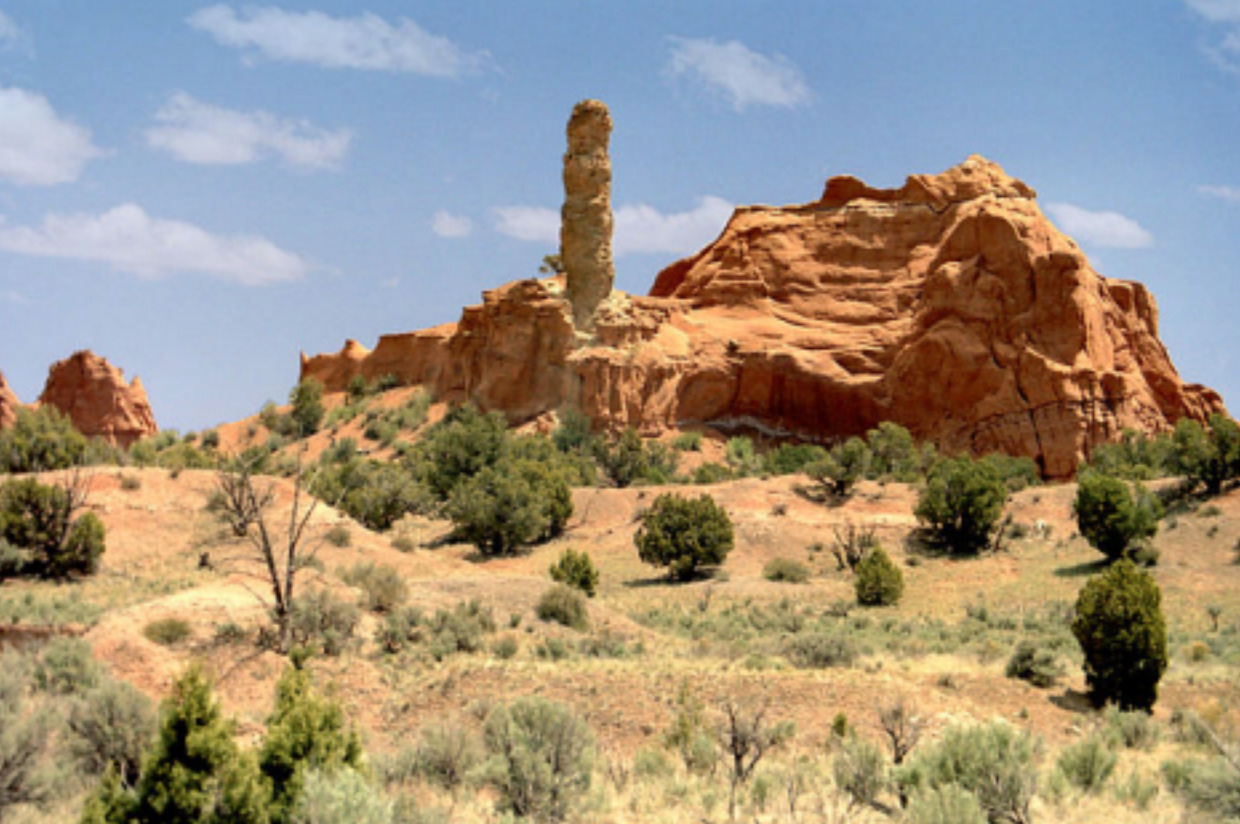
    <summary type="html"><![CDATA[<p><strong><em>Kodak released its first roll of colored film in 1936 called “Kodachrome.” This film became famous for its new method of producing color in still photography. Its use became widespread among National Geographic photographers, eventually leading to global awareness of the beauty of Southern Utah’s rust colored landscape. </p></strong></p><img src="https://www.intermountainhistories.org/files/fullsize/ef773cd98552f15f18157825eb6cc132.jpg" alt="My Beautiful Picture" /><br/><p><span style="font-weight:400;">In 1948, a group of National Geographic photographers, led by Jack Breed, set out to explore the Southern Utah terrain. Using trails only having ever been passed in modern times by a handful of cattle ranchers, Breed and his crew found a landscape that was relatively untouched. Traveling by car and hiking into more rugged regions, the National Geographic explorers found the contrasting colors of the land to be enchanting. The explorers nicknamed the area “Kodachrome Flat” after the film used to capture the rust colored canyons. Photos taken of the area were later published in a 1949 edition of National Geographic magazine, which had 60 million readers. </span>
<span style="font-weight:400;">Members of the Church of Jesus Christ of Latter-Day Saints who lived in the region were highlighted in the article as well as the landscape. Dressed in pioneer clothing, Breed photographed them recreating a traditional Latter-Day Saint dance in the Kodachrome area, perhaps using the peculiarity to catch readers’ attention. Before the photos were published in the magazine, they were shown to local members of the Lions Club at the Cameron Hotel in Panguitch. Crew member Burnett Hendryx spoke of the National Geographic team’s adventures in the desert. The invitation to view Hendryx’s photos was then extended to the general public who marveled at the color photographs.. This expedition was of great interest to the local residents of Garfield County, not only for the excitement the National Geographic visit sparked in local newspapers, but also because the highly publicized article brought tourists to the county, boosting its isolated economy. </span>
<span style="font-weight:400;">Although originally named Chimney Rock State Park due to copyright issues, the area today is officially known as Kodachrome Basin State Park. It sits in a quiet location between Bryce Canyon and Escalante National Park and is home to a plethora of campsites and hiking trails. It continues to be a tourist site, especially popular among foreigners. The park hosted a total of 179,121 visitors in 2022 and its popularity continues to grow. </span></p><p><em><strong><a href="https://www.intermountainhistories.org/items/show/772">For more (including 3 images) view the original article</a></strong></em></p>]]></summary>
    <published>2024-01-21T22:08:05+00:00</published>
    <updated>2026-04-17T19:32:17+00:00</updated>
    <link rel="alternate" type="text/html" href="https://www.intermountainhistories.org/items/show/772"/>
    <id>https://www.intermountainhistories.org/items/show/772</id>
    <author>
      <name>Jane Carlson, Brigham Young University</name>
    </author>
  </entry>
  <entry>
    <title type="html"><![CDATA[John Jarvie’s Historic Ranch]]></title>
    <summary type="html"><![CDATA[<p><strong><em>Not all hospitality is returned in kind. In the case of John Jarvie, the outlaws to whom he was so obliging went on to rob and murder both him and his son. </p></strong></p><img src="https://www.intermountainhistories.org/files/fullsize/fa571c3f7ee8336879f9a9d505c7f737.jpg" alt="John Jarvie" /><br/><p><span style="font-weight:400;">In 1880 John Jarvie and his wife Nellie Barr moved from Rock Springs, Wyoming to the burgeoning settlement of Brown’s Park. Jarvie set up a general store, post office, and ran a river ferry that crossed the nearby Green River. Jarvie became well known for his sagacity and kindness to all those who lived in the region, even the Wild Bunch outlaws. Such associations did not serve him well in the long run, but his kindness did, and his legacy has continued to today in Uintah and Daggett County.</span>
<span style="font-weight:400;">John Jarvie was born in Scotland in 1844. As a young man after being beaten soundly by a mine supervisor, Jarvie elected to immigrate to the United States as a stowaway. He arrived in America in 1870 and settled in Rock Springs, Wyoming.  After several years as a businessman in Rock Springs, working as a Saloon Owner, Jarvie met residency requirements and became a citizen on October 8</span><span style="font-weight:400;">th</span><span style="font-weight:400;">, 1875. In 1880 at the age of 36, Jarvie married Nellie Barr, 22, and the couple moved to Brown’s Park, the present location of John Jarvie’s Historic Ranch.  Jarvie opened a general store, moved the local post office to his property, and ran a ferry that crossed the Green River.</span>
<span style="font-weight:400;">Jarvie sold to everyone in the region, even notorious outlaws. One location on the historic ranch in particular, a storage cellar, was thought to have housed criminals like Butch Cassidy when they were on the run from the law. One notable event on the Ranch in 1895 termed the “Outlaws’ Thanksgiving Dinner” saw a dinner of gratitude  between several notorious outlaws including Billie Bender, Les Megs, Butch Cassidy, Elza Lay, Isom Dart, and the Sundance Kid. The meeting was jovial and in celebration of Jarvie and other residents in Brown’s Park tolerance of the outlaw’s activities. In light of their warm relationship, it is tragic that Jarvie and one of his sons eventually lost their lives to outlaws.</span>
<span style="font-weight:400;">William King and George Hood, hearing false rumors about Jarvie’s great wealth, came to the ranch on July 6</span><span style="font-weight:400;">th</span><span style="font-weight:400;">, 1909. Jarvie was alone, his sons having taken jobs on other farms, and his wife having died of Tuberculosis in 1895. Jarvie was known for his generosity and tendency to feed visitors so he set the table for three. The outlaws did not return his kindness. They forced Jarvie to open his store safe and took the contents, a $100 bill and a pearl handled revolver. Jarvie fled the store and was shot in the back and head. The outlaws placed his body on a boat and sent it down the river. Details of the murder slowly tricked out. When reports circulated of two men trying to change a $100 bill in Rock Springs, Jarvie’s son Jimmy pursued the outlaws voraciously. Jimmy was on their trail at an Inn in Idaho when he was pushed from a second-floor balcony and fell to his death. The criminals were never apprehended.</span>
<span style="font-weight:400;">Jarvie left a powerful legacy which was seen in the obituary written for him in the Vernal Express. There he was praised as a “the sage of the Uintahs, the Genius of Brown’s Park, and the Wizzard [sic] of the hills and rivers. He was not only a man among men but he was a friend among men… He was as broad and generous and far reaching in his good deeds as the stream which he knew and loved[.]”</span></p><p><em><strong><a href="https://www.intermountainhistories.org/items/show/770">For more (including 3 images) view the original article</a></strong></em></p>]]></summary>
    <published>2024-01-20T08:08:00+00:00</published>
    <updated>2026-04-17T19:32:17+00:00</updated>
    <link rel="alternate" type="text/html" href="https://www.intermountainhistories.org/items/show/770"/>
    <id>https://www.intermountainhistories.org/items/show/770</id>
    <author>
      <name>Samuel Pulsipher, Brigham Young University</name>
    </author>
  </entry>
  <entry>
    <title type="html"><![CDATA[Heart of Polyurethane: Barney Clark and the Artificial Heart]]></title>
    <summary type="html"><![CDATA[<p><strong><em>In December 1982, Dr. Barney B. Clark received the first permanent total artificial heart implant in a human. The implant was his last resort and his last chance of survival after being diagnosed with congestive heart failure in 1979. He lived with the Jarvik-7 artificial heart for 112 days. Today a memorial in Provo honors his courage.</p></strong></p><img src="https://www.intermountainhistories.org/files/fullsize/1687587c565e27f65f087d15a77083a3.jpg" alt="Marker Close Up" /><br/><p><span style="font-weight:400;">In December 1982, Dr. Barney Clark pioneered medical research by receiving the first artificial heart implant. Clark had suffered from congestive heart failure for several years and his condition was worsening. Despite the experimental nature of the implant and the potential for significant personal suffering, Clark wanted to receive the artificial heart. It represented his last remaining option for survival, and he aimed to contribute to the medical community’s knowledge in the field of heart disease. Before the surgery, Clark had been treated by several doctors. He tried many treatments including experimental medications. Because of the limited number of heart donors, he was too old and too sick to be eligible for an organic heart transplant. The Jarvik-7 artificial heart was his last resort. </span>
<span style="font-weight:400;">The artificial heart was heavily researched before Clark received it. Dr. William C. DeVries had been researching it since 1967. DeVries had implanted the Jarvik-7 heart in cadavers and in many live animals, including calves. Every detail of the preparation and the surgery were outlined almost two years before Clark was selected to receive the implant. </span>
<span style="font-weight:400;">The implant surgery was initially successful. On Thursday, December 2, 1982 the Provo Daily Herald reported that after seven hours of surgery the artificial heart was working well and that it had given Clark “the blood pressure of an 18-year-old.” Despite the successful surgery, Clark soon started facing complications. He experienced an air leak in his lung, seizures, a broken valve on the artificial heart, and frequent nose bleeds. The doctors fixed these problems as they arose, although they were never able to figure out the cause of the seizures. In March 1983 Clark suffered from aspiration pneumonia, which sent him back into the intensive care unit. He never recovered. On March 23, 1983 Clark “suffered from multiple organ system failure that caused a circulatory collapse” and passed away at 10:02 that night. Researchers concluded that the artificial heart itself had not killed him, but complications associated with the surgery and prior conditions had. </span>
<span style="font-weight:400;">Clark survived with the Jarvik-7 total artificial heart for 112 days, though experiencing great suffering. Many regard Barney Clark as a pioneer and a hero. A memorial in Provo honors his legacy. Today the artificial heart is used as a temporary placement while heart failure patients wait for a heart donor.</span></p><p><em><strong><a href="https://www.intermountainhistories.org/items/show/768">For more (including 2 images) view the original article</a></strong></em></p>]]></summary>
    <published>2024-01-20T07:16:05+00:00</published>
    <updated>2026-04-17T19:32:17+00:00</updated>
    <link rel="alternate" type="text/html" href="https://www.intermountainhistories.org/items/show/768"/>
    <id>https://www.intermountainhistories.org/items/show/768</id>
    <author>
      <name>Caitlin Zollinger, Brigham Young University</name>
    </author>
  </entry>
  <entry>
    <title type="html"><![CDATA[The American Fork Presbyterian Church]]></title>
    <summary type="html"><![CDATA[<p><strong><em>The Community Presbyterian Church in American Fork, Utah is a historic building that has been standing since the late 1800s. It has represented the prosperity of Presbyterianism within the majority-LDS state, while also being an institution of education and charity within the community of American Fork.</p></strong></p><img src="https://www.intermountainhistories.org/files/fullsize/b6c5b16467e99ac505960b7c545231bf.jpg" alt="American Fork Presbyterian Church with congregation, 1894" /><br/><p><span style="font-weight:400;">In 1877 Reverend George R. Bird arrived in American Fork to begin a religious ministry among the small Presbyterian community there. For the first year of his work, congregants met in the upstairs social hall of Chipman’s Store. They later assembled in a log cabin that Bird purchased with the help of the Board of National Missions of the Presbyterian Church. Work began on a dedicated Presbyterian Church in 1878, with architect Peter Van Houghton designing the sanctuary in a “modified Gothic revival style,” made especially evident in stained-glass windows, which are one of the church’s prominent features. Reverend Bird was replaced in 1880 by Reverend Thomas F. Day, who laid the cornerstone when the church was finished in 1881. </span>
<span style="font-weight:400;">The Community Presbyterian Church has functioned continuously as a place of worship ever since its completion in 1881 and served as a school until 1909. Despite on-and-off contention between Presbyterians and members of the Church of Jesus Christ of Latter-day Saints during the 19th century, the First Presbyterian Church became a central part of the Christian community in American Fork. Relations between the two faiths improved as they found ways to serve the community of American Fork together. In 1940 the church was renamed the “Community Presbyterian Church” by Reverend Elias Jones to reflect the different religious backgrounds of those who made up the congregation. In 1984 the church building gained national notoriety with its appearance in the hit movie, </span><i><span style="font-weight:400;">Footloose</span></i><span style="font-weight:400;">, for which members of the congregation played extras and even had some speaking roles. The Community Presbyterian Church was listed on the National Historic Register on May 23, 1980.</span>
<span style="font-weight:400;">Over the decades of its presence, the Community Presbyterian Church has continued to serve community members through a variety of  projects. In 1961, the congregation built the Kershaw Christian Education Building adjacent to the church. The building is used today for some Sunday meetings but is mainly leased by the church to the Belmont Classical Academy, a non-denominational, independent Christian church that offers K-12 education. Today the church hosts a community vegetable garden, a 9/11 memorial garden, and a playground dedicated to children with autism, all open to the public.</span>
<span style="font-weight:400;">Over the years, many renovations have been needed to maintain the building. A kitchen was built onto the back of the church in the 1940s and has now been renovated as a narthex, or a traditional entrance on the western side of a church. The bell tower was struck by lightning and badly damaged on July 12, 1952, and members replaced the weathervane with a stainless-steel cross. Funds were donated to repair the tower in 1997, with the cross remaining in place. Between 1975 and 1977 many renovations to the inside of the church were made to prepare for the church’s 100</span><span style="font-weight:400;">th</span><span style="font-weight:400;"> anniversary. Workers repaired the roofing, removed wallpaper, and rewired the building. Pews were purchased from the Salt Lake City Kol Ami Synagogue, and they remain in the church today. The church also had stained-glass windows designed by a Salt Lake City local, J. Fred Brown, installed. These stained-glass windows were replaced in 2013 with new windows creatde by Tom Holdman, which depict many scenes and symbols from the life of Jesus Christ. </span>
<span style="font-weight:400;">Today the Community Presbyterian Church of American Fork continues to serve the community. Weekly Sunday worship meetings are open to members of the congregation and visitors alike. The church also offers twelve-step and community groups and works alongside local organizations and charities to help people in the area.</span></p><p><em><strong><a href="https://www.intermountainhistories.org/items/show/767">For more (including 6 images) view the original article</a></strong></em></p>]]></summary>
    <published>2024-01-18T03:50:02+00:00</published>
    <updated>2026-04-17T19:32:17+00:00</updated>
    <link rel="alternate" type="text/html" href="https://www.intermountainhistories.org/items/show/767"/>
    <id>https://www.intermountainhistories.org/items/show/767</id>
    <author>
      <name>McKay Kimball, Brigham Young University</name>
    </author>
  </entry>
</feed>