<?xml version="1.0" encoding="UTF-8"?>
<feed xmlns="http://www.w3.org/2005/Atom">
  <title type="text">Intermountain Histories</title>
  <updated>2026-04-17T19:32:08+00:00</updated>
  <generator uri="http://framework.zend.com" version="1.12.20">Zend_Feed_Writer</generator>
  <link rel="alternate" type="text/html" href="https://www.intermountainhistories.org/"/>
  <link rel="self" type="application/atom+xml" href="https://www.intermountainhistories.org/items/browse?output=rss2"/>
  <id>https://www.intermountainhistories.org/</id>
  <author>
    <name>Intermountain Histories</name>
    <uri>https://www.intermountainhistories.org</uri>
  </author>
  <link rel="hub" href="https://pubsubhubbub.appspot.com/"/>
  <entry>
    <title type="html"><![CDATA[Dixie State University: A Trailblazing History]]></title>
    <summary type="html"><![CDATA[<p><strong><em>Dixie State University began as a small Dixie Academy that was a two-year school for High School students. Through the hard work and sacrifice of the citizens of St. George, the Dixie Academy grew into a prosperous University.</em></strong></p><img src="https://www.intermountainhistories.org/files/fullsize/84c075e5335a9fcc4f23ab5ece929b28.jpg" alt="First Dixie College Building" /><br/><p>Dixie State University began as a small academy in 1907 and, after going through some major difficulties, has become a very successful university that provides education for thousands of students yearly. The success of Dixie State University is because of the trailblazing citizens of St. George. Their sacrifices, perseverance, and community support were what made the institution possible. They helped the school grow from a two-year academy for youth to a continuously growing university that offers Bachelor’s and Master’s Programs. Because of the faithful trailblazing citizens of St. George, Dixie got through a split from the Church of Jesus Christ of Latter-Day Saints to a State-run school. They began the school in the harsh desert, got through a depression and two world wars. Their story is the story of Dixie State University. </p><p>The school was first created and funded by the Church of Jesus Christ of Latter-day Saints and its members. The creation of the Dixie Academy was through the Stake Board of Education. They funded most of the project and then took donations from the members of the church. Eventually the school was expanded to include a building for the two-year college program. The people of the area contributed money donations, food and produce that could be spared, and they donated nearly all the labor involved in constructing the new building. When the school was transferred over to the State of Utah, it faced potential closure. The people of St. George rallied together to get support for their little junior college. They eventually got enough support and the state got them enough funding to keep the school open. </p><p>Dixie State was built on the site of the first settlers of St. George called the Encampment mall. Those settlers suffered through harsh desert conditions, disease, and depression. Through their sacrifice and determination St. George itself was established and eventually the Dixie Academy. The process of creating the monument for those settlers represents the heritage that they passed on. It was built by the financial contributions and donations of the community. The labor to build it was provided by volunteers from the community and the school. The students also provided trees and bushes to plant on the memorial.</p><p>Since the building of the new college campus there have been many new additions and expansions. New buildings include the Eccles Fine Arts Center, art department in old Harmons Grocery, expansion of student housing, health sciences building, Holland Centennial Commons. A campus branch was built in Hurricane. The entire campus has been computerized which includes student computer labs, the library, and classroom computers. In 1999 they achieved the status of University and enrollment grew all the way to 9,000. As of 2019, 9,950 students enrolled, 57.2% of them being women. They have the status of being the most affordable in-state tuition in the nation. They have 4 Master’s Degrees, 22 certificates and endorsements, 45 Bachelor’s Degrees, 42 minors, and 11 Associate’s degrees.</p><p><em><strong><a href="https://www.intermountainhistories.org/items/show/429">For more (including 3 images) view the original article</a></strong></em></p>]]></summary>
    <published>2020-10-09T03:15:14+00:00</published>
    <updated>2026-04-17T19:32:08+00:00</updated>
    <link rel="alternate" type="text/html" href="https://www.intermountainhistories.org/items/show/429"/>
    <id>https://www.intermountainhistories.org/items/show/429</id>
    <author>
      <name>Kayla Spilker Gustafson, Brigham Young University</name>
    </author>
  </entry>
  <entry>
    <title type="html"><![CDATA[Forest City]]></title>
    <summary type="html"><![CDATA[<p><strong><em>Several miles up a dirt road in American Fork Canyon you can find a former mining town with an interesting history.</em></strong></p><img src="https://www.intermountainhistories.org/files/fullsize/2b1227d5e01bad43bc52072888543763.jpg" alt="Sultana Smelter" /><br/><p>Soon after silver was found in Little Cottonwood Canyon, east of Salt Lake City, Utah, in the 1860s, prospectors looked to American Fork Canyon, the neighboring canyon south, for valuable ores. The American Fork Mining district was quickly formed in 1870 and the Pittsburg Mine just south of Alta and over the ridge into the American Fork Canyon drainage was the first of the many mines to come.  Among prospectors of the new American Fork mining district were Jacob and William Millar who discovered lead carbonate ore bearing some gold. They started a mining camp and later sold what would become known as the Miller Hill Mine to the Aspinwall Steamship company based in New York.  </p><p>To boost production, the Aspinwall Steamship Company built the Sultana Smelter close to the Miller mine. A mining town known as Forest City grew up around the smelter. Estimates of the population are hard to pin down. The highest estimates say that the peak population was around 2000-3000 people, but other sources limit the population to about 500 or less. Even though the exact numbers of the population are unclear, Forest City was much more than a large mining camp. There were enough children that the school district built a schoolhouse and brought in a teacher from Salt Lake. There was a sawmill that was used to produce lumber for building and an industrious farmer started a up a dairy farm to provide goods for the miners. </p><p>When the Sultana Smelter began producing more than could be transported down the mountain, the Aspinwall Steamship Company started building the American Fork Railroad to transport the ore that was produced in Forest City. The road was graded all the way up to Forest city, but due to excessively steep grades, the railroad shopped short at Deer Creek. The ore was brought by wagon from Forest City to Deer Creek and the train was able to coast down the mountain until the mouth of the Canyon.  An resulting town that grew at the Deer Creek rail terminus is now submerged under the Tibble Fork Reservoir. </p><p>A bad winter in 1872 stopped production in the mine and a diphtheria outbreak killed several Forest City residents, including children. The Miller Hill Mine slowed after that. While there were other good veins found, the rugged terrain made accessing them difficult. Decreased mining led to profit loss for the railway, so the company began offering rail services to day trip tourists in 1878. Eventually the American Fork Railroad closed, making it the first railroad in in Utah to go out of business.</p><p>Without the railway operating, Forest City collapsed and most residents left by the early-1880s. Small mining excavations occurred in American Fork canyon up until the 1950s, including Tyng’s camp and others, but none of those competed with the peak production years of 1870-1876.</p><p>The graveyard where those that died of diphtheria were buried was preserved for a long time under the new name “Graveyard Flats” but with heavy winters up American Fork Canyon with snowpack easily reaching 6 feet or more, the site has been lost. What was left of Forest City was destroyed with the actions of snowmobilers who didn’t know they were driving over a snow covered ghost town. Today all that stands of the old town are the remains of the old Sultana Smelter. </p><p><em><strong><a href="https://www.intermountainhistories.org/items/show/428">For more (including 4 images) view the original article</a></strong></em></p>]]></summary>
    <published>2020-10-09T02:45:27+00:00</published>
    <updated>2026-04-17T19:32:08+00:00</updated>
    <link rel="alternate" type="text/html" href="https://www.intermountainhistories.org/items/show/428"/>
    <id>https://www.intermountainhistories.org/items/show/428</id>
    <author>
      <name>Kristyanne Woodland, Brigham Young University</name>
    </author>
  </entry>
  <entry>
    <title type="html"><![CDATA[Fort Douglas WWI German Internment Camp: WWI German Internment Camp]]></title>
    <summary type="html"><![CDATA[<p><strong><em>Though Utah had first been an asylum for members of the Church of Jesus Christ of Latter-day Saints from mobs and an earlier extermination order, Utah detained Germans during WWI under submission to federal order. Fort Douglas operated as a German POW and German enemy alien internment camp from 1917 to 1920. In the eyes of Utah and the larger United States, German enemy aliens were not American and would/should not receive the same rights as such, even though they had been residents of the United States prior to confinement.  </p></strong></p><img src="https://www.intermountainhistories.org/files/fullsize/2c4c2d65b19ade87688752a3c1347ca7.jpg" alt="Internee sleeping quarters" /><br/><p>Fort Douglas operated during WWI as a German internment camp, detaining threats to security. The first civilian enemy aliens arrived in July 1917 and the last did not leave until May 1920. Fort Douglas internee composition consisted of German Prisoners of War (POWs) and a selection of enemy aliens. President Woodrow Wilson defined general enemy aliens as, "All natives, denizens, or subjects of Germany, being males of the age of fourteen years and upwards, who shall be within the United States, and not actually naturalized." Though residents of the United States, it is significant to recognize why these Germans were not citizens. Before WWI, immigration legislation was largely laissez-faire. Living in the United States preceded citizenship; a five-year residency with a declaration of intention after two years was required to qualify for naturalization. If these Germans had not planned to obtain citizenship early after arrival and file declaration, they could not become a citizen—even after a five-year residency. A minor difference of paperwork meant risk of internment. In addition, several "noncombatants" were not intentionally "enemies," either.  Arriving before declaration of war, some immigrants were "trapped behind enemy lines" with wartime policy. These civilians were not American citizens and residency in America granted them no empathy. </p><p>Other German internment camps in the United States were made entirely of POWs or enemy aliens; however, Fort Douglas uniquely detained both. Prejudice towards the civilians, however, began before the camp. For some, "signing one’s name to a piece of paper that acknowledged him as an 'enemy' was offensive and humiliating" (Divjak and Potter, 2019). German residents individually petitioned for exception to classification as enemy aliens and sent requests for naturalization, but many of them would have to yield to registration and then possible internment. At the camp, the German POWs' nationalism and loyalty was recognized as more honorable and acceptable by Americans than the civilian "traitors." "At Fort Douglas those in charge decided to save the government money by dropping the individual food rations from 44 cents to 11 cents per day."  Given the account of one German sailor—found in Raymond Kelly Cunningham, Jr.'s, Internment 1917-1920; A History of the Prison Camp at Fort Douglas, Utah, and the Treatment of Enemy Aliens in the Western United States—"Daily fresh meat, daily fresh bread and very often fresh fruits, quantities as well as qualities, leave nothing to be desired," it would seem that it was the civilians receiving that lowered ration. Though residents of the United States, at Fort Douglas their credentials did not grant them even treatment equal to that of the POWs.</p><p><em><strong><a href="https://www.intermountainhistories.org/items/show/432">For more (including 3 images) view the original article</a></strong></em></p>]]></summary>
    <published>2020-10-13T07:27:57+00:00</published>
    <updated>2026-04-17T19:32:08+00:00</updated>
    <link rel="alternate" type="text/html" href="https://www.intermountainhistories.org/items/show/432"/>
    <id>https://www.intermountainhistories.org/items/show/432</id>
    <author>
      <name>MacKenzie N. DuBois, Brigham Young University</name>
    </author>
  </entry>
  <entry>
    <title type="html"><![CDATA[The Donner Party in Utah: Challenges and Set-Backs at Emigration Canyon ]]></title>
    <summary type="html"><![CDATA[<p><strong><em>While the Donner Party traveled on the Hastings Cut-Off in 1846, they entered Utah  and encountered many obstacles. In the Wasatch Mountains the Party had to excavate  Emigration Canyon. This proved to be extremely difficult and the Donner Party decided  instead to climb over the steep hill. This resulted in the death of many of their oxen, forcing  the Party to leave many of their wagons behind. </em></strong></p><img src="https://www.intermountainhistories.org/files/fullsize/b55ba76354d688144ac6d672edcd8eed.jpg" alt="Donner Hill Monument at Emigration Canyon " /><br/><p>While the Donner Party was not the first nor the last group to travel the Hastings  Cut-Off, they were undoubtedly the most afflicted and grief-stricken group to ever travel this  route. The Hastings Cutoff was a new route that the Donner Party followed in the summer of  1846. Taking this path was ultimately the beginning of their tragedy. The Hastings Cutoff  was a branch off of the Oregon trail starting in Wyoming that went through Utah (instead of Idaho like the Oregon Trail) then through Nevada, eventually joining with the  California trail. Lansford Hastings was the man who suggested the idea of the new route,  claiming that it would save them 250 miles of travel, although Hastings himself had never  traveled the route. </p><p>There were multiple factors that attributed to the unfortunate events experienced by the Donner Party, many of them in Utah. While traveling through Utah on the Hastings Cut-Off, the Party was negatively affected by having to clear out Emigration  Canyon, cross the muddy areas of the Great Salt Lake Desert, and travel for extended amounts  of time in the desert without water. While the party was going through Utah on the Hastings Cutoff route, they spent 16 days hacking out a 36-mile road through the Wasatch Mountains.  Upon arriving at what would later be known as Emigration Canyon, they encountered brush  and trees that were impenetrable. Instead of continuing hacking through the canyon, they  attempted to climb over the hill in hopes that they would save time. Unfortunately the hill  was too steep and the excursion left them more exhausted than if they had continued through the canyon. With no time to rest after climbing the hill, many of the oxen gave out and died, leaving the party to move on without them. Their trip was delayed further because of this  excursion which led to the well-publicized disaster in the Sierra Mountains where about half of their party died and many of the rest turned to cannibalism. Despite this well-known disaster,  Brigham Young’s party of pioneers took advantage of this path that the Donner party created in Emigration Canyon the following summer in 1847. This allowed the pioneers to save time on their own journey and plant crops in time for the next harvest. To honor the Donner Party’s legacy, the members of The Church of Jesus Christ of Latter-Day Saints erected a  monument in 1958 at the mouth of Emigration Canyon. </p><p><em><strong><a href="https://www.intermountainhistories.org/items/show/433">For more (including 6 images) view the original article</a></strong></em></p>]]></summary>
    <published>2020-10-14T04:58:40+00:00</published>
    <updated>2026-04-17T19:32:08+00:00</updated>
    <link rel="alternate" type="text/html" href="https://www.intermountainhistories.org/items/show/433"/>
    <id>https://www.intermountainhistories.org/items/show/433</id>
    <author>
      <name>Emme Corbett, Brigham Young University </name>
    </author>
  </entry>
  <entry>
    <title type="html"><![CDATA[The Icelander Lighthouse Monument of Spanish Fork: A Tribute to Icelandic Settlers]]></title>
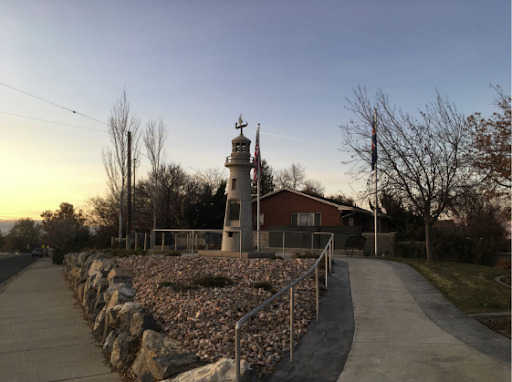
    <summary type="html"><![CDATA[<p><strong><em>A lighthouse monument was erected in Spanish Fork in 1938 to honor the first sixteen permanent Icelandic settlers in the United States. These immigrants came to Utah in 1855 after converting to the Church of Jesus Christ of Latter-day Saints.  </em></strong></p><img src="https://www.intermountainhistories.org/files/fullsize/20df20e0ba5f6d47d3afd8ebd282bad9.jpg" alt="Lighthouse Broad Perspective" /><br/><p>The lighthouse monument in Spanish Fork, Utah, was erected in 1938 to honor the original Icelandic pioneers, the first permanent settlers from that country, who immigrated into the United States in 1855. The monument is a celebration of Icelandic culture and customs. It also celebrates the bravery of those first Icelandic pioneers who crossed the Atlantic in 1854 after their conversion to the Church of Jesus Christ of Latter-day Saints. The structure was unveiled as part of the “Iceland Day” celebrations in 1938. The monument is a miniature lighthouse replica with a Viking ship on the top that references the seafaring for which the Vikings, the Icelanders’ ancestors, were best known. A plaque, which carries the names of the first sixteen Icelandic settlers, accompanies the monument. The first Iceland Day took place in Utah in 1897 to commemorate the settlement of Iceland in 870 CE. Every year from this point on, Iceland Day has been celebrated on the same day as the annual holiday in the Westmann Islands (Vestmannaeyjar), Iceland, from which the first Icelandic pioneers came. </p><p>This monument is a hallmark that has helped foster ever-improving relationships between the Church of Jesus Christ and the Icelandic government. The improving relations made it possible for the Church to renew their missionary efforts in Iceland after not having a permanent presence in the country for over 50 years. In 1975, Bryon T. Geslison and his family would be the first missionaries since 1914 called to serve in Iceland. Because of the missionary efforts initiated by Geslison and his family, the Icelandic government officially recognized the missionary work of the Church in 1983. Ever since then, the relations between the Icelandic government and the Church of Jesus Christ have been very positive and friendly. The importance of the monument has been recognized by local representatives of Utah who, in 2005, started a makeover project to make this monument more similar to one that was erected in the Westmann Islands, Iceland in 2000. The monument in Iceland was erected by the local government to honor the brave men who faced the harsh weather, sea, and other difficulties and emigrated to Utah after “hearing the call to build Zion.” </p><p>Some of the new features of the lighthouse monument in Spanish Fork include a rock brought from the shores of Vestmannaeyjar, where the first pioneers were baptized; bronze plaques that retell the history of Icelanders in Utah; and, a granite monument that lists the names of over 400 Icelanders who settled in Utah between 1855 and World War I. The renewed project was dedicated by President Gordon B. Hinckley, then the president of the Church of Jesus Christ, who commemorated the culture and faith of the Icelandic settlers in his speech</p><p><em><strong><a href="https://www.intermountainhistories.org/items/show/427">For more (including 3 images) view the original article</a></strong></em></p>]]></summary>
    <published>2020-10-07T03:59:58+00:00</published>
    <updated>2026-04-17T19:32:08+00:00</updated>
    <link rel="alternate" type="text/html" href="https://www.intermountainhistories.org/items/show/427"/>
    <id>https://www.intermountainhistories.org/items/show/427</id>
    <author>
      <name>Jessyca K. O. Zanetti, Brigham Young University</name>
    </author>
  </entry>
  <entry>
    <title type="html"><![CDATA[The Kennedy Ditch<br />
]]></title>
    <summary type="html"><![CDATA[<p><strong><em>The Kennedy Ditch was an irrigation ditch named after its first watermaster, Charles Kennedy, who was one of the earliest pioneers settling in Utah. Dug in the early 1850’s by several families living in the vicinity, including the Kennedy’s, for many years it served as an important water source for several blocks in Salt Lake City. </em></strong></p><img src="https://www.intermountainhistories.org/files/fullsize/3ab62c33096f1d1a132d1dad298b8e03.jpg" alt="Kennedy Ditch Plaque" /><br/><p>For the first pioneers arrived in Utah in 1848 creating a settlement in the Salt Lake Valley was a daunting task. One of the biggest problems they faced was a severe shortage of water sources which greatly limited the agricultural potential of the area. To overcome this limitation, the settlers worked together to dig irrigation ditches and created a system of water rights that was unlike that of anywhere else in the continent.</p><p>The Kennedy Ditch was one of these innovative irrigation canals. It was created as a cooperative work project among the settlers and was taken out of a stream in Parley’s Canyon, near the street 17th East. It helped to irrigate and bring under cultivation 864 acres of farmland in the Salt Lake settlement, which extended west from the street 13th East and North from 21st South to 9th South.</p><p>The Kennedy Ditch was named after its first watermaster, Charles Kennedy. Kennedy was part of the first wave of pioneers who arrived in the valley in 1848. His life demonstrates many of the peculiarities of the lives of the Latter Day Saints of this time, particularly the unique community organization, and both the successes and failures of living in this way.</p><p>The highly structured community organization of the Latter-day Saint pioneers is a large part of what allowed them to flourish in the inhospitable Utah environment. Nowhere is this more clear than in the unique system of water rights and distribution that they established. Charles Kennedy played a role in this early organization, and he and the Kennedy Ditch provide a microcosm of the work, triumphs, and failures that went into the establishment of the Latter Day Saint society in Utah.</p><p><em><strong><a href="https://www.intermountainhistories.org/items/show/434">For more (including 3 images) view the original article</a></strong></em></p>]]></summary>
    <published>2020-10-14T05:31:15+00:00</published>
    <updated>2026-04-17T19:32:08+00:00</updated>
    <link rel="alternate" type="text/html" href="https://www.intermountainhistories.org/items/show/434"/>
    <id>https://www.intermountainhistories.org/items/show/434</id>
    <author>
      <name>Emma Burns, Brigham Young University</name>
    </author>
  </entry>
  <entry>
    <title type="html"><![CDATA[The Nephi Mounds : New Light Shed on the Origins of the Fremont]]></title>
    <summary type="html"><![CDATA[<p><strong><em>The Nephi Mounds got their name from their location, which is approximately two miles north of Nephi, Utah. The site is an Fremont archaeological site with 30 pithouses and important historical artifacts. This site helps to substantiate the claims that the Fremont were not originally from Utah, but could have descended from Athabascan tribes from the north. </em></strong></p><img src="https://www.intermountainhistories.org/files/fullsize/420f340e27ce1c781c958e28211e02fe.jpg" alt="Photo of a pithouse." /><br/><p>The Nephi Mounds are a Fremont archaeological site situated approximately two miles north of Nephi Utah. In one of these cattle fields just west of the slopes of the mountains, a farmer first discovered the Fremont mounds while working on his farm in 1871. The site was then covered up. It was not until 1965 when, upon further examination by archaeologists from the University of Utah, discovered a series of pit houses and granaries situated in groups that numbered about 30 total structures. Inside were several artifacts that exemplify Fremont culture. There were several pieces of pottery, bone and stone tools, pieces of food, and firepits. These artifacts contribute to the hypothesis that the Fremont were not originally from Utah, but had heavy influence from neighboring tribes that were well adapted to living in the Utah climate. These artifacts are more congruent with finds from Athabascan tribes to the northwest, which suggest that the Fremont had origins from that region. One of the most important aspects of this site are the adobe-coil dwellings that are unique to the Sevier Fremont tribes. </p><p>Mystery surrounds the origins and disappearance of the Fremont. Data gathered from the pithouses, moccasins, and ceramics found in Fremont sites differentiate the Fremont from their Anasazi and Pueblo neighbors. This hypothesis is further supported by the skeletal remains of</p><p>the Fremont at sites such as the Nephi mounds, which show similarities to Athabaskan groups living in areas as far north as sub-arctic regions. </p><p>The story of the Fremont can be told as one of cultural differences and international relations. The semi-nomadic lifestyle of the Fremont leads to high possibility that the Fremont were travelers from outside of Utah. In synthesizing these findings and considering a possible route of travel along the Ivie and Snake river systems, the theory of Athabascan progenitors living throughout the region can be readily endorsed. </p><p>As for the Nephi site in particular, the findings here have been supportive of migrant theory thus far. There were 30 mounds total, of which some were living structures, others for storage and worship. There were two skeletons found, a male and a female. The man had evidence of rust on his arm, where he was possibly holding a weapon or tool made from iron. There were many ceramic vessels inside, including a metate for grinding corn. Food scraps and other debris from the period were also in the pithouses. There were deer bones fashioned into needles for the purpose of making moccasins as well. </p><p><em><strong><a href="https://www.intermountainhistories.org/items/show/431">For more (including 3 images) view the original article</a></strong></em></p>]]></summary>
    <published>2020-10-11T09:42:14+00:00</published>
    <updated>2026-04-17T19:32:08+00:00</updated>
    <link rel="alternate" type="text/html" href="https://www.intermountainhistories.org/items/show/431"/>
    <id>https://www.intermountainhistories.org/items/show/431</id>
    <author>
      <name>Daniel Martin, Brigham Young University</name>
    </author>
  </entry>
  <entry>
    <title type="html"><![CDATA[Utah State Hospital<br />
]]></title>
    <summary type="html"><![CDATA[<p><strong><em>While the hospital struggled from its inception to adequately fill its role in mental health treatment, it stands today as a modern institution illustrating the broader American shift toward effective care of the mentally ill.</em></strong></p><img src="https://www.intermountainhistories.org/files/fullsize/80183f549f53f7c444d18efb460b5920.jpg" alt="Hospital in 1900." /><br/><p>On 6 February 1880, a resolution was passed in the Utah Territorial Legislature forming a committee to consider the necessity of an asylum. The next day a bill was introduced to build such an institution and fund it thereafter. The bill was passed on 20 February 1880. The Territorial Insane Asylum was officially opened in Provo on 15 July 1885. It was placed several blocks away from the city’s population, separated by marshland and the city dump. Before its construction individual counties and private institutions were responsible for the care of the “insane.”</p><p>The dedication of the asylum was a widely publicized and rather grand affair. Not only were reduced railroad rates offered to those attending the event, music, refreshments, and a grand ball for the inmates were planned. At first, it was deemed a credit to Utah, well worth the time and money expended to finally free the territory of the self-inflicted “abuses” it had endured due to the lack of such an institution. The asylum was originally conceived as a place for individuals to be rehabilitated and returned to public life. However, the training and resources were insufficient and the institution soon became a human warehouse with terrible conditions. </p><p>A shift in attitudes toward the institution was signaled in 1903 when it was officially renamed the State Mental Hospital. Later in 1927, it was again renamed the Utah State Hospital in a further attempt to remove stigma. These name changes did little to help the lack of resources and overcrowding which reached a peak when in the 1940s. The 1,100 patients outnumbered their 700-bed capacity. In 1942 Dr. Owen P. Heninger became superintendent, instituting reforms and programs which improved the quality of life for patients and enabled staff to more effectively administer to the needs of the populace. In 1969 state care shifted from hospitalized treatment to more local centers and programs, lessening the load on the hospital and ensuring maximum attention to those still requiring institutionalization. Today the hospital is a modern hospital providing excellent care according to the many advances in mental health treatment made over several decades. </p><p><em><strong><a href="https://www.intermountainhistories.org/items/show/430">For more (including 3 images) view the original article</a></strong></em></p>]]></summary>
    <published>2020-10-11T09:17:09+00:00</published>
    <updated>2026-04-17T19:32:08+00:00</updated>
    <link rel="alternate" type="text/html" href="https://www.intermountainhistories.org/items/show/430"/>
    <id>https://www.intermountainhistories.org/items/show/430</id>
    <author>
      <name>Racheal Minns Kay, Brigham Young University</name>
    </author>
  </entry>
</feed>