<?xml version="1.0" encoding="UTF-8"?>
<feed xmlns="http://www.w3.org/2005/Atom">
  <title type="text">Intermountain Histories</title>
  <updated>2026-04-17T19:32:05+00:00</updated>
  <generator uri="http://framework.zend.com" version="1.12.20">Zend_Feed_Writer</generator>
  <link rel="alternate" type="text/html" href="https://www.intermountainhistories.org/"/>
  <link rel="self" type="application/atom+xml" href="https://www.intermountainhistories.org/items/browse?output=rss2"/>
  <id>https://www.intermountainhistories.org/</id>
  <author>
    <name>Intermountain Histories</name>
    <uri>https://www.intermountainhistories.org</uri>
  </author>
  <link rel="hub" href="https://pubsubhubbub.appspot.com/"/>
  <entry>
    <title type="html"><![CDATA[Provo and Orem WWII Labor Camps: Japanese-American Internees<br />
]]></title>
    <summary type="html"><![CDATA[<p><strong><em>Due to war-time labor shortages, prisoners from the Topaz Internment Camp helped Orem and Provo farmers harvest fruit, amid discrimination. </p></strong></p><img src="https://www.intermountainhistories.org/files/fullsize/2cf7dddc066089ac665145de8968404b.jpg" alt="Plaque located at 950 North and 800 East Orem, Utah" /><br/><p>After the Japanese military bombed Pearl Harbor in 1941, some Americans feared that US citizens of Japanese descent might engage in espionage for Japan. This racially charged wartime hysteria led President Roosevelt to sign Executive Order 9066, which forced those of Japanese descent into prison camps across the country. One such camp was in Delta, Utah. It was known as the Topaz Relocation Center.  </p><p>World War II labor shortages increased as more Utah men joined military efforts, and state officials and Utah farmers sought workers to fill their places in designated labor camps to harvest various crops. Seeking work opportunities outside of the prison camp, many of Topaz’s  internees volunteered to work at these labor camps in the surrounding town of Delta and in the northern Utah towns of Provo and Orem. The Provo camp, located at Ninth South and Fourth East, housed 400 persons and consisted of a temporary tent city where local farmers hired Japanese workers to work on beet farms. The Orem labor camp, located at 950 North and 800 East, was a more permanent site with large barracks and cabins, administrative offices, a kitchen and mess hall, and outhouses. The internees worked in orchards of various kinds. In May of 1943, the first seventeen young men arrived in Utah County to work as farmhands. The Utah Farm Association eventually relocated these hired Japanese American workers to the permanent Orem site shortly after.  </p><p>Though farmers hired Japanese workers willingly, anti-Japanese sentiments continued among many Utah residents. In 1943, these sentiments culminated in a violent incident involving Japanese-American workers and some white Provo residents. On October 3rd, five white youth, with shotguns and .30 caliber rifles, gathered and opened fire on the Provo labor camp and on local Japanese homes. Three people were struck by pellets, but no one was seriously injured. The attack had been the third of the week, with two previous reports of white youth throwing stones at Japanese workers and quickly escaping in cars. The War Relocation board threatened to remove the workers, and thereby their desperately needed labor, if Provo residents could not tolerate and protect Japanese workers. The residents chose to protect the workers and keep their labor. The five youth were later arrested for their attack.</p><p>In the fall of 1944, German and Italian prisoners of war replaced Japanese American and immigrant workers at the Orem labor camp, ending the Topaz prisoners’ connections at the Orem labor camp. But today the Topaz prisoners’ important role in Utah farm labor is memorialized at the Orem Heritage Museum. Though a school now stands on the actual Orem camp site, a sign commemorates Japanese workers and the labor contributions they made to WWII-era agricultural efforts. Residents can visit these sites and see Topaz’s influence far beyond the internment camp in central Utah.</p><p><em><strong><a href="https://www.intermountainhistories.org/items/show/300">For more (including 3 images) view the original article</a></strong></em></p>]]></summary>
    <published>2019-02-13T10:52:38+00:00</published>
    <updated>2026-04-17T19:32:05+00:00</updated>
    <link rel="alternate" type="text/html" href="https://www.intermountainhistories.org/items/show/300"/>
    <id>https://www.intermountainhistories.org/items/show/300</id>
    <author>
      <name>Hannah Lee, Melodie Jackson, and Sarah AdamsBrigham Young University</name>
    </author>
  </entry>
  <entry>
    <title type="html"><![CDATA[Willie Ito: From Topaz to Disney]]></title>
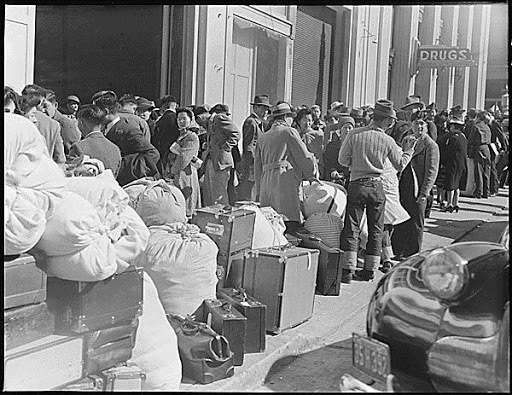
    <summary type="html"><![CDATA[<p><strong><em>Internees at Topaz went to school and participated in all kinds of classes, including art. One art student at Topaz went on to illustrate one of the most iconic Disney animation scenes of all time.</p></strong></p><img src="https://www.intermountainhistories.org/files/fullsize/1cc7d8583516881c7661310b76cbf7b9.jpg" alt="Preparing to Leave San Francisco" /><br/><p>The devastation of Pearl Harbor and the hysteria of the Second World War set the stage for white Americans to indulge their racist attitudes. Despite Japanese Americans showing no verifiable signs of sedition, many American citizens saw them as enemies who could not be trusted. Those of Japanese ancestry who lived along the Pacific coast were forced to enter inland internment camps like Topaz, Utah, for the duration of the war. Despite having had their rights disregarded, many of these prisoners continued to develop their talents. One such prisoner was a boy named Willie Ito, who went on to create a piece of art that would be seen by millions of Americans for years to come. </p><p>Willie was born in 1934 and grew up in San Francisco California. One of the most influential experiences in young Willie’s life was going to a movie theater in San Francisco and seeing the film Snow White and the Seven Dwarfs (1937). It was then that he knew that he wanted to be an animation cartoonist. After President Roosevelt signed Executive Order 9066 in February 1942, Willie and his family were interned at Tanforan racetrack in San Francisco. A few months later the government relocated the Tanforan prisoners to a permanent camp in Topaz, Utah. In Topaz Willie went to school and took art classes. While many of the kids liked to play games and baseball after school, Willie liked to go back to his family’s assigned barrack and draw. Willie would draw on the Sears Roebuck catalogs that were delivered every three months, making flipbooks in the margins of the expired catalogs.</p><p>Willie and his family left Topaz in early 1945. While studying at Chouinard Art Institute in Los Angeles, Willie landed the dream job of working at Walt Disney Studios. One of his first projects was animating the famous spaghetti scene in the film Lady and the Tramp. Willie also worked at Warner Bros and Hannah-Barbera Studios before returning to Walt Disney to work on consumer products. More recently Willie has illustrated two children's books, Hello Maggie (2007) and Boy of Heart Mountain (2010). These books detail some of the experiences of the people of Japanese descent who were incarcerated during World War II. Willie has chosen to use his artistic skill to educate others on the great injustices done to him and many other Americans of Japanese descent who were here at Topaz as well as the other internment camps across the country.</p><p><em><strong><a href="https://www.intermountainhistories.org/items/show/299">For more (including 3 images) view the original article</a></strong></em></p>]]></summary>
    <published>2019-02-13T10:34:59+00:00</published>
    <updated>2026-04-17T19:32:05+00:00</updated>
    <link rel="alternate" type="text/html" href="https://www.intermountainhistories.org/items/show/299"/>
    <id>https://www.intermountainhistories.org/items/show/299</id>
    <author>
      <name>Marcus Vanderholm and Jillian Manley, Brigham Young University</name>
    </author>
  </entry>
  <entry>
    <title type="html"><![CDATA[Arrival at Topaz: The Gate and Its Meaning<br />
]]></title>
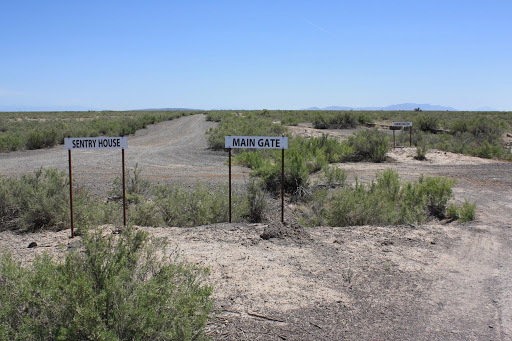
    <summary type="html"><![CDATA[<p><strong><em>The Topaz experience was prefaced by a mixture of welcoming residents and military presence at the camp’s main gate. </p></strong></p><img src="https://www.intermountainhistories.org/files/fullsize/855d8154dd98f7485c8e99a537b65695.jpg" alt="Main Gate" /><br/><p>On September 11, 1942, the first group arrived at Topaz War Relocation Center. That day, over 500 people of Japanese descent entered in Delta by train and were loaded onto buses that brought them to the internment site. There were more arrivals throughout the three-year period Topaz operated, all of whom passed through this main gate. It was here they were met with symbols of patriotism and signs of welcome. The residents of the internment camp tried to ease the new arrivals’ worries with these attempts; however, the barbed wire fences and guard towers framing the gate in the black desert-scape sent a contradicting message.</p><p>The people interned had been brought from homes on the Pacific coast that were exchanged for Topaz’s desert. It was a bleak sight amidst devastating circumstances. One woman, Yoshiko Uchida, noted her appreciation for the Boy Scouts’ effort to soften the arrival experience: “it was such a touching sight to see them standing in the burning sun, covered with dust and making such a determined effort to lessen the shock of our arrival at this bleak desert camp.” Windswept sand from the barren earth scattered about the Boy Scouts bearing instruments. The interned residents had organized a Boy Scout band to welcome new arrivals by song. The Boy Scouts symbolized patriotism to those arriving at the hand of policies that did not live up to American ideals of justice. Eventually, some men within the camp would volunteer for the war effort, enlisting in the segregated 442nd infantry. As the Boy Scout band played, the U.S. military guards stood nearby, holding rifles and kindling fear in the new arrivals.</p><p>Beyond the music of the Boy Scout band, those arriving at the camp were also greeted by signs welcoming them into Topaz. These signs had welcoming phrases such as “Welcome to Topaz: Jewel of the Desert” or “Welcome to Topaz—Your Camp.” However, these signs, whether intentionally or not, covered the truth of the internment experience. For example, one sign describes the camp as a “Jewel,” yet residents were forced to live in close quarters, surrounded by armed guards and barbed wire. Describing it as a “Jewel” hides the reality of what it was really like to live there. Another sign, recounted by Uchida, describes Topaz as “[their] camp.” However, the camp was run by the War Relocation Authority, not the residents. It was surrounded by the military and had strict rules and procedures. As one resident described, “rifles were pointed at us, not outward” (Stone). Although the sign claimed that the camp belonged to them, their surroundings told a different story. The desert landscape and military presence sent a message of fear that overcame the tokens of welcome.</p><p><em><strong><a href="https://www.intermountainhistories.org/items/show/298">For more (including 3 images) view the original article</a></strong></em></p>]]></summary>
    <published>2019-02-13T10:17:11+00:00</published>
    <updated>2026-04-17T19:32:05+00:00</updated>
    <link rel="alternate" type="text/html" href="https://www.intermountainhistories.org/items/show/298"/>
    <id>https://www.intermountainhistories.org/items/show/298</id>
    <author>
      <name>Elizabeth Young and Ann Johnston, Brigham Young University</name>
    </author>
  </entry>
</feed>