<?xml version="1.0" encoding="UTF-8"?>
<feed xmlns="http://www.w3.org/2005/Atom">
  <title type="text">Intermountain Histories</title>
  <updated>2026-04-17T19:32:02+00:00</updated>
  <generator uri="http://framework.zend.com" version="1.12.20">Zend_Feed_Writer</generator>
  <link rel="alternate" type="text/html" href="https://www.intermountainhistories.org/"/>
  <link rel="self" type="application/atom+xml" href="https://www.intermountainhistories.org/items/browse?output=rss2"/>
  <id>https://www.intermountainhistories.org/</id>
  <author>
    <name>Intermountain Histories</name>
    <uri>https://www.intermountainhistories.org</uri>
  </author>
  <link rel="hub" href="https://pubsubhubbub.appspot.com/"/>
  <entry>
    <title type="html"><![CDATA[James Cash Penney, Jr. and Salt Lake’s First United Methodist Church]]></title>
    <summary type="html"><![CDATA[<p><strong><em>James Cash (J.C.) Penney, Jr., early twentieth-century business and retail man, was dedicated to the local Methodist community of Salt Lake City. As a religious attendee and significant patron, J.C. Penney holds a prominent spot in the history of First United Methodist Church. </em></strong></p><img src="https://www.intermountainhistories.org/files/fullsize/229971960039eaffff7d1d268dc2ec08.jpg" alt="Portrait of J.C. Penney, Jr. " /><br/><p>James Cash (J.C.) Penney, Jr. was born on September 16, 1875 in the small Caldwell County town of Hamilton, Missouri to James Cash Penney, Sr. and Mary Frances Paxton. His father was a notable member of the Hamilton community as a minister for the local Baptist church, farmer, and civic leader. J.C. Penney’s family eventually moved out West to the town of Longmont, Colorado. It was here that J.C. Penney began pursuing a life as a businessman and entrepreneur that would eventually develop into a prominent and successful career. In Longmont, Penney met his future wife, Berta Alva Hess, and they were married in Cheyenne, Wyoming on August 24, 1899. The couple had two sons, Roswell Kemper Penney (b. 1901) and James Cash Penney III (b. 1903). After establishing a successful store in Kemmerer, Wyoming in 1902, Penney decided it was time for a change of scenery. He wrote in his 1950 autobiography, “In 1909 things were moving in a way which seemed to warrant a new phase. I gave up managing the Kemmerer store personally and moved Mrs. Penney and the boys to Salt Lake City.”</p><p>Berta Penney was a devoted member of the Methodist Church and the blossoming Penney family’s new environment helped facilitate a connection to their new community. Penney wrote, “Our two boys were nearing the age when they should be going to Sunday School. Mrs. Penney and I sought out a church of her denomination, and the boys began going before long to the Sunday school of the First Methodist Church.” The Penney family began attending services at the First Methodist Church in Salt Lake City, then under the stewardship of Dr. Francis Burgette Short.  Penney described him as “a forceful speaker and a man of striking appearance and personality, standing six foot four.” Shortly after the move to Salt Lake City, Berta Penney underwent a tonsillectomy procedure that unfortunately led to the development of pneumonia after traveling in the rain. The illness led to her tragic death on December 26, 1910. The passing of his wife devastated Penney, leaving him with two sons, in a new city, and with demanding business responsibilities. </p><p>The death of his wife deepened his involvement in the church. The First Methodist Church in Salt Lake City had been built and dedicated in May 1906 at the cost of approximately $80,000. The cost of the building, furniture, fixtures, organ, and grounds were covered for the most part by generous members of the church and community, yet at the time of the dedication, a $20,000 debt remained. Dr. Short, who assumed leadership of the Church in 1907, successfully acquired the remaining funds and paid off the indebtedness by 1912, the final $5,000 being donated by J.C. Penney in memory of his late wife. He noted in his autobiography that “a man’s duty was to support the church with money in addition to living in a conscientious and upright manner.” In 1914, Penney moved the headquarters of his company to New York City and later remarried, but his generous contribution to the Methodist community of Salt Lake City is held in highest regard to this day. One of the church towers of First United Methodist Church on 203 South 200 East in Salt Lake City is dedicated to Berta Penney and is designated with a plaque in her memory. </p><p><em><strong><a href="https://www.intermountainhistories.org/items/show/151">For more (including 5 images) view the original article</a></strong></em></p>]]></summary>
    <published>2018-05-02T21:27:57+00:00</published>
    <updated>2026-04-17T19:32:01+00:00</updated>
    <link rel="alternate" type="text/html" href="https://www.intermountainhistories.org/items/show/151"/>
    <id>https://www.intermountainhistories.org/items/show/151</id>
    <author>
      <name>Nicholas Shrum, Brigham Young University</name>
    </author>
  </entry>
  <entry>
    <title type="html"><![CDATA[Utah’s First Methodist Pioneer - Jedediah Strong Smith]]></title>
    <summary type="html"><![CDATA[<p><strong><em>Said to have been the first great protestant missionary to mountain men, “Bible Totin' Jed Smith” holds a special place in the memory of the Methodist community of Utah. </em></strong></p><img src="https://www.intermountainhistories.org/files/fullsize/7b138a6554c82831c59ac1c0b4ce33a7.jpg" alt="Jedediah Smith" /><br/><p>Early American Methodism and the exploration of the American West share a common pioneering ancestor in Jedediah Smith. While many of the commonly held beliefs about Jedediah Smith’s religious background and affiliation would require the support of more historical documentation than is currently available, Jedediah Smith’s life and subsequently developed popular legend provide an influential look into how the early nineteenth century explorer helped forge a future for the development of Utah and as a result, the Methodist Community that reveres the formidable mountaineer, appropriately referred to as “Bible Totin’ Jed Smith.”</p><p>Jedediah Strong Smith, Jr. was born on January 6, 1799 in Jericho, New York (present-day Bainbridge) to Jedediah Smith, Sr. and Sally Strong. The Smith family had early Puritan roots in the Samuel Smith family, which immigrated to the Massachusetts Bay Colony from Hadleigh, England in 1634. Jedediah Smith, Sr. became associated with the Wesleyan movement in the 1790s, tying the Smith family to the Methodist Church. It was a new movement, having just been developed in the 1780s in America by John and Charles Wesley. Though tempted to consider a life in the ministry, Jedediah Smith, Jr. chose to pursue a career as a trapper, frontiersman, and explorer. However, due to the revivalist fervor of the Second Great Awakening, Jedediah undoubtedly was shaped by his upbringing in the Methodist faith, influencing his actions and worldview throughout his short life. </p><p>Jedediah Smith’s contributions to early nineteenth-century exploration of the American West are well known and many. He was the first Anglo-American to make his way to California directly overland as well as the first to make an overland journey through northwest California into Oregon, a remarkable feat considering the densely forested landscape. Further, he was the first American to traverse the length of the Pacific Coast, ranging from San Diego in the South to Vancouver in the North. Smith was among the first to pass over the Sierra Nevada Mountains, and the first Americans to journey across the length and width of Utah. In 1826, he trekked into the Salt Lake and Utah Valleys, being the first American explorer to step foot south or west of the Great Salt Lake. Smith met a young and untimely death in a conflict with Comanche Indians in Kansas on May 27, 1831. Many of Jedediah Smith’s biographers note that he was a pious, sober, and God-fearing man. While Smith’s explorations in the West kept him from any form of regular or intermittent church attendance, he is known to have regularly devoted himself to the reading of the Bible. In fact, at the time of his death, Jedediah Smith’s estate contained a modest collection of books, two of which likely traveled with him during his career: The Holy Bible and a book of Methodist hymns. Today the Utah Methodist community reveres the memory and legend of Jedediah Smith as a pioneer of both their home state and faith. First United Methodist in Salt Lake City proudly displays a portrait of Jedediah Smith as a part of the faith’s community in the Great Basin. </p><p><em><strong><a href="https://www.intermountainhistories.org/items/show/152">For more (including 3 images) view the original article</a></strong></em></p>]]></summary>
    <published>2018-05-02T22:11:31+00:00</published>
    <updated>2026-04-17T19:32:01+00:00</updated>
    <link rel="alternate" type="text/html" href="https://www.intermountainhistories.org/items/show/152"/>
    <id>https://www.intermountainhistories.org/items/show/152</id>
    <author>
      <name>Nicholas B. Shrum, Brigham Young University</name>
    </author>
  </entry>
  <entry>
    <title type="html"><![CDATA[Building Dedication for Salt Lake City’s First United Methodist Church]]></title>
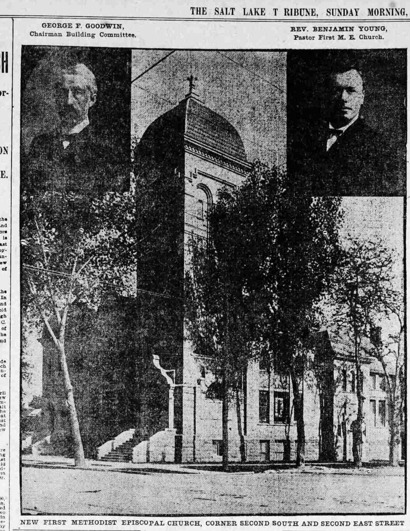
    <summary type="html"><![CDATA[<p><strong><em>For well over a century, the First United Methodist Church building has established its place in downtown Salt Lake City. The turn-of-the-century structure’s dedication was celebrated across the city and among Salt Lake City’s Methodist community.</em></strong></p><img src="https://www.intermountainhistories.org/files/fullsize/8691fcb64eb218642184ccdb10e2a624.jpg" alt="Methodists Will Dedicate Church" /><br/><p>For the last quarter of the nineteenth century (1871-1906), Salt Lake City’s First Methodist Episcopal Church was located downtown on 300 South between Main Street and State Street. This original church structure was dedicated after its completion in 1875. Due to the ever-increasing Methodist population and community needs, the original building was sold in 1905 for the price of $47,500, with the new funds available for the purchase of new property and for the construction of a brand-new building. A new site was purchased on May 10, 1905, for $13,500 at a nearby plot located at 203 South and Second East. The former church building was torn down and the Metropole Hotel eventually came to inhabit the site. Today, the old church and later hotel site is occupied by a parking garage.</p><p>The task of designing the new church building was placed upon the well-renowned Utah architect, Frederick Albert Hale (1855-1934). Mr. Hale, originally from Rochester, New York, grew up in Colorado after migrating out West with his parents. He returned to New York, Ithaca in particular, to study at Cornell University to become an architect. After graduating in 1875, Mr. Hale came back to the West where he began his architectural practice with buildings in Colorado, Wyoming, and Utah. In Utah, Frederick Albert Hale’s more well-known works include the Alta Club, a variety of Salt Lake City homes and mansions along South Temple, commercial structures such as the A.O. Whitmore Electric Automobile building and Continental Bank, and civic buildings such as the old Salt Lake Public Library. During his career, Mr. Hale was also the architect for a variety of church buildings in Wyoming and Colorado. However, the only church building Mr. Hale designed and completed in the state of Utah was what would eventually become the First Methodist Episcopal Church building completed in April of 1906 and subsequently dedicated the following month on May 22nd. </p><p>The dedicatory sermon was given by Bishop Moore of Portland, Oregon who was accompanied by the Utah Mission Superintendent Dr. Henry J. Talbott. Bishop Moore and Superintendent Talbott were also joined by an additional speaker, Dr. Robert McIntyre, pastor of the First Methodist Church of Los Angeles. On the day of the dedication, the church was filled beyond capacity, with occupants overflowing into the classrooms and any available space. The total cost of the structure, property, organ, and interior furnishings was generously donated by loyal and dedicated church members and local citizens; a sum of close to $80,000. The general appearance of what is now the First United Methodist Church has remained essentially the same for well over a century and has played an instrumental role in grounding a strong Methodist Community in the middle of downtown Salt Lake City. </p><p><em><strong><a href="https://www.intermountainhistories.org/items/show/153">For more (including 4 images) view the original article</a></strong></em></p>]]></summary>
    <published>2018-05-04T01:22:35+00:00</published>
    <updated>2026-04-17T19:32:01+00:00</updated>
    <link rel="alternate" type="text/html" href="https://www.intermountainhistories.org/items/show/153"/>
    <id>https://www.intermountainhistories.org/items/show/153</id>
    <author>
      <name>Nicholas Shrum, Brigham Young University</name>
    </author>
  </entry>
  <entry>
    <title type="html"><![CDATA[Wesleyan Heritage Organ at First United Methodist Church: History and Community]]></title>
    <summary type="html"><![CDATA[<p><strong><em>Initially dedicated six months following the dedication of their new church building, the pipe organ at First United Methodist Church has a long and storied history. Having gone through many updates, improvements, and restorations over the last several decades, the organ remains a highlight of religious music culture in Salt Lake City, Utah. </em></strong></p><img src="https://www.intermountainhistories.org/files/fullsize/f60f373de01c4c6aa7aaf09c151e3200.jpg" alt="1930 Console and Organ Choir" /><br/><p>Perhaps the most nationally recognized organ in Utah is found at the Mormon Tabernacle on Temple Square. However, First United Methodist Church in the heart of downtown Salt Lake City, Utah is home to the oldest pipe organ in the state that features the most original components in their original location. The church building on the corner of 200 South and 200 East was built and dedicated in May of 1906. The dedication of the original church organ, made by George Kilgan & Sons, followed seven months later on December 7, 1906. The organ featured pipes painted in shades of green and highlighted by intricate stenciling, as well as a console close to the organ choir that faced the congregation. Between 1915 and 1960, the organ underwent enlargements, various color changes accentuated by gold paint, as well as the movement of the console closer to the congregation on the main floor of the chapel. During the period of 1924–1939, the First United Methodist Church organist and choir director was Dr. Frank W. Asper, who also was an organist for the Mormon Tabernacle during the years 1924–1965. The organ underwent significant renovation during what is called the sanctuary and chancel beautification project. A notable change to the organ included moving the organ pipes behind a screen. Further, the pipes were hidden by a wooden grill, crosses, and lights that highlighted the new front to the Church chancel and sanctuary. The beautification project also included the incorporation of permanent pulpits and flower boxes. </p><p>In 2009, First United Methodist Church made the decision to restore the organ back to its original style, parts, and feel as part of a larger effort to remodel and renovate an integral and central component of the church’s community, history, and tradition. At this time, fundraising efforts began with recitals performed by local organists, grants, and a crowdfunding campaign. First United Methodist’s principal organist, Scott Mills, attributes the success of the fundraising efforts to the community, similar to an outreach that led to the building and dedication of the Church building over one hundred years earlier in 1906. Later at the completion of the project, Mills said, “The donations came in from one penny to thousands of dollars. And so, this whole restored effort . . . it was done mostly by the widow’s mite, literally the widow’s mite was the efforts of people who came together and made this all possible.” By 2014, the church had raised an ample sum to hire local American Fork, Utah based organ builders, Bigelow & Co. The restoration effort consisted of finding necessary vintage parts at the local Salt Lake Masonic Temple, locating and purchasing a 1930 organ console from Old St. Mary’s Catholic Church in Cincinnati, Ohio, and the hiring of Tony Devroude to recreate the original stenciling on the organ pipes. In addition, the 1960 paneling and carpeting was removed, opening up the chancel area and exposing the organ façade.  The organ console was dedicated to the memory of the 1924–1939 director and organist, Dr. Frank W. Asper. Restored to its original look and vintage composition, the Wesleyan Heritage Organ at First United Methodist continues to serve the local Methodist community, a wide variety of community events, as well as amateur and professional organ recitals on a regular basis. </p><p><em><strong><a href="https://www.intermountainhistories.org/items/show/154">For more (including 3 images) view the original article</a></strong></em></p>]]></summary>
    <published>2018-05-04T02:18:30+00:00</published>
    <updated>2026-04-17T19:32:01+00:00</updated>
    <link rel="alternate" type="text/html" href="https://www.intermountainhistories.org/items/show/154"/>
    <id>https://www.intermountainhistories.org/items/show/154</id>
    <author>
      <name>Nicholas Shrum, Brigham Young University</name>
    </author>
  </entry>
  <entry>
    <title type="html"><![CDATA[Kennecott&#039;s Greek History]]></title>
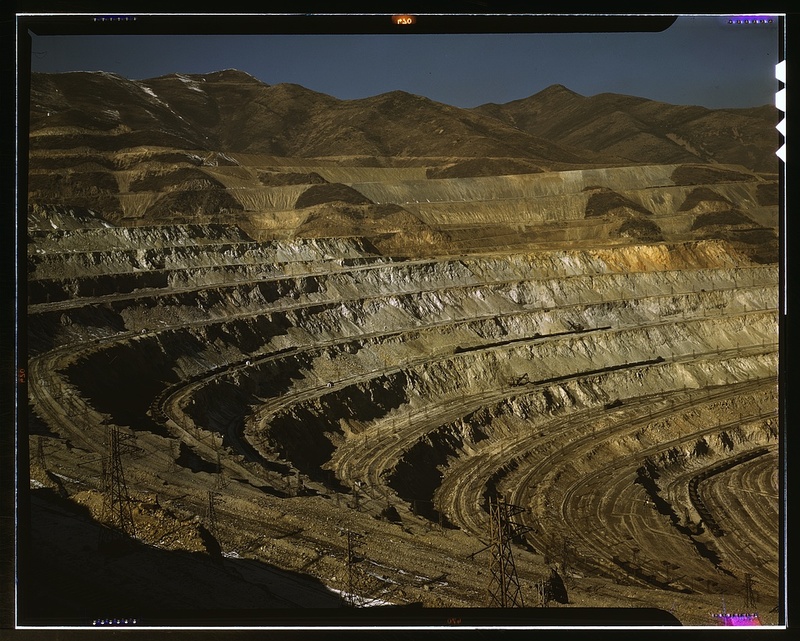
    <summary type="html"><![CDATA[<p><strong><em>Located on the West Side of Utah’s Salt Lake Valley, Kennecott Copper Mine provided work (and conflict) for hundreds of Greek Immigrants during the twentieth century. The mine is now the largest open pit mine in the world, built at a cost. </em></strong></p><img src="https://www.intermountainhistories.org/files/fullsize/b780d7a736a87decfc5e5f95e989ac0d.jpg" alt="View of the Utah Copper Company open-pit mine workings at Carr Fork, as seen from the railroad, Bingham Canyon, Utah" /><br/><p>By 1868, Utah’s copper industry had grown to such an extent that it attracted immigrant workers from all over Europe. After the Utah Copper Company began managing the Bingham Canyon Copper Mine in June of 1903, the Magna Mill and other smelters in Murray, Midvale, and Tooele were established to separate the copper from its ore. In Europe, Greece’s infrastructure was suffering and many families’ individual economies collapsed when the Greek currant crops failed in 1907. This pushed hundreds of Greeks to the United States in hopes of making a living for family left behind. Mining and smelting operations in Utah needed a larger labor force to excavate the mine in Bingham Canyon and to smelt. During this early period of Greek migration to Utah, many were coming from currant farming and sheep herding. Hundreds of Greek immigrants moved to Magna and areas surrounding Bingham Canyon’s smelters when offered jobs in the mining industry. In 1904 there were 2,000 names on the payroll at Bingham Canyon. By 1912, after a large influx of Greek migration to Utah, there were 3,239 laborers, and Greek-Americans made up 37.4 percent of the labor force among eleven different ethnicities, some of which included Serbian, Italian, and Russian. </p><p>Enclaves of Greek families formed in Magna, which was referred to as “Little Greece” due to its high population density of Greek immigrant families. Houses were “little tinder boxes, poorly built” and most houses were built below the top levels of the mine. As the Bingham Canyon Mine expanded, it required re-grading. Explosives were used to re-grade the mine and “every time they’d blast [the mine], boulders came rolling down the hill, several times right through [the houses].” Children and widows were found weeping in the debris. Conditions were dangerous. </p><p>Compounding the challenging circumstances of their living conditions, Greek immigrants found opposition from locals. The Ku Klux Klan’s branch in Salt Lake County was active around the mining towns that attracted Eastern European immigrants, and some Greek immigrants in Magna tell of the KKK’s white cross burning at the end of the street. Less than a month after the Utah Copper Company absorbed Bingham Canyon, newspapers reported race riots at the smelters where “[Greeks] force[d] opponents to run for their lives.” Serbians, Austrians, Italians, and Greeks were often found feuding and killings were not uncommon. In one instance, a conflict among Greeks and Italians became violent at the Bingham Canyon smelter and police were called to regulate it. Conflict toward immigrants became so heavy that in 1904, the “dastardly crime” of one Greek man prompted the mayor of Murray to propose a forced exodus of foreigners out of the mines and surrounding towns.</p><p>The conflict at Bingham Canyon fostered a strong Greek community. Few immigrants reached out across cultures due to the discrimination that existed and the structure of boarding houses at the mine. The mines did, however, provide hundreds of jobs for Greek immigrants looking for ways to economically strengthen their families. </p><p><em><strong><a href="https://www.intermountainhistories.org/items/show/155">For more (including 4 images) view the original article</a></strong></em></p>]]></summary>
    <published>2018-05-04T02:51:17+00:00</published>
    <updated>2026-04-17T19:32:01+00:00</updated>
    <link rel="alternate" type="text/html" href="https://www.intermountainhistories.org/items/show/155"/>
    <id>https://www.intermountainhistories.org/items/show/155</id>
    <author>
      <name>Katie Calton, Brigham Young University</name>
    </author>
  </entry>
  <entry>
    <title type="html"><![CDATA[Salt Lake&#039;s Historic Crown Burger]]></title>
    <summary type="html"><![CDATA[<p><strong><em>The next time you eat at Crown Burger, say hello to the cashier. They may just be a member of the Greek family who owns and operates the iconic Utah chain. </em></strong></p><img src="https://www.intermountainhistories.org/files/fullsize/3288af9d2f3899ac497717cc64f107ea.jpg" alt="Inside Crown Burger" /><br/><p>Dean Maroudas’ father immigrated to Chicago with his siblings. After spending some time in Chicago, the Maroudases came to Utah where Mr. Maroudas began working for another Greek family at Ajax Presses fashioning dry cleaning presses. When Ajax Presses decided to relocate to Chicago, the Maroudases chose to stay in Utah and open a dinner-night club. Food is “always the Greek default . . . we know how to cook.” The Katzourakis, friends of the Maroudases, opened Crown Burger in 1978. Dean eventually began working at Crown Burger as a dishwasher and is now the acting manager. He later married the Katzourakis’ daughter. </p><p>Years before Crown Burger opened its doors, John Katzourakis worked at Ajax Presses with Dean’s father. Ajax’s relocation to Chicago put John and his family out of work, as it had the Maroudases. Some of John’s siblings went to work for Bingham Canyon’s copper mine or the railroad, while John and his wife, Rula, moved to California so John could work at a machining company. During their time at the machining company, he and Rula decided to open Crown Burger.</p><p>After their pastrami burger failed to sell in California, the couple moved back to Utah. In 1978, they found a hotdog stand on the corner of 377 East and 200 South in Salt Lake City. With the help of Rula’s brother, Nic, they purchased the hotdog stand and started Crown Burger. Unlike the response in California, Utah went “gang-busters” for the pastrami burger. After six months, the Katzourakis purchased a gas station on the lot behind the hot dog stand. As Crown Burger’s popularity grew, the store expanded. There are now seven Crown Burger locations across Utah. </p><p>Greek immigrants in Chicago sold hot dogs, tamales, and other items from food carts in highly industrialized areas. The Crown Burger menu offers a similar diversity – burgers, burritos, fish and chips, and the classic Greek gyro. The community and the customers are most important to Dean and the rest of the Crown Burger family, so what the community loves to eat is what they perfect. “We don’t have [the] vision to say, ‘let’s conquer the world with this,’” Dean said, “We just really like what we are doing. We like the community. . . .We know people’s names. Probably the best way I can put it is we are not entrepreneurs, we are restaurateurs.”</p><p>The Greek word philoxenia roughly describes an inclusive friendship, even to strangers, that obligates you to care for their needs. This is the philosophy of Crown Burger, and it is the same philosophy that keeps the Greek community so inclusive and tight-knit today. </p><p><em><strong><a href="https://www.intermountainhistories.org/items/show/156">For more (including 2 images&#32;&amp;&#32;1 audio file) view the original article</a></strong></em></p>]]></summary>
    <published>2018-05-06T00:59:13+00:00</published>
    <updated>2026-04-17T19:32:01+00:00</updated>
    <link rel="alternate" type="text/html" href="https://www.intermountainhistories.org/items/show/156"/>
    <id>https://www.intermountainhistories.org/items/show/156</id>
    <author>
      <name>Katie Calton, Brigham Young University</name>
    </author>
  </entry>
  <entry>
    <title type="html"><![CDATA[The Hellenic Historic Monument]]></title>
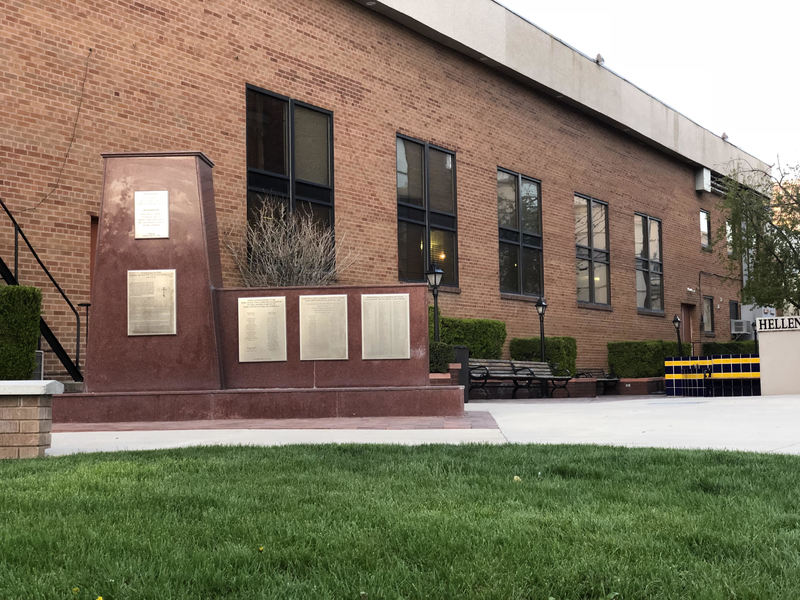
    <summary type="html"><![CDATA[<p><strong><em>A significant number of Greek Utahns served in the United States military. Their sacrifice to protect the nation is honored at the Hellenic Historic Monument in Salt Lake City. How can this monument impact our appreciation for United States service men and women?</em></strong></p><img src="https://www.intermountainhistories.org/files/fullsize/5b2ad5dcbfae1cdfc8fca342a54518b0.jpg" alt="Hellenic Historic Monument" /><br/><p>America experienced heightened nationalist ideology during World Wars I and II. As hysteria over the broader conflicts in Europe increased, xenophobia in the United States created strong inter-ethnic stress. In Utah, tension already existed in the industrial labor forces between Greeks, Americans, and other Eastern European immigrants at the start of the century. Lynchings were not widely publicized but nevertheless occurred in response to immigrant culture in the Salt Lake Valley. Greek immigrants were particularly targeted as un-American because they did not immediately desert their language and customs (often due to foundational religious beliefs), were involved in domestic labor strikes, and sent large amounts of money home. However, many Greeks were at the forefront of purchasing Liberty Bonds. Though criticized for not knowing English, Greek Newspapers (like O Ergatis) provided a resource to Greek-speaking immigrants to stay updated on war efforts in the United States.</p><p>Greek-Americans held an invested interest in World War I and II, regardless of their position on the conflict. Not only was America involved in the war, but so was their expatriate country – Greece. While many Greek Utahns joined the military by choice, others were drafted. The fairness of the draft was called into question when 221 of the 801 people in the Carbon County draft were Greek. Other members of the Greek community wanted to enlist, but were unable because they did not speak English. While many enlisted in the military to show their support for the war, others supported it through the Greek Orthodox Church. A parade was held from Price to the Holy Trinity Greek Orthodox church where speeches of patriotism were given and loyalty was pledged to the United States. </p><p>The wars significantly impacted Greek communities in Salt Lake City. Economically, the wars pushed copper miners and other industrial workers toward the city and into the middle class. This was partially due to the smaller number of more highly educated immigrants that came to Utah to be with family or friends who had already immigrated. Marriages decreased during the war (though they increased once the war had ended), and the Greek school located in the basement of the Holy Trinity Orthodox Church became less important than Orthodoxy itself. </p><p>To honor the history of Greek Utahns that fought in World Wars I, II, and the Korean Conflict, as well as the resulting effects of the war, the Hellenic Cultural Association (HCA) erected the Hellenic Historic Monument. The monument names the thirty-eight Greek Utahns that lost their lives in World Wars I, II, and the Korean Conflict, including Private First Class Theodore C. Dimas. Dimas was honored both in the community and by the Holy Trinity Orthodox church after his death. The HCA continues to hold Memorial Services for Greek servicemen and women at the monument each year.</p><p><em><strong><a href="https://www.intermountainhistories.org/items/show/157">For more (including 3 images) view the original article</a></strong></em></p>]]></summary>
    <published>2018-05-06T01:22:42+00:00</published>
    <updated>2026-04-17T19:32:01+00:00</updated>
    <link rel="alternate" type="text/html" href="https://www.intermountainhistories.org/items/show/157"/>
    <id>https://www.intermountainhistories.org/items/show/157</id>
    <author>
      <name>Katie Calton, Brigham Young University</name>
    </author>
  </entry>
  <entry>
    <title type="html"><![CDATA[Greek Orthodoxy in Salt Lake City]]></title>
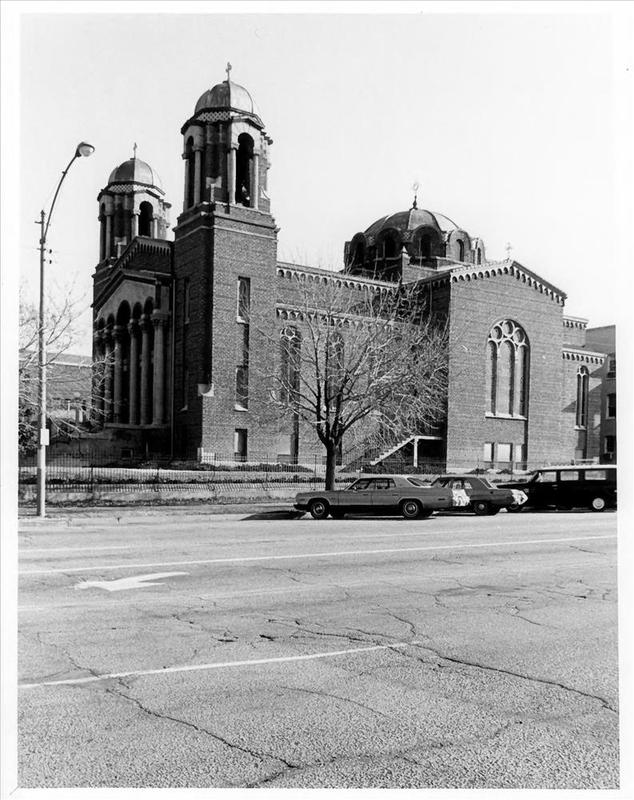
    <summary type="html"><![CDATA[<p><strong><em>The Holy Trinity Cathedral in downtown Salt Lake City is a registered historic monument with the National Parks Services. It is still used today and has served to connect Utah Greek communities for over one hundred years. </em></strong></p><img src="https://www.intermountainhistories.org/files/fullsize/ce84ecd0f11bd80bcfd146ca1fa2c01f.jpg" alt="Holy Trinity Greek Orthodox Church" /><br/><p>Greek Orthodoxy long served as the center of life in Greek Utah. A small church was initially built in Price, Utah in 1904 to carry out rituals of marriage, baptism, and funerals. After approximately twenty years, the Holy Trinity Cathedral was erected and later consecrated in Salt Lake City in August of 1925. It was the only Greek Orthodox cathedral in the Intermountain West during the early twentieth century and became the hub for Greeks regionwide. The West was likened unto Siberia for Greek Orthodoxy, but local newspapers hailed Salt Lake’s Orthodox Church as the “flower of the Greek clergy in America.” </p><p>The clergy played an important role in the vitality of the church in the Intermountain West. The services welcomed everyone. Priests would travel to members of their congregation that could not attend due to geography or other reasons. In addition to ministering, clergy mediated marriages and conflict. For example, during an episode of mining labor strife, one priest “climbed a Bingham Canyon mountainside to exhort Greek strikers . . . to put down their guns.” As American nationalism increased throughout the United States during World War II, the clergy also became subject to criticism. English, education, and marriage were important to the Greek community. For this reason, both Greeks and Americans were critical of the clergy. The Greek newspaper New Advocate criticized one clergyman, Father Yiannis, for only speaking Greek, doing a poor job of marrying his constituents, and for his disinterest in education. After Father Yiannis left, many Greek mothers had their babies re-baptized by the new priest that arrived from the east. </p><p>While Greek Orthodoxy responded to the cultural movements in the United States during the twentieth century, religious ceremonies and practices remained consistent. Marriage was required to take place within the church. This left many women unmarried. Funeral services reflected connections with birth and baptism. In addition, the elaborate detail on the Holy Trinity Cathedral retained Greek Orthodox symbolism. Symbols of God’s hand, seven candles and an olive branch, crowns, peacocks, and lilies can be found in the Byzantine architecture and design. A Phoenix also appears on the outside of the Cathedral, symbolizing the importance of birth, sanctification, and an ultimate resurrection. </p><p>The Holy Trinity Cathedral manifests the importance of Orthodox Theology in the West. The Holy Trinity Cathedral continues to connect the community with Greek life. Originally used as a Greek school during World War II, the basement of the Holy Trinity Cathedral has been converted into a Hellenic History Museum – it is the largest Hellenic museum west of St. Louis. The Cathedral is also involved with the Hellenic Cultural Association and the Greek Festival in downtown Salt Lake each year. For these reasons, the Holy Trinity Cathedral “is why Greeks are still a community into the fourth generation.” </p><p><em><strong><a href="https://www.intermountainhistories.org/items/show/158">For more (including 4 images) view the original article</a></strong></em></p>]]></summary>
    <published>2018-05-06T03:21:19+00:00</published>
    <updated>2026-04-17T19:32:01+00:00</updated>
    <link rel="alternate" type="text/html" href="https://www.intermountainhistories.org/items/show/158"/>
    <id>https://www.intermountainhistories.org/items/show/158</id>
    <author>
      <name>Katie Calton, Brigham Young University</name>
    </author>
  </entry>
  <entry>
    <title type="html"><![CDATA[Albert Bierstadt&#039;s Old Faithful]]></title>
    <summary type="html"><![CDATA[<p><strong><em>Albert Bierstadt was fascinated by the geysers of Yellowstone. In all his life, he had never seen anything as captivating as these bubbly, explosive fountains. His painting of Old Faithful is one of his best works.</em></strong></p><img src="https://www.intermountainhistories.org/files/fullsize/d2c03b869049797a3d1bfc53ed6f9781.jpg" alt="Old Faithful" /><br/><p>Old Faithful is a geological wonder with its consistent eruption schedule. It is not the largest or most regular geyser in Yellowstone National Park, yet it has become one of the most popular sites in Yellowstone. Albert Bierstadt, like tourists of today, was amazed by Old Faithful and his painting captures this feeling. </p><p>Albert Bierstadt was born in Germany in 1830 but moved to the United States at the age of one. Early on in his life, Bierstadt showed interest in art. To jumpstart his career he returned to Germany to study art and later trained with the Hudson River School in New York. The Hudson River School’s style was focused on grand paintings of landscapes with a glowing light. Using the skills he learned in his training, Bierstadt began painting landscapes in the West. Well-known for his works in Yosemite, Bierstadt decided he wanted to explore another American geological wonder. Though Albert Bierstadt was not on the Hayden Geographical Survey of 1872, he was visiting Yellowstone at the same time as Moran and Jackson. He also believed that he was a more accomplished artist than those on the Hayden Survey. </p><p>One of his grandest works in Yellowstone was his Old Faithful. As noted in the introduction, Bierstadt was enthralled by the geysers in Yellowstone. Peter Hassick expands on Bierstadt’s captivation, “Bierstadt’s admitted fascination with Yellowstone’s geysers is reflected in the number of paintings that he produced using them as themes. . . . Contrasted with his conventional, monumental landscapes infused with Claudian glow and other theatrical effects, these studies are intimate and naturalistic.” </p><p>Albert Bierstadt said of his experience in Yellowstone, “This is not the first season I have spent about the Rocky Mountains, but it is my first introduction to the geysers of the Yellowstone. To use the word wonderful is simply to use a relative term. But I have never been so impressed with the infinite divinity of the types of nature as I was by the same geysers. I went West with the fixed intention of spending the greater part of my time about the geysers, and also to study them as thoroughly as I could in the protracted period I had allotted to myself. I have always had an inclination towards geological studies, and here I had a whole world of geological phenomena spread before me.” </p><p><em><strong><a href="https://www.intermountainhistories.org/items/show/159">For more (including 3 images) view the original article</a></strong></em></p>]]></summary>
    <published>2018-05-06T03:49:56+00:00</published>
    <updated>2026-04-17T19:32:01+00:00</updated>
    <link rel="alternate" type="text/html" href="https://www.intermountainhistories.org/items/show/159"/>
    <id>https://www.intermountainhistories.org/items/show/159</id>
    <author>
      <name>Emma Tolman, Brigham Young University</name>
    </author>
  </entry>
  <entry>
    <title type="html"><![CDATA[Thomas Moran&#039;s Grand Canyon of the Yellowstone]]></title>
    <summary type="html"><![CDATA[<p><strong><em>Thomas Moran immersed himself  deeply in his Yellowstone work. He documented over thirty different sites, one of his best was the Grand Canyon of the Yellowstone.  Enthralled with Yellowstone, Moran started signing some of his works with a “Y” in the middle of his name, Thomas “Yellowstone” Moran.</em></strong></p><img src="https://www.intermountainhistories.org/files/fullsize/bdfbcb15bf2f510059e59a2e5d60ff65.jpg" alt="The Grand Canyon of the Yellowstone" /><br/><p>The Grand Canyon of the Yellowstone, carved out by the Yellowstone River, stretches 1,500 – 4,000 feet wide, and 800 – 1,200 feet deep. After the Yellowstone Caldera, essentially a giant volcano, erupted more than 600,000 years ago, the canyon was formed through lava flow and the increased rate of erosion caused by these flows. The Canyon has captivated visitors for a long as the park has been open, not only because of its striking form, but also because of its reputation as the subject of one of Thomas Moran’s grandest paintings.</p><p>Thomas Moran’s Grand Cañon [sic] of the Yellowstone is one of his most recognizable paintings. Moran was a part of the Hayden Geological Survey in 1872. The survey was federally funded, and its purpose was to document the landscape and geological features of the Yellowstone area. This expedition, with Moran’s artwork as a central component, was influential in establishing Yellowstone as the first national park in America. </p><p>Thomas Moran’s painting mirrors the grandness of the canyon with its giant canvas size of 7 feet by 12 feet.  Peter H. Hassrick writes that, “Some observers, when they saw the large canvas, wondered aloud when the image would move.” This type of enormous painting was a key characteristic of the Rocky Mountain School of artists. The goal of the Rocky Mountain School, patterned after the Hudson River School, was to create art that transported people into the imagined space, that would encourage them to visualize themselves in the depicted location. Admittedly a lofty goal, the artists usually combined different views of the area into one whole creating, an image that one could never witness in real life.</p><p>Writing to Ferdinand Vandeveer Hayden, leader of the Hayden Geological Survey, Thomas Moran said of the Grand Canyon of the Yellowstone, “I have always held that the Grandest, Most Beautiful, or Wonderful in Nature, would, in capable hands, make the grandest, most beautiful, or wonderful pictures, and that the business of a great painter should be the representation of great scenes in Nature . . . I cast all my claims to being an Artist, into this one picture of the Great Cañon and am willing to abide by the judgment upon it.” </p><p><em><strong><a href="https://www.intermountainhistories.org/items/show/160">For more (including 5 images) view the original article</a></strong></em></p>]]></summary>
    <published>2018-05-07T22:04:07+00:00</published>
    <updated>2026-04-17T19:32:01+00:00</updated>
    <link rel="alternate" type="text/html" href="https://www.intermountainhistories.org/items/show/160"/>
    <id>https://www.intermountainhistories.org/items/show/160</id>
    <author>
      <name>Emma Tolman, Brigham Young University</name>
    </author>
  </entry>
  <entry>
    <title type="html"><![CDATA[William Henry Jackson’s Hot Spring and Castle Geyser]]></title>
    <summary type="html"><![CDATA[<p><strong><em>Providing the earliest photographs of Yellowstone as he participated in the Hayden Geological Survey, William Henry Jackson was influential in creating America’s first National Park. Hayden, the leader of the survey, remarked that “collecting photographs was similar to collecting fossils and natural history specimens,” a convincing way to influence the United States government to protect these specimens found in Yellowstone. One of Jackson’s best photographs is Hot Springs and Castle Geyser. Castle Geyser is located in the Upper Basin of Yellowstone National Park, near Old Faithful Geyser. </em></strong></p><img src="https://www.intermountainhistories.org/files/fullsize/9452e04037751e30e91a3fc86069e9fb.jpg" alt="Hot Springs and Castle Geyser (color)" /><br/><p>As a member of the Hayden Geographical Survey in 1871, William Henry Jackson was the first photographer in Yellowstone. His photographs informed the government of the landscape and geological sites in Yellowstone, and provided artists on the survey like Thomas Moran with references to the sites so they could complete their works after the survey in their studios. Moran credits the accuracy of his paintings to Jackson’s photographs. Jackson’s photographs were also important to the creation of Yellowstone National Park. “As an intelligent, ambitious, and gifted individual working in a medium of great influence, Jackson became a powerful progenitor of the changes in the American conception of the West and of landscape in general,” writes the historian Peter Bacon Hales.</p><p>William Henry Jackson wrote, “Pictures were essential to the fulfillment of the doctor's plan for publicizing this Survey; but the basic purpose was always exploration. I cannot be too careful in emphasizing the fact that in this [the 1871 expedition] and all the following expeditions I was seldom more than a sideshow in a great circus.” Perhaps humble, perhaps realistic, Jackson saw himself as a small part to a greater whole, yet his photographs have been cited again and again by participants in the survey, as well as historians today, as highly influential in the creation of Yellowstone National Park.</p><p>Hot Spring and Castle Geyser provides an excellent example of his work. Since much of Europe and the eastern United States do not have geysers as a part of their geological makeup, Hot Spring and Castle Geyser documented a unique aspect of Yellowstone. In fact, Yellowstone has the largest concentrated number of geysers in the world. Castle Geyser may be the oldest geyser in Yellowstone, and although its eruption schedule may not be as predictable as Old Faithful Geyser, Castle Geyser erupts about every 10–12 hours a day. Jackson’s photograph Hot Spring and Castle Geyser was the first photograph that shared geysers with a wide audience.</p><p><em><strong><a href="https://www.intermountainhistories.org/items/show/161">For more (including 5 images) view the original article</a></strong></em></p>]]></summary>
    <published>2018-05-07T22:34:56+00:00</published>
    <updated>2026-04-17T19:32:01+00:00</updated>
    <link rel="alternate" type="text/html" href="https://www.intermountainhistories.org/items/show/161"/>
    <id>https://www.intermountainhistories.org/items/show/161</id>
    <author>
      <name>Emma Tolman, Brigham Young University</name>
    </author>
  </entry>
  <entry>
    <title type="html"><![CDATA[Abby Williams Hill’s Artemisia Geyser Pool]]></title>
    <summary type="html"><![CDATA[<p><strong><em>Abby Williams Hill was captivated by the Artemisia Geyser Pool, and for good reason. Though it may not garner as much attention as Old Faithful, Artemisia provides onlookers a unique experience since it does not give any warning signs to indicate when it will erupt. The feeling of surprise and awe of the geyser’s eventual eruption is captured in one of Hill’s best paintings.</em></strong></p><img src="https://www.intermountainhistories.org/files/fullsize/d36be929f8f3d34f4f993d564b77d337.jpg" alt="Artemisia Pool" /><br/><p>The Artemisia Geyser Pool sits just below the Gem Pool and Atomizer Geyser in the Upper Basin of Yellowstone Park. The three of these make up the Cascade Group that erupts for a duration of 15–25 minutes once or twice a day. Artemisia is unique because it does not give any visible warning that indicates when it will erupt. When Artemisia does erupt, however, the force is strong, causing the surrounding area to thump due to the steam bubbles coming from the geyser. Though it has not been the focus of many artists that have come through Yellowstone, Artemisia captivated the painter Abby Williams Hill and was the subject of one of her best paintings. </p><p>Though she was originally from Iowa and spent time in New York training to become an artist, Abby Williams Hill is best known for her work in the American West. After marrying Frank Hill, she moved with him to Tacoma, Washington. There, she became well-known as an artist, and in the early 1900s she was commissioned by the Northern Pacific Railroad to paint the American West as she traveled through it via the railroad. At the time of the assignment, Hill was forty-five, with one son and three adopted daughters. She brought her family along with her on her assignments so they could explore the sites together. Her assignment for the railroad specifically was to paint twenty-two works in the short span of eighteen weeks, in the en plein air style. En plein air is a French term that means outdoors. This style of painting was started and finished while the artist was still outside observing the location, unlike the studio paintings of the past where the artist would sketch while at the location and return back to the studio to finish the work. As a woman, Hill is an interesting and important figure, since many women artists of the time did not receive these types of opportunities, or the recognition that followed. </p><p>In her diary on September 3, 1906, Abby Williams Hill wrote about the Artemisia Geyser Pool, “I have been sketching the Artemisia. We thought it would play, but there was almost no movement of water. There is a small geyser on the formation below it. Ione [Hill’s daughter] and I went to look at it and judging it would soon play, stood to watch it. There came a jarring of the earth and a thumping under our feet. Looking up we saw a ridge of water moving down over the hill towards us as if all the water in the Artemisia had been raised and pushed off over the hill. We ran with all our might, jumped the little gully and climbed the hill where we sat down, but the thumping was so great we ran further. By this time, the water was agitated and soon a great mass was raised a hundred feet, rivers of boiling water poured out. The steam shut off a view of everything else and it was as if we were looking at an eruption in the ocean. The vibration and thumping continued with increased and startling force. It seemed as if a new crater was about to yawn under us.” </p><p>Her painting of Artemisia Geyser Pool depicted a place untouched by humans, yet since she painted in the twentieth century, after Yellowstone was open to the public, this was an unrealistic reality. Historian Laura Edgar writes, “Despite the obvious presence of tourists and the facilities that catered to them, Hill’s paintings depicted only virgin landscapes devoid of any representation of human intervention. She felt strongly that the increased presence of humans in the national parks harmed the pristine natural environment; this opinion grew stronger as the decades passed, resulting in a flurry of correspondence with the US Department of the Interior in the late 1920s and 1930s.” Hill’s painting hearkened back to the time when Yellowstone was first explored by artists. </p><p><em><strong><a href="https://www.intermountainhistories.org/items/show/162">For more (including 3 images) view the original article</a></strong></em></p>]]></summary>
    <published>2018-05-07T23:08:52+00:00</published>
    <updated>2026-04-17T19:32:01+00:00</updated>
    <link rel="alternate" type="text/html" href="https://www.intermountainhistories.org/items/show/162"/>
    <id>https://www.intermountainhistories.org/items/show/162</id>
    <author>
      <name>Emma Tolman, Brigham Young University</name>
    </author>
  </entry>
  <entry>
    <title type="html"><![CDATA[Bullock v. United States: Radioactive Sheep]]></title>
    <summary type="html"><![CDATA[<p><strong><em>The United States Nuclear Testing Program began in the 1950s and was conducted in the Nevada desert near local sheep grazing lands. The Bullock ranching family was heavily affected by the radiation in spring of 1953. Vera Bullock later recorded, “By June 4, eleven bomb tests had been conducted and our lives had been changed forever.” </em></strong></p><img src="https://www.intermountainhistories.org/files/fullsize/fd234e2ec746f3649367c03784144c09.jpg" alt="Tikaboo Valley" /><br/><p>It was an early, spring morning in 1953 in eastern Nevada when brothers Kern and McRae Bulloch were grazing their sheep. Just miles east of the Nevada Nuclear Testing Site, these brothers were witness to one of the largest nuclear tests performed by the United States government. Kern recorded the experience from that morning in his own words:</p><p>"I remember the day very distinctly. I was sitting with one leg cocked over my saddle horn, when I noticed some airplanes. I watched them come from the east and start to turn north over the Nevada Test Site. All at once there was a fire ball, I threw my hands over my eyes, it about blinded me, my horse darn near unloaded me, and the sheep all came together in a wad. They had dropped a bomb from the air less than 40 miles away."</p><p>Unnerved by the experience, the brothers sat talking until a convoy of military personnel traveled toward them. An officer addressed them saying, “You’re in a hell of a hot spot. Get these sheep and yourselves the hell out of here as fast as you can.” Kern and McRae moved their sheep, but with a whole outfit of supplies and sheep that only moved six miles a day, the process was slow. On the way back to Utah, the brothers noticed burns and sores on their sheep and horses. </p><p>After the Bullocks arrived at their lambing sheds in Cedar City, the sheep died in droves. Each morning, the Bullocks awoke to find more of their sheep dead than the day before. Other sheep ranchers who were in Nevada with them experienced the same strange symptoms of deaths, burns, and deformed lambs. The lambs that survived birth only lived for several hours. In total, the Bullocks lost 2,300 sheep. Local veterinarians were baffled and the Atomic Energy Commission (AEC) was contacted. Kern was present when government scientists measured the radiation on the sheep with their Geiger counters and were stunned, “They’re so hot the needle’s about to jump the post.” Their final report was published and the cause of death determined: malnutrition. The ranchers were outraged. </p><p>The ranchers had not only lost millions of dollars, but their way of life. In 1955, Kern and five other ranchers determined to take the United States government to court. They asked that each rancher be compensated at current market price for each sheep lost. Kern’s wife Vera later wrote that before the trial an AEC attorney approached Kern. He admitted that the radiation killed the sheep, but that the AEC could never admit it because “every pregnant woman who lost a baby and every person who got sick would sue the government.” The ranchers lost the case in 1955 and the appeals case in 1982. McRae later told a newspaper reporter, “What I feel bad about is if they knew they were going to hurt us, why didn’t they warn us ahead of time?” Many families in southern Utah would ask the same question over the next several decades. Bullock v. United States was the first of a series of legal battles against the AEC for negligence</p><p><em><strong><a href="https://www.intermountainhistories.org/items/show/163">For more (including 3 images) view the original article</a></strong></em></p>]]></summary>
    <published>2018-05-08T02:41:55+00:00</published>
    <updated>2026-04-17T19:32:01+00:00</updated>
    <link rel="alternate" type="text/html" href="https://www.intermountainhistories.org/items/show/163"/>
    <id>https://www.intermountainhistories.org/items/show/163</id>
    <author>
      <name>Emily Cook, Brigham Young University</name>
    </author>
  </entry>
  <entry>
    <title type="html"><![CDATA[Atomic Veterans: Orville E. Kelly and Thomas H. Saffer]]></title>
    <summary type="html"><![CDATA[<p><strong><em>Soldiers know that risking their lives is a part of their duty to their country, but what does it mean to die for your country as a guinea pig? Orville E. Kelly, Thomas H. Saffer, and many other atomic veterans have asked themselves that very question.</em></strong></p><img src="https://www.intermountainhistories.org/files/fullsize/25fcd3e64734287b41e8a710928dae84.jpg" alt="Frenchman&#039;s Flat" /><br/><p>It was 5:30 a.m. on the morning of June 24, 1957 when second-lieutenant Thomas H. Saffer knelt in a trench at the Nevada Nuclear Testing Site. He and his fellow service-men had been assigned to experience the full effects of a nuclear explosion as part of the Plumbbob series. Saffer had been told that kneeling in the trench just two miles away from ground zero would protect him from the gamma rays because they only traveled in a horizontal direction. All he needed to do was kneel down, cover his eyes with his arm, and brace himself. An inter-com announced the count-down:  Three, two, one . . . </p><p>"At zero, I heard a loud click. Immediately, I felt an intense heat on the back of my neck. A brilliant flash accompanied the heat, and I was shocked when, with my eyes tightly closed, I could see my bones in my forearms as though I were examining a red x-ray . . . I had been bounced helplessly around in the trench for ten to twelve seconds that seemed like an eternity. I felt as though I had been attacked and savagely beaten by a gang of toughs who hammered on my helmet and tore at my clothing from all sides. I was alive but dazed. No one had prepared me for what I had experienced. Had something gone wrong or was my encounter typical of a nuclear explosion?"</p><p>Saffer’s experience actually was typical for the thousands of soldiers who participated in the nuclear testing from 1945 to 1963. Later, he discovered that he was not the only veteran to develop serious health problems due to the heavy doses of radiation released during the nuclear explosions. An estimated 250,000 defense personnel were exposed to radiation during the United States nuclear weapons tests. For some, it meant cancer and premature death.  Over the years, soldiers realized the effects of their service on their lives and fought for reparations. </p><p>In 1979, Orville E. Kelly organized the NAAV or the National Association of Atomic Veterans “for the purposes of allowing the U.S. Atomic Veteran Community to speak, with a single voice, to their inability to get a fair hearing related to their developing (radiogenic) health issues.” He was the first Atomic Veteran to be awarded compensation by the Veterans Association for the effects of radiation. In 1996, the Repeal of Nuclear Radiation and Secrecy Agreements Law allowed veterans to share their experiences during nuclear testing. The Compensation Act of 1988, the Radiation Exposure Compensation Act in 1990, and the 1995 Advisory Committee on Human Radiation Experiments all acknowledged the mistake of the federal government to not inform soldiers and citizens of the dangers of nuclear testing. </p><p>The government performed the tests in the name of national security, but in the end its own citizens were harmed. While the atomic bomb is often debated in the terms of war, it is important to acknowledge the costs at home.</p><p><em><strong><a href="https://www.intermountainhistories.org/items/show/164">For more (including 5 images) view the original article</a></strong></em></p>]]></summary>
    <published>2018-05-09T03:01:34+00:00</published>
    <updated>2026-04-17T19:32:01+00:00</updated>
    <link rel="alternate" type="text/html" href="https://www.intermountainhistories.org/items/show/164"/>
    <id>https://www.intermountainhistories.org/items/show/164</id>
    <author>
      <name>Emily Cook, Brigham Young University</name>
    </author>
  </entry>
  <entry>
    <title type="html"><![CDATA[Downwinders in Court: Irene Allen v. United States]]></title>
    <summary type="html"><![CDATA[<p><strong><em>The downwinders of southern Utah have been deeply affected by cancers linked to nuclear radiation. Allen v. United States was a landmark case for holding the government responsible for negligence during nuclear testing. </em></strong></p><img src="https://www.intermountainhistories.org/files/fullsize/231fd1909103d22b25521a953513e3cf.jpg" alt="Suit Filed by Fall-out Victims" /><br/><p>When deciding where to perform nuclear tests, the Atomic Energy Commission (AEC) looked westward. Southern Nevada was close to the Los Alamos Laboratory where the weapons were designed, near the Four Corners region rich with the uranium they needed, and in the desert with low population density. To avoid Las Vegas, they just needed wait until the wind was blowing north-east. The Nevada Nuclear Testing site was built and tests began.</p><p>As large clouds loomed, residents of southern Utah were repeatedly assured by the AEC that they were safe from radiation. After several years, residents could not ignore the growing rates of cancer in their community. Leukemia increased over the national average and death occurred twice as often. Newspaper stories, congressional reports, and executive attention in other areas of the country encouraged the people to action. In 1978 and 1979, local leaders led the community in a lawsuit against the federal government that would become Allen v. United States. </p><p>In 1979, Utah Senator Orrin Hatch held a special town meeting in St. George, Utah to discuss the issue. Locals attended and shared personal stories, including how children interacting with fallout directly. One citizen commented, “You know how little kids love snow. They went out and would eat the snow. They didn’t know it was going to kill them later on.” Gloria Gregerson shared, “We liked to play under the trees and shake this fallout onto our heads and our bodies, thinking that we were playing in the snow. Then I would go home and eat. If my mother caught me as a young child, I would wash my hands; if not, then I would eat with the fallout on my hands.”  At the age of seventeen Gloria developed ovarian, stomach, and skin cancer followed by Leukemia. She died at the age of forty-two in 1983. Few citizens escaped having relatives or friends die of cancer. </p><p>In 1980, a congressional report “The Forgotten Guinea Pigs” would admit the government “failed to give adequate warning to the residents living downwind from the test site regarding the dangers posed by the radioactive fallout emitted during the atmospheric nuclear test operations.” The question that remained was if the government could legally be held responsible for its actions. </p><p>Allen v. United States was a landmark case with over 1,100 plaintiffs represented under 24 representative claims with Stuart Udall as their attorney. In 1984, Bruce Jenkins ruled in favor of the people by holding the government liable for negligence. The U.S. appealed and in 1987 the Tenth Circuit Court of Appeals overturned his decision. Despite the fact that it was overturned, Allen v. United States is a landmark case because the citizens won and paved the way for compensation in the future. </p><p><em><strong><a href="https://www.intermountainhistories.org/items/show/165">For more (including 4 images) view the original article</a></strong></em></p>]]></summary>
    <published>2018-05-09T03:37:17+00:00</published>
    <updated>2026-04-17T19:32:01+00:00</updated>
    <link rel="alternate" type="text/html" href="https://www.intermountainhistories.org/items/show/165"/>
    <id>https://www.intermountainhistories.org/items/show/165</id>
    <author>
      <name>Emily Cook, Brigham Young University</name>
    </author>
  </entry>
  <entry>
    <title type="html"><![CDATA[Navajo Vanadium Miners in Monument Valley]]></title>
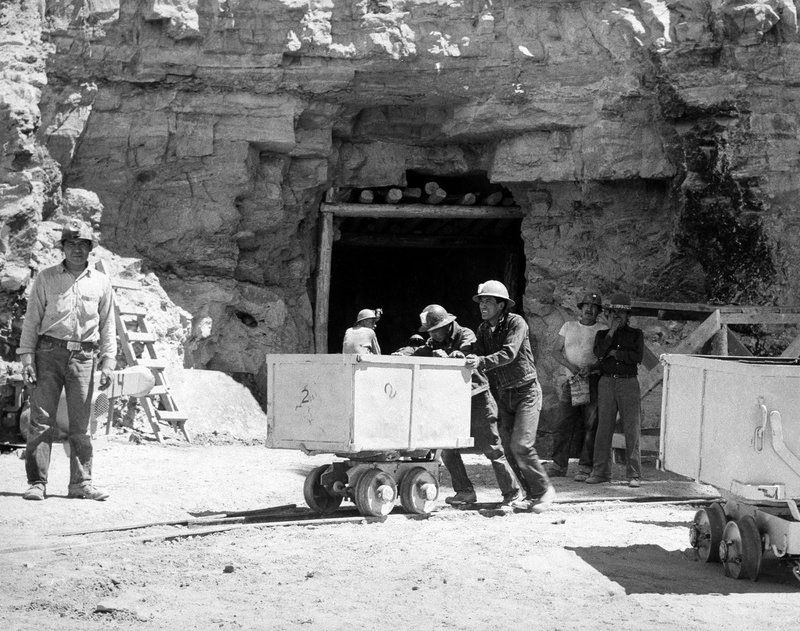
    <summary type="html"><![CDATA[<p><strong><em>The dangers of nuclear testing began even before the bombs were dropped. Navajo miners in Monument Valley experienced similar symptoms to those exposed to fallout in other areas of the West. </em></strong></p><img src="https://www.intermountainhistories.org/files/fullsize/574f85e253ccecd26c391c39f8b6daae.jpg" alt="Navajo Miners" /><br/><p>A critical component to building atomic weapons is vanadium, an element that is also radioactive. One area with vanadium in plentiful amounts is Monument Valley on the Utah-Arizona border within the Navajo Nation. Recognizing the opportunity for jobs, the Navajo people took on the task of mining the substance and were exposed to the radiation that would become familiar to many in the west. </p><p>In the 1940s, the Vanadium Corporation of America (VCA) and other organizations petitioned the Navajo Nation for the right to mine on their land. The rights were granted with the stipulation that the jobs go to Navajos themselves and the grazing land be as undisturbed as possible. One young man named Luke Yazzie heard that there were men willing to pay for a particular kind of rock. He knew where to find the rock so he contacted John Wade of the VCA and led him to an area he often played in as a boy. A sample from the area determined that it was rich with vanadium. It came to be known as Monument No. 2, one of the largest producing vanadium mines in Monument Valley. </p><p>Previous research with uranium mining in Europe taught health officials the risk of lung cancer when mining radioactive materials. Uninformed of the danger, Navajos worked in unventilated conditions and brought the dust home with them. One worker, George Brown, later recalled, “We brought a lot of that stuff home. We never knew it would affect us down the road.” As time passed, many had strange, unexplainable health problems. Family and friends began dying. They began to point to the mines as the cause. </p><p>Harry Tome was one individual who knew he needed to do something. He contacted newspapers and, despite his efforts, little to no attention was paid to his cause. Miners were dying from the effects of radiation because they had not been warned of the dangers by their employers or the Public Health Association. Investigations into the issue by Congress showed that they knew the dangers, but had not acted in the interest of the Navajo people. It would be years later, when the issue grew in the nation, that his effort would gain momentum. </p><p>After several years, Tome contacted Secretary of the Interior Stewart Udall. Udall was from the area and knew the Navajo people. With his help and more years of continuous effort on the part of the Navajo people, a bill passed through Congress. The Radiation Exposure Compensation Act of 1990 required that $100,000 be paid to miners suffering from radiation exposure and that if they were deceased their families should receive the money. The bill may be considered a victory for the community, but it is also important to remember the time and work that preceded it. Their story is a reminder of the importance of occupational safety and that every community’s safety be a governmental priority. </p><p><em><strong><a href="https://www.intermountainhistories.org/items/show/166">For more (including 5 images) view the original article</a></strong></em></p>]]></summary>
    <published>2018-05-09T22:53:01+00:00</published>
    <updated>2026-04-17T19:32:01+00:00</updated>
    <link rel="alternate" type="text/html" href="https://www.intermountainhistories.org/items/show/166"/>
    <id>https://www.intermountainhistories.org/items/show/166</id>
    <author>
      <name>Emily Cook, Brigham Young University</name>
    </author>
  </entry>
  <entry>
    <title type="html"><![CDATA[Immigrants at the Bingham Canyon Mine]]></title>
    <summary type="html"><![CDATA[<p><strong><em>Important landmarks often serve as reflections of their societies. The Bingham Canyon Copper Mine is no exception. Religion, immigration, global economics, and environmental safety concerns all echo throughout the mine’s history and tell a story not just about the mine, but also about Utah and the evolution of its cultural identity.</em></strong></p><img src="https://www.intermountainhistories.org/files/fullsize/abee83c6b5febd9ceab3c38b05b65976.jpg" alt="Lower Portal to the Bingham Mine" /><br/><p>Sanford and Thomas Bingham, along with their father Erastus Bingham, arrived in Utah in September 1847 with the Mormon pioneers. In 1848 they began grazing their cattle in the area of the mine, but the brothers quickly discovered something they thought could be far more valuable than cattle: copper ore. By 1868, Utah’s copper industry had grown to such an extent that it attracted immigrant workers from all over Europe. By 1912, after a large influx of Greek migration to Utah, there were 3,239 laborers, and Greek-Americans made up 37.4 percent of the labor force among eleven different ethnicities, some of which included Serbian, Italian, and Russian. Immigrants accounted for 65 percent of Bingham’s population by 1914. </p><p>The story of immigrant labor within the Bingham Canyon Mine paints a picture representative of Utah’s simultaneous employment of and discrimination toward immigrant workers. Immigrants were paid considerably less for much harder work. Average pay for the Southern and Eastern Europeans was about $1.50 to $1.75 per day, about half of what the Anglo workers were making. At the time, many immigrants were simply happy to have steady work, something that would have been a luxury in their home countries.</p><p>Compounding the challenging circumstances of their living conditions, immigrants found opposition from locals and other ethnicities. The Ku Klux Klan’s branch in Salt Lake County was active around the mining towns that attracted Eastern European immigrants, and some Greek immigrants in Magna tell of the KKK’s white cross burning at the end of the street. Less than a month after the Utah Copper Company absorbed Bingham Canyon, newspapers reported race riots at the smelters. Serbians, Austrians, Italians, and Greeks were often found feuding and killings were not uncommon. In one instance, a conflict among Greeks and Italians became violent at the Bingham Canyon smelter and police were called to regulate it. Conflict toward immigrants became so heavy that in 1904, the “dastardly crime” of one Greek man prompted the mayor of Murray to propose a forced exodus of foreigners out of the mines and surrounding towns.</p><p>Mexican and Mexican-American workers were also present in the canyon when the Utah Copper Company used them to break strikes in 1912. Most did not stay after the strike was resolved, but company records from 1918–1910 contained many workers with Spanish names. World War II brought more demand for workers and more immigrants flooded in. The company magazine, Kennescope, emphasized the mine’s diversity in 1953 by showing the twenty ethnicities present in the area. </p><p>As the mine was re-graded over the years, landslides were common and “every time they’d blast [the mine], boulders came rolling down the hill, several times right through [the houses].” On April 10, 2013, two massive landslides only an hour and a half apart resulted in 145 million tons of rock waste tumbling down to the bottom of the open pit mine. The Utah Geological Survey bills it as the largest mining-induced landslides in history. Luckily for employees, Kennecott had foreseen the disaster and there were no injuries. There was however significant damage to the infrastructure of the mine as well as costly damage to Kennecott’s equipment. The four and a half years since then were devoted to cleanup. Still, Bingham Canyon Mine continues to operate. Although there is little new ore production, the mine still maintains a modest profit.</p><p><em><strong><a href="https://www.intermountainhistories.org/items/show/175">For more (including 7 images) view the original article</a></strong></em></p>]]></summary>
    <published>2018-05-17T01:26:39+00:00</published>
    <updated>2026-04-17T19:32:02+00:00</updated>
    <link rel="alternate" type="text/html" href="https://www.intermountainhistories.org/items/show/175"/>
    <id>https://www.intermountainhistories.org/items/show/175</id>
    <author>
      <name>Katie Calton, Austin Simcox, and Emily Cook, Brigham Young University</name>
    </author>
  </entry>
</feed>